by VIN, Year, Make, Model by License Plate

1986 Chevrolet Express Overview, Reviews, Ratings & Specs

Rating: 0.00
Based on 0 Owner Reviews
Simon A | September 24, 2025
The 1986 Chevrolet Express isn't actually an "Express" model; that nameplate came later. In 1986, Chevrolet produced the G-series van, often known colloquially as the Chevy Van or Vandura. This full-size, body-on-frame utility van, available in cargo, passenger, and cutaway forms, was part of a generation that ran from 1971 to 1996. Key trims included the utilitarian G10, G20, and heavy-duty G30 models. Known for its robust construction and versatility, it was a staple for businesses, families, and conversion van enthusiasts, offering ample space and a rugged appeal at an initial price range typically from $9,000 to $15,000.

The Good

The 1986 G-series van boasts immense practicality with its cavernous interior, making it ideal for hauling cargo or large families. Its robust, body-on-frame design ensures long-term durability and impressive towing capabilities. While not a performance vehicle, its V8 engine options deliver reliable power. Owners appreciate its simple, serviceable mechanics and classic, boxy design, evoking a sense of nostalgic Americana. It offers excellent value as a workhorse or a canvas for custom conversions, appealing to those seeking utility, reliability, and character.

The Bad

Potential weaknesses for the 1986 G-series van include susceptibility to rust, particularly in rear wheel wells and door bottoms. Electrical issues, often related to aging wiring and connectors, can crop up. Fuel economy is generally poor, especially with larger V8 engines. Worn suspension components, steering play, and transmission longevity can also be concerns on high-mileage examples, requiring careful pre-purchase inspection.

1986 Chevrolet Express: Quick Overview

The 1986 Chevrolet G-series van (often referred to as the Chevy Van or Vandura for its passenger versions) offered a range of robust powertrains and functional features typical of its era.

  • Engine Options: The 1986 G-series vans were available with several gasoline engines, primarily V6 and V8 options. Common choices included:
    • 4.3L (262 cu in) "Vortec" V6: A popular and more fuel-efficient option.
    • 5.0L (305 cu in) "Small Block" V8: A very common and reliable choice for general duty.
    • 5.7L (350 cu in) "Small Block" V8: The most popular and potent option, offering good power for heavier loads.
    • 6.2L (379 cu in) "Detroit Diesel" V8: An optional diesel engine known for its torque and durability, though less common.
  • Horsepower: Horsepower figures varied by engine and specific tuning, but generally ranged from:
    • 4.3L V6: Approximately 155-165 hp
    • 5.0L V8: Approximately 165-170 hp
    • 5.7L V8: Approximately 170-190 hp
    • 6.2L Diesel V8: Approximately 130-140 hp
  • Fuel Economy: Given their size and engine options, fuel economy was not a strong suit. Estimates are approximate and vary widely based on engine, gearing, and driving conditions:
    • City: 10-14 MPG
    • Highway: 13-18 MPG (V6s and diesels typically on the higher end, 5.7L V8 on the lower end)
  • 0-60 Times: These vans were not built for speed. 0-60 mph times were generally leisurely:
    • Estimates range from 12-16 seconds, depending heavily on engine, load, and gearing.
  • Towing Capacity: A key strength of the G-series vans was their towing capability, especially the G20 and G30 models.
    • G10 (light duty): Up to 3,500 lbs
    • G20 (medium duty): 5,000-7,000 lbs
    • G30 (heavy duty): Up to 8,000 lbs or more, especially with the 5.7L V8 or 6.2L diesel and proper towing package.
  • Trim-Level Features: Trims (G10, G20, G30) primarily denoted gross vehicle weight ratings (GVWR) and payload capacity, but also influenced available features and options.
    • Cargo Van (Base): Typically very sparse, featuring vinyl seating, rubber floor mats, unpainted bumpers, and minimal interior amenities. Meant purely for utility.
    • Passenger Van (Vandura/Sportvan): Added rear seating (up to 8 or 12 passengers), windows all around, carpeting, improved interior trim, and often air conditioning, power steering, and power brakes as standard or common options.
    • Custom/Conversion Van: Many G-series vans, particularly Sportvans, were sent to third-party outfitters for extensive luxury conversions, adding features like custom seating, entertainment systems, unique lighting, and elaborate interior finishes.
    • Common Options: Power windows, power door locks (rare), tilt steering wheel, cruise control, AM/FM stereo (with or without cassette), front and rear air conditioning, heavy-duty suspension, and various appearance packages.

1986 Chevrolet Express Specifications

No records to be displayed

Vehicle History Report

What Problems Does the 1986 Chevrolet Express Have?

The 1986 Chevrolet G-series van, while a workhorse, had its share of frequently reported problems and long-term reliability concerns, typical for vehicles of its age and design. One of the most prevalent issues is rust. These vans are notorious for rust developing in the rocker panels, wheel arches, around the windshield, and at the bottom of doors and cargo areas. Chassis rust can also be a significant issue, especially in regions with road salt. A thorough inspection for body and frame rust is critical.

Electrical system issues are also common. Given the age, wiring insulation can become brittle, leading to shorts, intermittent power to accessories, or issues with lighting (headlights, taillights, dashboard lights). Starter motor and alternator failures are not uncommon after decades of use. Fuel gauge inaccuracies are a frequently reported nuisance.

Engine concerns for the 4.3L V6, 5.0L, and 5.7L V8s generally revolve around aging components. This includes worn distributors, carburetor issues (for models not converted to aftermarket fuel injection), vacuum leaks, and oil leaks from valve covers or oil pan gaskets. The 6.2L diesel, while durable, can suffer from glow plug failures and injection pump issues. Overheating can be a problem if the cooling system is not meticulously maintained.

Transmission problems, particularly with the TH350, TH400, or 700R4 automatic transmissions, can occur. Slipping gears, harsh shifts, or complete failure are possible, especially if fluid changes were neglected or the vehicle was consistently used for heavy towing. The 700R4 (later 4L60) is known for being less robust than the older TH350/400 and can be problematic without proper maintenance.

Suspension and steering components tend to wear out over time. This includes ball joints, tie rods, control arm bushings, and steering box play, leading to a vague steering feel or uneven tire wear. Brake systems, while generally reliable, can suffer from sticky calipers or worn drums/rotors.

Regarding recalls for the 1986 model year G-series van, specific recalls for a vehicle this old are harder to track via modern databases. However, general safety campaigns related to fuel tank placement, brake lines, or steering components were occasionally issued across the G-series platform during its long production run. For instance, some G-series vans had recalls concerning fuel tank integrity or steering column issues, but specific applicability to 1986 would require detailed VIN research through NHTSA archives. Prospective buyers should always check a specific VIN for any open recalls, though most issues from this era would have been addressed or manifested by now.

How long will the 1986 Chevrolet Express last?

The 1986 Chevrolet G-series van, if properly maintained, can achieve remarkable longevity. It's not uncommon to find these vans with 150,000 to 250,000 miles on their original powertrains, and many dedicated owners report 300,000 miles or more, especially with the venerable 5.7L V8 or 6.2L diesel. Their body-on-frame construction and simple, robust mechanicals contribute significantly to their long-term durability.

Years of service often extend well beyond 20-30 years, with many still in active use as work vans, campers, or daily drivers. However, this longevity hinges on consistent maintenance, particularly fluid changes, rust prevention, and addressing worn suspension and electrical components proactively. Weaknesses over time primarily include chassis and body rust, requiring continuous vigilance, and the eventual wear of transmissions if subjected to heavy loads without proper servicing. Original interior plastics and upholstery can also deteriorate significantly over decades.

What Technology & Safety Features are Included?

The 1986 Chevrolet G-series van, being a product of its era, featured minimal "built-in tech" by modern standards. The emphasis was on utility and basic functionality rather than advanced electronics or driver assistance.

Built-in Tech & Entertainment:
  • Audio System: The standard offering was typically an AM/FM radio. Higher trims or optional packages might include an AM/FM stereo with a cassette player. Basic two-speaker setups were common.
  • Instrumentation: A straightforward analog gauge cluster provided essential information like speed, fuel level, oil pressure, battery voltage, and coolant temperature. A trip odometer was standard.
  • Climate Control: Basic manual heating and ventilation were standard. Air conditioning was a popular optional feature, often with a separate rear air conditioning unit in passenger vans (Sportvans).
  • Power Accessories: Power steering and power brakes were standard or very common options, crucial for managing a vehicle of this size. Power windows and power door locks were available but far less common than on passenger cars of the time, typically found on higher-trim passenger vans or custom conversions.

Driver-Assistance Features:
Driver-assistance features as we understand them today (e.g., ABS, traction control, cruise control, backup cameras) were non-existent. The closest "assistance" would be the power steering and power brakes, which reduced driver effort.

Safety Features:
Safety features were basic and reflected the standards of the mid-1980s.
  • Seatbelts: Three-point lap/shoulder belts were provided for front occupants. Rear passengers typically had lap belts.
  • Body-on-Frame Construction: The robust body-on-frame design offered inherent structural rigidity, which could contribute to occupant protection in some collision scenarios.
  • Visibility: Large windows provided good all-around visibility, particularly in passenger van configurations. Cargo vans, however, had limited rear visibility through solid panels.
  • Brakes: Standard front disc brakes and rear drum brakes were typical. Anti-lock braking systems (ABS) were not available.
  • No Airbags: Airbags were not standard equipment and were not available as an option in the 1986 G-series van.

Crash-Test Ratings:
Modern standardized crash-test ratings from organizations like the NHTSA or IIHS for frontal, side, or rollover protection are not available for the 1986 Chevrolet G-series van. These types of comprehensive tests and rating systems were not established or publicly reported in the same manner during that era. Owners relied on the vehicle's robust construction and basic safety equipment for protection.

What Colors Options are Available?

We’re working on this section!
In the meantime, feel free to explore the other sections for more content.

1986 Chevrolet Express Prices and Market Value

When new in 1986, a basic Chevrolet G-series cargo van (G10) would have started around $9,000-$10,000. A well-equipped passenger van (Vandura or Sportvan) could range from $12,000 to $15,000, with custom conversions easily pushing prices higher. Like most utilitarian vehicles, they depreciated significantly over their initial years of service.

In today's used market (2023-2024), prices for a 1986 G-series van vary wildly. A rust-free, running, but rough cargo van might fetch $2,000-$5,000. Clean, well-maintained passenger vans or examples suitable for conversion can range from $5,000 to $10,000. Highly desirable, low-mileage, or professionally converted 'vintage' models, especially 'van life' ready examples, can command $15,000 to $25,000+. Factors affecting resale value include condition, mileage, rust levels, engine choice (V8s often preferred), and the presence of desirable options or a quality conversion. Its classic status and utility have slowed its depreciation significantly, with good examples now appreciating.

1986 Chevrolet Express Cost of Ownership

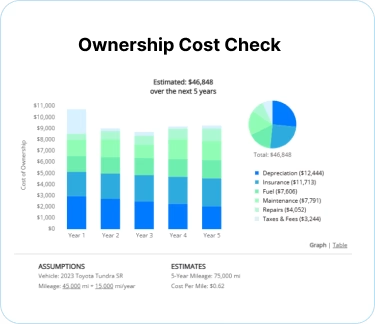
Owning a 1986 Chevrolet G-series van can be a mixed bag financially. Insurance is generally affordable, especially if registered as a classic or utility vehicle, as its value is lower than modern cars. Fuel costs are significant due to poor MPG; expect 10-18 MPG. Maintenance can be economical for basic service as parts are readily available and relatively cheap, and its simple design allows for DIY repairs. However, major repairs like transmission rebuilds or significant rust remediation can be costly.

Long-term ownership costs depend heavily on the vehicle's initial condition and maintenance history. A well-preserved example with proactive care can be reasonably economical. A neglected van will drain your wallet with constant repairs. Overall, it's not particularly economical on fuel, but its repairability and parts availability can keep other costs manageable for a dedicated owner.

1986 Chevrolet Express Fuel Efficiency

No records to be displayed

1986 Chevrolet Express Insurance

Insurance for a 1986 Chevrolet Express is moderately priced, reflecting its status as a Vehicle with strong safety ratings and
reasonable repair costs.

How Does the 1986 Chevrolet Express Compare to Other Vehicle?

The 1986 Chevrolet G-series van stood firmly against its primary rivals: the Ford Econoline (E-Series) and the Dodge Ram Van (B-Series). All three offered similar full-size, body-on-frame designs, catering to the same utility, commercial, and passenger markets.

Performance: All three vans offered a range of V6 and V8 engines. The Chevy G-series, particularly with its 5.7L Small Block V8, was comparable to Ford's 5.0L and 5.8L V8s and Dodge's 5.2L and 5.9L V8s. None were performance vehicles, focusing instead on torque for hauling and towing. Fuel economy was similarly poor across the board. The Chevy's 6.2L diesel offered a unique option for those prioritizing torque and potentially better diesel efficiency, though Ford also had a diesel option in some Econolines.

Features: Features were largely analogous. All offered basic AM/FM radios, manual climate control, and optional power steering, power brakes, and air conditioning. Passenger versions (Chevy Sportvan, Ford Club Wagon, Dodge Ram Wagon) had multiple seating configurations. The choice often came down to minor ergonomic preferences or brand loyalty. Aftermarket conversion vans were also common for all three, offering customized luxury features far beyond factory options.

Reliability: All three American full-size vans of this era were known for their robust, if unrefined, mechanicals. Chevy's Small Block V8s (305/350) and Ford's Windsor V8s (302/351) were workhorses, though prone to the usual wear and tear over decades. Dodge's Slant-6 and Magnum V8s were also solid. Reliability issues often stemmed from age-related wear, rust, and neglected maintenance rather than inherent design flaws. Chevy might have a slight edge in powertrain parts availability due to the ubiquity of the Small Block, but all have good aftermarket support. Rust was a common enemy for all three.

Price: New prices were very competitive, with all three brands vying for the same market share. Today, used prices also track closely, with condition, mileage, engine, and overall originality being bigger determinants of value than brand. A clean, well-maintained G-series, Econoline, or Ram Van will command similar prices.

Alternatives:
  • Ford Econoline (E-Series): A very similar, equally robust, and popular alternative. Parts are abundant, and it offers comparable utility.
  • Dodge Ram Van (B-Series): Another strong contender, known for its "short-nose" design in earlier models, though the 1986 model was more conventional. Also offers good parts availability and solid powertrains.
  • GMC Vandura/Rally Wagon: Essentially the same vehicle as the Chevrolet G-series, offering identical performance, features, and reliability under a different badge.

Ultimately, the choice among these 'Big Three' vans often came down to personal preference or a good deal on a well-maintained example, as their capabilities and common issues were remarkably similar.

Final Verdict: Is the 1986 Chevrolet Express a Good Vehicle?

The 1986 Chevrolet G-series van is ideal for individuals or businesses needing a highly capable, spacious, and mechanically straightforward utility vehicle. It's perfect for hobbyists, contractors, or "van life" enthusiasts seeking a classic platform for customization. It excels as a cargo hauler, a basic passenger transporter, or a foundation for a camper conversion.

It is definitely worth buying used, as new models are obviously not available. The ideal purchase would be a well-maintained example from a dry climate, minimizing rust concerns. Prioritize models with the 5.7L V8 for reliability and power. Be prepared for poor fuel economy and the need for ongoing maintenance typical of a nearly 40-year-old vehicle. If you're mechanically inclined, appreciate vintage vehicles, and value robust simplicity over modern amenities, the 1986 Chevy G-series van offers immense character and utility for a reasonable price.

1986 Chevrolet Express Owner Reviews

0.00
Consumer Rating, Based on 0 Consumer Reviews
Overall rating
Cancel
Thank You for Your Review!

We truly appreciate the time and effort you took to share your experience with us.

Uh oh!

Something went wrong, please try again later.

Author Image
Simon A

Simon is a contributor to VinCheck, where he provides articles and reviews on various automotive topics. His work focuses on delivering accurate and up-to-date information about used cars, helping readers make informed decisions.