
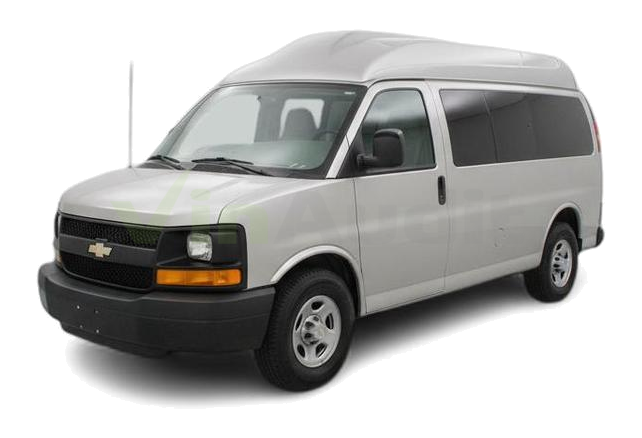
The Good
The 2008 Chevrolet Express boasts powerful V8 engine options, offering strong performance for heavy hauling and towing. Its reputation for reliability and straightforward maintenance appeals to practical buyers seeking a dependable work vehicle. Despite its utilitarian design, passenger versions offer ample interior space. The Express provides excellent long-term value due to its durability and adaptability, fulfilling the emotional need for a trusted "get-the-job-done" companion.
The Bad
2008 Chevrolet Express: Quick Overview
Here is a bullet-point summary of key specifications for the 2008 Chevrolet Express:
- Engine Options: The 2008 Express offered a variety of robust engines to suit different needs:
- 4.3L V6 Vortec (standard in some models)
- 4.8L V8 Vortec (common option)
- 5.3L V8 Vortec (often with flex-fuel capability)
- 6.0L V8 Vortec (most powerful gasoline option)
- 6.6L Duramax Diesel V8 (offered in 2500/3500 series for maximum capability)
- Horsepower: Horsepower figures varied significantly by engine:
- 4.3L V6: Approximately 195 hp
- 4.8L V8: Approximately 279 hp
- 5.3L V8: Approximately 301 hp
- 6.0L V8: Approximately 323 hp
- 6.6L Duramax Diesel V8: Approximately 250 hp and 460 lb-ft of torque (higher torque than gas engines for heavy hauling)
- Fuel Economy: Fuel economy was not a strong suit for the Express, reflecting its heavy-duty nature.
- V6 and smaller V8s typically ranged from 13-15 MPG city / 18-20 MPG highway.
- Larger V8s and the diesel generally saw 11-13 MPG city / 16-18 MPG highway. Actual mileage varies based on load and driving conditions.
- 0-60 Times: The 2008 Express is a utility vehicle, not designed for quick acceleration. 0-60 mph times were typically in the 9-11 second range for gasoline V8 models, with the diesel slightly slower but with stronger low-end grunt.
- Towing Capacity: Towing capacity was a major strength of the Express, varying by engine, axle ratio, and configuration.
- It could range from around 5,000 lbs up to an impressive 10,000 lbs for properly equipped 3500 series models with the 6.0L V8 or 6.6L Duramax Diesel.
- Trim-Level Features:
- Work Van (Cargo): Aimed at commercial users, this trim was basic, offering vinyl seating, AM/FM radio, manual windows/locks, air conditioning, and a bare cargo area for customization.
- LS (Passenger/Cargo): Offered more comfort, including cloth seats, full carpeting (passenger), power windows/locks, a CD player, and optional rear air conditioning.
- LT (Passenger): The top-tier passenger trim added features like deluxe cloth or optional leather seating, cruise control, remote keyless entry, a tilt steering wheel, power mirrors, upgraded audio, and optional OnStar and rear-seat entertainment systems. Safety features like StabiliTrak were standard across most models by 2008.
2008 Chevrolet Express Specifications
Vehicle Information
| Year | 2008 |
| Make | Chevrolet |
| Model | Express |
| Trim | - |
| Style | LS Van RWD 4AT 5.3L V8 |
| Type | Van |
| Category | passenger |
Manufacturing Details
| Made In | United States |
| Manufacturing City | WENTZVILLE |
Dimensions
| Doors | 3-Door |
| Curb Weight | 5500 pounds |
| Gross Vehicle Weight Rating | 8600 pounds |
| Overall Height | 82 inches |
| Overall Length | 224.1 inches |
| Overall Width | 79.2 inches |
| Wheelbase Length | 135 inches |
| Standard Seating | 12 |
Engine & Performance
| Engine | 5.3L V8 |
| Engine Size | 5.3L |
| Engine Cylinders | 8 |
| Transmission | 4-Speed Automatic |
| Transmission Type | Automatic |
| Transmission Speeds | 4-Speed |
| Drivetrain | Rear-Wheel Drive |
Additional Features
| Anti-Brake System | 4-Wheel ABS |
| Steering Type | Recirculating Ball |
Pricing
| Manufacturer Suggested Retail Price (MSRP) | $29,000 |
| Invoice Price | $27,000 |
| Delivery Charges | $900 |
Vehicle History Report
Specifications
History
Events
History Check
Check
Check
Check
Check
Listings
Recalls
Check
Analysis
What Problems Does the 2008 Chevrolet Express Have?
Another prevalent problem is fuel pump failure. These pumps, located inside the fuel tank, are known to fail, leading to no-start conditions or stalling. Replacing them can be labor-intensive and costly due to tank removal.
Intake manifold gasket leaks are also a recurring concern, especially on the Vortec V8 engines. These leaks can cause coolant loss, rough idling, misfires, and, if neglected, engine damage. It's a relatively common issue across GM's Vortec engine family from this era.
Rust is a significant long-term reliability concern. Given its utility nature and exposure to various environments, the chassis, rocker panels, rear wheel wells, and other body panels are susceptible to rust, especially in regions that use road salt. This can compromise structural integrity and aesthetic value.
Electrical issues, though not universal, can occasionally crop up, including problems with power window motors, door lock actuators, and various sensors (e.g., ABS wheel speed sensors, oxygen sensors) which can trigger "Check Engine" lights.
Regarding recalls for the 2008 model year, several were issued. A notable recall (NHTSA Campaign Number 14V355000) involved a potential issue with the fuel tank strap bracket fracture, which could allow the fuel tank to detach. Another significant recall (NHTSA Campaign Number 14V393000) addressed certain passenger frontal airbag inflators, which could rupture upon deployment, posing a risk of injury from metal fragments. Owners should always check their specific VIN for outstanding recalls. While the 2008 Express is generally considered a durable vehicle, these specific issues highlight areas that require attention during pre-purchase inspection and ongoing maintenance.
How long will the 2008 Chevrolet Express last?
However, maintaining this longevity hinges on consistent maintenance habits. Regular oil changes, transmission fluid service, cooling system flushes, and addressing minor issues promptly are crucial. Over time, weaknesses tend to emerge in areas like suspension components (shocks, ball joints), brakes, and exhaust systems due to wear and tear. As mentioned, rust is a persistent enemy, especially on the frame and lower body, which can eventually lead to structural compromise if not addressed. Electrical components can also become finicky with age.
What Technology & Safety Features are Included?
Built-in Tech & Entertainment:
Standard tech was straightforward: an AM/FM stereo with a CD player was common. Higher trims or optional packages could include an upgraded stereo system, sometimes with an auxiliary input for portable music devices. OnStar, GM's telematics system offering roadside assistance, navigation (turn-by-turn directions via an operator), and emergency services, was an available option. For passenger vans, an optional rear-seat DVD entertainment system was a popular choice to keep passengers occupied on long journeys, typically including a flip-down screen and wireless headphones.
Driver-Assistance Features:
Driver-assistance technology in the 2008 Express was minimal. The most prominent feature was the standard Anti-lock Braking System (ABS) on all wheels, crucial for maintaining steering control during hard braking. A significant enhancement for the 2008 model year was the standardization of StabiliTrak, GM's electronic stability control system, across all models. This system helps drivers maintain control during sudden maneuvers or slippery conditions by automatically applying brakes and reducing engine power when wheel slip is detected.
Safety Features:
Standard safety features included dual front airbags for the driver and front passenger. Three-point seatbelts were provided for all outboard seating positions. Side-impact airbags or side curtain airbags were generally not available in this class of vehicle at the time. The robust body-on-frame construction inherently provided a degree of passive safety.
Crash-Test Ratings:
The National Highway Traffic Safety Administration (NHTSA) conducted crash tests for the 2008 Chevrolet Express. For the 2008 model year, the Express passenger van received 4 out of 5 stars for the driver in the frontal crash test and 3 out of 5 stars for the front passenger. In side-impact tests, it generally received 5 out of 5 stars for front occupant protection. Rollover ratings were typically 3 out of 5 stars, which is common for high-profile vans of this type. It's important to note that these ratings reflect standards of the time and may not directly compare to modern crash test methodologies or results for newer vehicles.
What Colors Options are Available?
2008 Chevrolet Express Prices and Market Value
However, in the current used market, the Express demonstrates strong resale value, especially for well-maintained examples. Used prices vary dramatically based on condition, mileage, engine type (diesel often commands a premium), and configuration (cargo vs. passenger). Expect current prices to range anywhere from $5,000 for a high-mileage work van needing attention, up to $15,000 or more for lower-mileage, well-preserved passenger or diesel models. Factors like rust, transmission health, and interior wear significantly impact resale. Its enduring demand as a reliable work vehicle or customizable platform helps mitigate depreciation over the long term, making it a solid investment for utility-focused buyers.
2008 Chevrolet Express Cost of Ownership
2008 Chevrolet Express Fuel Efficiency
2008 Chevrolet Express Recalls & Defects
2008 Chevrolet Express Warranty
Basic
Powertrain
Rust
2008 Chevrolet Express Insurance
reasonable repair costs.
How Does the 2008 Chevrolet Express Compare to Other Van?
In terms of performance, the Express, with its strong V8 gasoline and Duramax diesel engine options, offered comparable power and towing capabilities to the Ford E-Series. Both delivered a robust, truck-like driving experience, ideal for heavy loads. The Sprinter, conversely, offered a more refined ride, better fuel economy from its diesel engines, and superior maneuverability due to its unibody construction and tighter turning radius, but typically with less outright towing grunt.
Regarding features, the Express and E-Series were very similar: basic, functional interiors with a focus on durability. Both offered options like power accessories, air conditioning, and basic audio. Passenger versions could add amenities like rear HVAC and entertainment. The Sprinter generally offered a more modern interior design and slightly more advanced features for its time, including options for navigation and improved ergonomics, though it came at a higher price point.
Reliability is a strong suit for both the Express/Savana and the E-Series. Their body-on-frame design and proven powertrains made them workhorses known for high mileage. Common issues for all traditional vans of this era included rust and transmission wear under heavy use. The Sprinter, while offering efficiency, often came with higher maintenance and repair costs due to its more complex European engineering and specialized parts.
Price-wise, the Express and E-Series were very competitive, with similar new and used market values. The Sprinter typically commanded a higher purchase price, both new and used, reflecting its import status and different design philosophy.
Similar Alternatives: The GMC Savana is virtually identical to the Express, offering the same strengths and weaknesses. The Ford E-Series is a very strong, direct alternative with a similar philosophy, performance, and reliability profile.
Better Alternatives (depending on priorities): For those prioritizing fuel economy, better handling, and a more modern driving experience, a used Dodge (or Freightliner) Sprinter would be a better choice, but be prepared for potentially higher repair costs. For someone needing maximum modern refinement, cargo versatility, and efficiency in a current market, newer vans like the Ram ProMaster or Ford Transit would be superior, but they are a different generation of vehicle.
Final Verdict: Is the 2008 Chevrolet Express a Good Van?
It is definitely worth buying on the used market, where its strong value proposition truly shines. Its proven durability and relatively simple mechanicals make it an attractive option for budget-conscious buyers who prioritize utility over refinement and fuel efficiency. When considering a purchase, focus on well-maintained examples, particularly those with the 6.0L V8 or the highly desirable 6.6L Duramax diesel engine for maximum power and longevity. Thoroughly inspect for rust, transmission health, and any "Check Engine" lights. Cargo van versions offer the most flexibility for customization. Avoid poorly maintained units, as major repairs can negate the initial cost savings. For those needing a reliable, spacious, and powerful workhorse without breaking the bank, a carefully selected used 2008 Express is an excellent choice.

Jovan
Jovan specializes in interpreting vehicle records and making sense of VIN data. With over 10 years of experience in the automotive data industry, his work ensures that every report is clear, accurate, and useful for car buyers.