
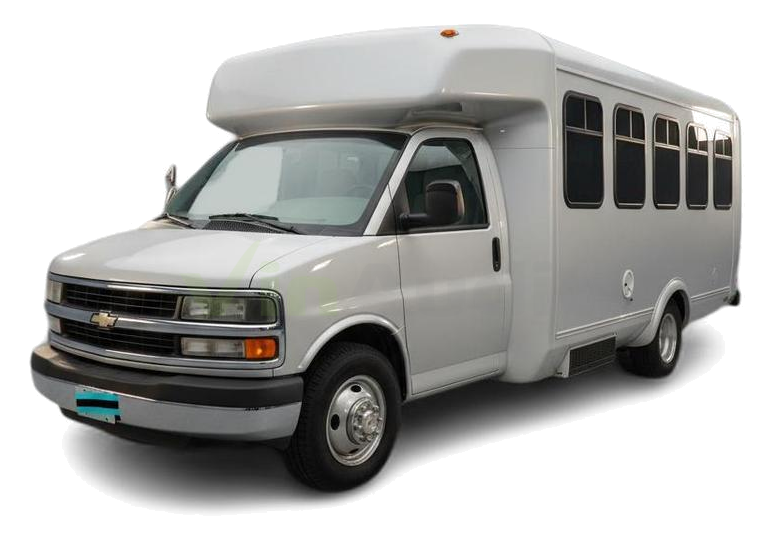
The Good
The 1998 Chevrolet Express offers impressive practicality with its powerful V8 engine options, immense cargo and passenger capacity, and robust towing capabilities. Its sturdy design ensures long-term reliability for demanding tasks, appealing to practical buyers. Emotionally, it provides a sense of rugged dependability and the freedom for extensive customization, whether for family adventures or business needs, all at an attractive used market value.
The Bad
Potential weaknesses for the 1998 Chevrolet Express include its poor fuel economy, especially with V8 engines, and often dated interior ergonomics. Handling can be cumbersome due to its large size. Owners should also watch out for common issues like rust on the body and frame, fuel pump failures, and aging electrical components, which are typical for vehicles of this age.
1998 Chevrolet Express: Quick Overview
- Engine Options:
- 4.3L Vortec V6: Standard engine, offering a balance of power and efficiency for lighter duties.
- 5.0L Vortec V8: A popular upgrade providing more torque and horsepower.
- 5.7L Vortec V8: The most common and robust V8 option, ideal for heavy hauling and towing.
- 6.5L Turbo Diesel V8: An available option for maximum torque and fuel efficiency, though less common in passenger variants.
- Horsepower:
- 4.3L V6: Approximately 195 hp
- 5.0L V8: Approximately 220 hp
- 5.7L V8: Approximately 255 hp
- 6.5L Turbo Diesel V8: Approximately 190 hp (but significantly higher torque)
- Fuel Economy (Estimated MPG):
- 4.3L V6: Around 14-16 city / 18-20 highway
- 5.0L/5.7L V8: Around 12-14 city / 16-18 highway (varies greatly with load and driving style)
- 6.5L Turbo Diesel V8: Can achieve slightly better, around 15-17 city / 19-21 highway
- 0-60 MPH Times:
- Not a performance vehicle; acceleration is utilitarian. Expect 0-60 mph times in the 10-12 second range for V8 models, slower for V6 and fully loaded variants.
- Towing Capacity:
- Varies significantly by engine, axle ratio, and configuration (1500, 2500, 3500 series).
- Can range from approximately 5,000 lbs (V6) up to 10,000 lbs (5.7L V8 or Diesel in 2500/3500 series with appropriate trailering package).
- Trim-Level Features:
- Cargo Van: Basic, no rear seats, vinyl flooring, AM/FM radio, manual windows/locks. Focus on utility.
- LS Passenger Van: Standard seating for 8-15 passengers, air conditioning, AM/FM radio, often cloth seats, power steering.
- LT Passenger Van: Adds more comfort and convenience features like power windows, power door locks, cruise control, tilt steering wheel, upgraded stereo (cassette), additional interior lighting, and higher-grade cloth or optional leather seating.
- Conversion Van Ready: Often a stripped-down window van or cutaway chassis, designed to be sent to third-party outfitters for custom interiors.
1998 Chevrolet Express Specifications
Vehicle Information
| Year | 1998 |
| Make | Chevrolet |
| Model | Express |
| Trim | - |
| Style | LS Van RWD 4AT 5.7L V8 |
| Type | Van |
| Category | passenger |
Manufacturing Details
| Made In | United States |
| Manufacturing City | WENTZVILLE |
Dimensions
| Doors | 3-Door |
| Curb Weight | 5000 pounds |
| Gross Vehicle Weight Rating | - |
| Overall Height | 81 inches |
| Overall Length | 224 inches |
| Overall Width | 79 inches |
| Wheelbase Length | 135 inches |
| Standard Seating | 12 |
Engine & Performance
| Engine | 5.7L V8 |
| Engine Size | 5.7L |
| Engine Cylinders | 8 |
| Transmission | 4-Speed Automatic |
| Transmission Type | Automatic |
| Transmission Speeds | 4-Speed |
| Drivetrain | Rear-Wheel Drive |
Additional Features
| Anti-Brake System | 4-Wheel ABS |
| Steering Type | Recirculating Ball |
Pricing
| Manufacturer Suggested Retail Price (MSRP) | $25,000 |
| Invoice Price | $23,000 |
| Delivery Charges | $800 |
Vehicle History Report
Specifications
History
Events
History Check
Check
Check
Check
Check
Listings
Recalls
Check
Analysis
What Problems Does the 1998 Chevrolet Express Have?
Transmission problems, particularly with the 4L60-E automatic transmission (common in 1500 and some 2500 series), can occur, including harsh shifting, slipping, or complete failure, especially in vehicles that have been used for heavy towing or hauling without proper maintenance. The larger 4L80-E transmission (in 2500HD and 3500 series) is generally more durable but not immune to age-related wear.
Rust is a major long-term concern, particularly in regions that use road salt. This can affect the body panels, rocker panels, frame, and brake lines, leading to significant structural integrity issues if not addressed. Electrical gremlins are also common, including issues with power windows, door locks, dashboard gauges, and lighting, often due to aging wiring or faulty connections.
Steering components, such as power steering pumps and steering gearboxes, can develop leaks or become noisy over time. Exhaust system components are also prone to rust and failure.
For specific recalls, the 1998 model year had several. One notable recall (NHTSA Campaign ID 98V204000) involved the fuel tank filler pipe, where a faulty design could lead to fuel leaks during refueling. Another recall (NHTSA Campaign ID 98V177000) addressed issues with the park brake cable, which could fray or seize, affecting the parking brake's effectiveness. Always check a specific vehicle's VIN for open recalls.
How long will the 1998 Chevrolet Express last?
Its long-term durability primarily stems from its strong V8 engines and heavy-duty components. However, this longevity is heavily dependent on consistent maintenance habits, particularly regular oil changes, transmission fluid services, and attention to cooling system upkeep. Over time, common weaknesses that emerge include rust on the body and frame, especially in salted climates, leading to significant structural and cosmetic concerns. Electrical gremlins, worn suspension components, and aging rubber parts (hoses, belts, bushings) are also common issues requiring attention as the mileage climbs.
What Technology & Safety Features are Included?
Built-in Tech & Entertainment:
Standard equipment on most models included an AM/FM radio, often with a cassette player. Higher trims or optional packages might have offered a CD player. Basic climate control, consisting of manual air conditioning and heating, was standard or optional depending on the trim and intended use (cargo vans sometimes omitted A/C). Power steering was standard, while power windows and power door locks were typically optional features, especially on base cargo models. Cruise control was another common optional convenience feature for long-distance driving. Instrumentation was analog, providing essential information like speed, RPM, fuel level, and engine temperature.
Driver-Assistance Features:
True driver-assistance features as understood today (like adaptive cruise control, lane-keeping assist, or blind-spot monitoring) were non-existent in the 1998 Express. The only "assistance" came from the standard power steering and available cruise control.
Safety Features:
For safety, the 1998 Express included standard dual front airbags for the driver and front passenger. Anti-lock Braking System (ABS) was available and often standard on higher trim levels or specific configurations (e.g., 2500/3500 series). Three-point seatbelts were standard for front occupants, and lap belts or three-point belts for rear passengers depending on seating configuration. The robust body-on-frame construction inherently offered a degree of passive safety.
Crash-Test Ratings:
Specific, comprehensive crash-test ratings for the 1998 Chevrolet Express, particularly from organizations like the NHTSA or IIHS, are limited or not directly comparable to modern testing standards. Large commercial-derived vans of this vintage were not subjected to the same rigorous consumer-oriented crash tests as passenger cars. General assessments from the time suggested that full-size vans offered reasonable protection in frontal impacts due to their size and mass, but lacked many of the advanced structural and occupant restraint technologies found in later vehicles.
What Colors Options are Available?
1998 Chevrolet Express Prices and Market Value
Depreciation has been substantial, as expected for a utility vehicle over two decades old. Factors significantly affecting current resale value include overall condition (rust is a major detractor), mileage, engine type (V8s often command a slight premium for their power), passenger vs. cargo configuration, and whether it has been well-maintained. A clean title and comprehensive service records are also crucial. While the initial purchase price is low, its utility helps maintain a baseline value, preventing it from becoming a true "beater" if kept in decent shape.
1998 Chevrolet Express Cost of Ownership
1998 Chevrolet Express Fuel Efficiency
1998 Chevrolet Express Recalls & Defects
1998 Chevrolet Express Warranty
Basic
Powertrain
Rust
1998 Chevrolet Express Insurance
reasonable repair costs.
How Does the 1998 Chevrolet Express Compare to Other Van?
Performance: In terms of engine performance, the Express's Vortec V8s (5.7L in particular) offered competitive power and torque compared to Ford's Triton V8s and Dodge's Magnum V8s. All three were capable workhorses, with similar acceleration and towing capacities, excelling at hauling heavy loads rather than outright speed. The Express sometimes felt slightly more refined in its engine operation than its rivals, though this was subjective.
Features: Feature-wise, all three vans were quite basic by modern standards. They offered similar levels of creature comforts: manual windows/locks as standard, with power options, air conditioning, and basic AM/FM stereos. The Express, E-Series, and Ram Van provided comparable utilitarian interiors focused on functionality. None stood out significantly for advanced tech or driver-assistance features in this model year.
Reliability: Reliability was a strong point for all three, provided they were maintained. Common issues like fuel pump failures, rust, and transmission concerns were prevalent across the board for full-size vans of this era, not unique to the Express. The Express's GMT600 platform was known for its robust construction, much like Ford's E-series.
Price: When new, pricing for all three was very competitive, typically falling within similar ranges. In the used market today, all three offer incredible value for their utility, with prices largely dictated by condition, mileage, and engine rather than brand loyalty.
Alternatives: For someone seeking a similar, highly capable full-size workhorse at a low budget, a well-maintained 1998 Ford E-Series (Econoline) or Dodge Ram Van would be excellent, nearly interchangeable alternatives. If a newer, more fuel-efficient, and feature-rich option is desired, then looking at much newer generations of the Express, Ford Transit, Ram ProMaster, or even Mercedes-Benz Sprinter would be recommended, though at a significantly higher price point. For those needing significant space without the "van" stigma, a full-size SUV like a Chevrolet Suburban or Ford Excursion from a similar era could also be considered, though with less pure cargo volume.
Final Verdict: Is the 1998 Chevrolet Express a Good Van?
It is absolutely worth buying as a used vehicle, provided a thorough pre-purchase inspection is performed. Focus on examples with good maintenance records, minimal rust, and a strong-running engine and transmission. The 5.7L V8 is generally the most desirable for its balance of power and proven reliability. Avoid units with significant structural rust or obvious mechanical issues unless you're prepared for substantial repairs. For its low acquisition cost and immense utility, the 1998 Express offers excellent value, making it a smart choice for practical-minded buyers who prioritize capability over modern creature comforts and fuel economy.

Cathleen V
Cathleen is an exceptional freelance writer covering hot topics in the automotive world from a gearhead's perspective. Her articles delve into various aspects of automotive technology and history, offering readers detailed insights into engine performance, reliability, and maintenance. Through her engaging and informative writing, Cathleen provides valuable information to automotive enthusiasts and consumers alike, helping them make informed decisions about vehicle maintenance and purchases.