
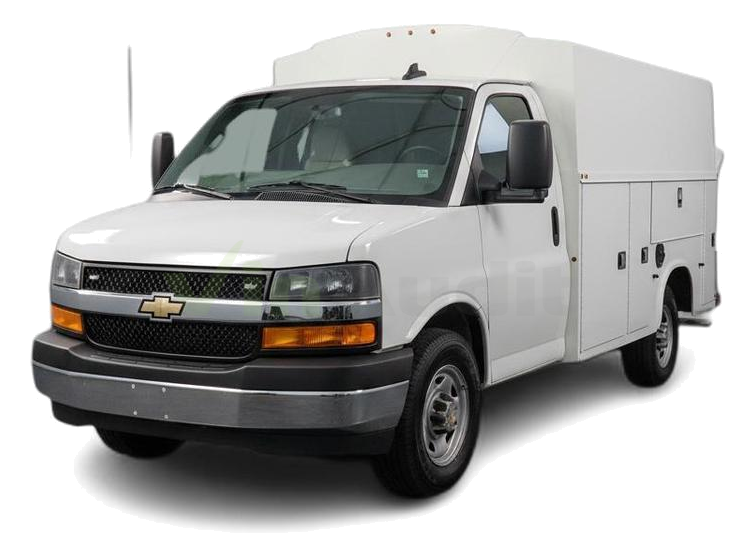
The Good
Its practical advantages include powerful engine options for heavy loads, exceptional towing and payload capacity, and reliable, proven mechanicals that are straightforward to maintain. For emotional buyers, it represents a "get-the-job-done" mentality, offering robust simplicity and a no-nonsense design, all contributing to a strong value proposition for businesses needing a dedicated work vehicle.
The Bad
Potential buyers should be aware of its outdated design, resulting in poor fuel economy, a lack of modern safety and driver-assistance features, and a relatively unrefined, truck-like ride quality. The interior ergonomics and technology are also significantly behind newer rivals, impacting comfort and connectivity on long journeys or in daily use.
2025 Chevrolet Express: Quick Overview
- Engine Options: The 2025 Chevrolet Express is expected to offer two primary engine choices: a 4.3L V6 engine and a more powerful 6.6L V8 engine. Both are paired with an automatic transmission (often an 8-speed for the V6 and a 6-speed for the V8 in recent models).
- Horsepower: The 4.3L V6 typically produces around 276 horsepower and 298 lb-ft of torque. The robust 6.6L V8 engine delivers approximately 401 horsepower and 464 lb-ft of torque, making it suitable for demanding tasks.
- Fuel Economy: Fuel efficiency is not a strong suit for the Express, given its size and engine options. The 4.3L V6 averages roughly 16 MPG in the city and 20 MPG on the highway, while the 6.6L V8 is lower, estimated around 13 MPG city and 18 MPG highway. Actual figures will vary significantly based on load and driving conditions.
- 0-60 Times: As a commercial van, 0-60 mph acceleration times are not officially published or typically a focus. Estimates for an unladen Cargo Van might range from 8-9 seconds for the V6 and 7-8 seconds for the V8, but these figures are highly dependent on configuration and cargo.
- Towing Capacity: The Express boasts impressive towing capabilities. When properly equipped with the 6.6L V8 engine, it can tow up to approximately 10,000 pounds, making it a strong contender for hauling heavy trailers and equipment. The V6 also offers respectable towing capacity, often up to 7,000 pounds.
- Trim-Level Features:
- Cargo Van (LS, LT): Primarily focused on utility.
- LS: Standard features include vinyl seats, basic AM/FM radio, power windows and door locks, and air conditioning. It prioritizes a durable, easy-to-clean interior. Options include various door configurations (e.g., swing-out rear cargo doors, sliding side door), different rear axle ratios, and provisions for shelving.
- LT: Adds a few comfort and convenience features over the LS, such as cruise control, remote keyless entry, power-adjustable mirrors, and a chrome appearance package. Interior materials remain utilitarian, but some amenities improve daily usability. Optional features like an upgraded infotainment system with Bluetooth and a USB port, or blind-spot monitoring, may be available.
- Passenger Van (LS, LT): Designed for transporting people, typically offering 12- or 15-passenger configurations.
- LS: Includes standard seating for the chosen configuration, vinyl or cloth upholstery, air conditioning (front and rear for extended models), basic audio system, and power accessories.
- LT: Enhances the passenger experience with features like deep-tinted glass, carpeted flooring, cruise control, tilt steering wheel, and upgraded interior lighting. Optional features like a rear vision camera and rear park assist become more common here, improving safety for a larger vehicle.
2025 Chevrolet Express Specifications
Vehicle Information
| Year | 2025 |
| Make | Chevrolet |
| Model | Express |
| Trim | - |
| Style | LT Van RWD 8AT 4.3L V6 |
| Type | Van |
| Category | commercial |
Manufacturing Details
| Made In | United States |
| Manufacturing City | WENTZVILLE |
Dimensions
| Doors | 3-Door |
| Curb Weight | 5500 pounds |
| Gross Vehicle Weight Rating | 9000 pounds |
| Overall Height | 82.2 inches |
| Overall Length | 224.1 inches |
| Overall Width | 79.2 inches |
| Wheelbase Length | 135 inches |
| Standard Seating | 12 |
Engine & Performance
| Engine | 4.3L V6 |
| Engine Size | 4.3L |
| Engine Cylinders | 6 |
| Transmission | 8-Speed Automatic |
| Transmission Type | Automatic |
| Transmission Speeds | 8-Speed |
| Drivetrain | Rear-Wheel Drive |
Additional Features
| Anti-Brake System | 4-Wheel ABS |
| Steering Type | Recirculating Ball |
Pricing
| Manufacturer Suggested Retail Price (MSRP) | $36,000 |
| Invoice Price | $34,000 |
| Delivery Charges | $1,395 |
Vehicle History Report
Specifications
History
Events
History Check
Check
Check
Check
Check
Listings
Recalls
Check
Analysis
What Problems Does the 2025 Chevrolet Express Have?
Due to its basic design, some owners experience a lack of refinement compared to modern vans. Common issues that have appeared in previous model years, and thus could potentially carry over, include electrical gremlins related to wiring harnesses or sensors, especially as the vehicle ages. Suspension components, such as control arm bushings and ball joints, tend to wear out over higher mileage due to the heavy loads these vans often carry. Brake components also see significant wear, as expected for a heavy vehicle used for work.
Transmission issues, while not rampant, have been reported in some older models, though the more recent 8-speed and 6-speed units are generally robust. Rust can also be a long-term concern, particularly in areas where roads are salted during winter, affecting the undercarriage and body panels over many years of service. As for recalls, the Express has had its share over its long production run, addressing issues like airbag inflators (e.g., Takata recalls for older models), power steering hoses, or potential fire risks from specific components. While no 2025-specific recalls exist yet, buyers should always check NHTSA's database for any open recalls that might apply to components shared across model years or for newly identified issues after release. Overall, while generally robust, its mechanical simplicity means some wear-and-tear items will demand attention over its lifespan.
How long will the 2025 Chevrolet Express last?
What Technology & Safety Features are Included?
Driver-assistance features are similarly limited, reflecting the Express's older architecture. While many modern vehicles come standard with a suite of advanced safety technologies, the Express offers only a handful of optional aids. These may include a rear vision camera for easier maneuvering in tight spots, rear park assist sensors to help with backing up, and available blind-spot monitoring with rear cross-traffic alert to assist with lane changes and parking lot exits. Forward collision alert, lane departure warning, adaptive cruise control, or automatic emergency braking are typically not available.
In terms of passive safety, the Express comes standard with front airbags for the driver and front passenger. Passenger van variants may include side-curtain airbags. StabiliTrak, Chevrolet's electronic stability control system, is standard, aiding in vehicle control during adverse conditions or evasive maneuvers. Crash-test ratings for the 2025 Chevrolet Express are not readily available from agencies like the National Highway Traffic Safety Administration (NHTSA) or the Insurance Institute for Highway Safety (IIHS). Full-size commercial vans, especially those with long-running designs like the Express, are often not subjected to the same comprehensive crash test evaluations as passenger cars and light-duty trucks. Given its older design, any available ratings from previous generations would likely reflect lower scores compared to modern vehicles.
What Colors Options are Available?
2025 Chevrolet Express Prices and Market Value
2025 Chevrolet Express Cost of Ownership
2025 Chevrolet Express Fuel Efficiency
2025 Chevrolet Express Recalls & Defects
2025 Chevrolet Express Warranty
Basic
Powertrain
Rust
2025 Chevrolet Express Insurance
reasonable repair costs.
How Does the 2025 Chevrolet Express Compare to Other Van?
When it comes to features, the Express lags significantly. It offers minimal in-cabin technology, basic infotainment, and very few advanced driver-assistance systems. Rivals like the Ford Transit and Mercedes-Benz Sprinter boast sophisticated infotainment systems, extensive safety suites (including adaptive cruise control, lane-keeping assist, and automatic emergency braking), and much more ergonomic and comfortable interiors with multiple roof height and length configurations. The Ram ProMaster, while also focused on value, offers modern FWD architecture with good cargo accessibility and better fuel economy than the Express.
Reliability for the Express is a strong point, attributed to its proven, relatively simple mechanicals. Its components are robust and well-understood, leading to predictable maintenance and repair. While rivals also offer good reliability, their more complex systems can sometimes lead to higher repair costs when issues do arise. The Sprinter, known for its diesel engines, can be more expensive to maintain but offers excellent fuel economy.
In terms of price, the Express is often the most affordable new full-size commercial van, offering excellent value for businesses on a tight budget. The Ram ProMaster is also competitively priced, while the Ford Transit sits in the middle, and the Mercedes-Benz Sprinter is typically the most expensive, reflecting its premium features and diesel efficiency.
Recommended alternatives include the Ford Transit for those needing a more modern driving experience, better fuel efficiency (especially with its EcoBoost engines), diverse configurations, and a greater suite of technology and safety features. The Ram ProMaster is a good alternative for its value, front-wheel-drive efficiency, and tall, easily upfitted cargo area. For premium efficiency, high roofs, and advanced features, the Mercedes-Benz Sprinter is the top choice, albeit at a higher price point.
Final Verdict: Is the 2025 Chevrolet Express a Good Van?
It is worth buying new if budget constraints are paramount and a "no-frills" approach to a full-size van is acceptable. Used, the Express offers exceptional value as a durable, easily maintained workhorse, particularly models with reasonable mileage. Consider the Cargo Van LS trim for maximum utility and minimal cost, or the Passenger Van LT for basic people-hauling needs. However, if modern safety features, superior fuel economy, comfortable ergonomics, or advanced technology are priorities, then contemporary rivals would be a much better investment.

Cathleen V
Cathleen is an exceptional freelance writer covering hot topics in the automotive world from a gearhead's perspective. Her articles delve into various aspects of automotive technology and history, offering readers detailed insights into engine performance, reliability, and maintenance. Through her engaging and informative writing, Cathleen provides valuable information to automotive enthusiasts and consumers alike, helping them make informed decisions about vehicle maintenance and purchases.