
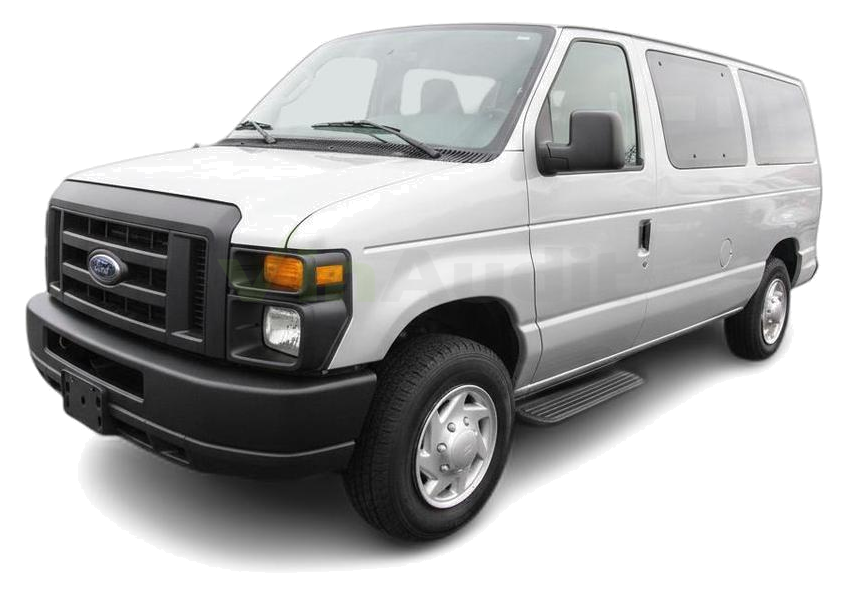
The Good
The 2011 E-150 boasts a strong V8 engine for dependable performance and towing prowess. Its legendary reliability and durable construction offer peace of mind, while the spacious interior provides comfort for long journeys. It represents exceptional value for its utility and longevity.
The Bad
Potential buyers should be aware of common issues like transmission problems, particularly with higher mileage. Fuel economy is a significant drawback. Some owners report interior trim wear and potential for rust on older models, especially in harsh climates.
2011 Ford E-150: Quick Overview
- Engine Options: The 2011 Ford E-150 was primarily offered with two V8 engine options.
- 4.6L Triton V8
- 5.4L Triton V8
- Horsepower:
- 4.6L V8: Approximately 225 horsepower
- 5.4L V8: Approximately 300 horsepower
- Fuel Economy: As a large, rear-wheel-drive van with powerful V8 engines, fuel economy is not a strong suit. Expect figures generally in the range of 10-14 MPG combined, varying significantly with engine choice, driving conditions, and load.
- 4.6L V8: Estimated 11-13 MPG city / 15-17 MPG highway
- 5.4L V8: Estimated 10-12 MPG city / 14-16 MPG highway
- 0-60 Times: Due to its size and weight, acceleration is not a primary focus. 0-60 mph times are generally in the 9-11 second range, depending on the engine and configuration.
- Towing Capacity: The E-150 is designed for towing and hauling. When properly equipped, towing capacities could reach up to 7,500 lbs for the 4.6L V8 and up to 9,600 lbs for the 5.4L V8.
- Trim-Level Features:
- XL Trim: Typically served as the base model, focusing on functionality. Standard features often included vinyl flooring, a basic stereo system, manual windows and locks, and durable interior materials suitable for commercial use.
- XLT Trim: Offered more comfort and convenience features. This could include upgraded cloth seating, power windows and locks, cruise control, a better sound system, and sometimes a more refined interior appearance. Optional packages could add features like air conditioning (standard on some configurations), and enhanced audio.
2011 Ford E-150 Specifications
Vehicle Information
| Year | 2011 |
| Make | Ford |
| Model | E-150 |
| Trim | - |
| Style | - |
| Type | Van |
| Category | Cargo Van |
Manufacturing Details
| Made In | United States |
| Manufacturing City | AVON LAKE |
Dimensions
| Doors | 3-Door |
| Curb Weight | 5430 pounds |
| Gross Vehicle Weight Rating | 8600 pounds |
| Overall Height | 82.60 inches |
| Overall Length | 216.70 inches |
| Overall Width | 79.40 inches |
| Wheelbase Length | 138.00 inches |
| Standard Seating | 2 |
Engine & Performance
| Engine | 5.4L V8 |
| Engine Size | 5.4L |
| Engine Cylinders | 8 |
| Transmission | 4-Speed Automatic |
| Transmission Type | Automatic |
| Transmission Speeds | 4-Speed |
| Drivetrain | Rear-Wheel Drive |
Additional Features
| Anti-Brake System | 4-Wheel ABS |
| Steering Type | Recirculating |
Pricing
| Manufacturer Suggested Retail Price (MSRP) | $27,265 |
| Invoice Price | $25,194 |
| Delivery Charges | $980 |
Vehicle History Report
Specifications
History
Events
History Check
Check
Check
Check
Check
Listings
Recalls
Check
Analysis
What Problems Does the 2011 Ford E-150 Have?
Another area of concern for many is the fuel economy. This is an inherent characteristic of large, V8-powered vans, and owners should not expect efficiency. However, some owners have noted that the actual MPG can be even lower than anticipated, especially when carrying heavy loads or during stop-and-go driving.
Brake issues have also been mentioned by some owners, including premature wear of pads and rotors, and occasional problems with calipers. Regular inspection and maintenance of the braking system are crucial.
Regarding rust and corrosion, like many vehicles of this era, the E-150 can be susceptible, especially if driven in areas with heavy road salt use. Areas to inspect include the rocker panels, wheel wells, and the undercarriage.
Electrical gremlins, though not widespread, can occasionally surface. This might manifest as issues with interior lighting, power accessories, or the instrument cluster.
Recalls for the 2011 Ford E-150 are not overly numerous, but it's always advisable to check the National Highway Traffic Safety Administration (NHTSA) website for any outstanding safety recalls specific to the vehicle's VIN. These recalls often address issues like potential fuel leaks or airbag system faults.
In terms of long-term reliability, the E-150's simple, robust mechanical design contributes to its longevity. However, the aforementioned transmission and brake issues, along with general wear and tear on suspension components, are common points of concern for vehicles reaching higher mileage. Consistent and thorough maintenance is the key to maximizing its lifespan.
How long will the 2011 Ford E-150 last?
What Technology & Safety Features are Included?
Driver-assistance features were minimal. The primary focus was on mechanical capability rather than electronic aids. Standard safety features included front airbags, anti-lock brakes (ABS) for improved stopping control, and an electronic brake-force distribution system. Traction control was often standard or part of an optional package, helping to prevent wheel spin during acceleration. Stability control was not a widespread feature on E-150 models from this year.
Optional safety features could include a rearview camera (though more common on passenger van variants or for specific upfitting) and upgraded lighting for improved visibility. Side curtain airbags were not typically available.
Crash-test ratings for commercial vehicles like the E-150 are often not as comprehensive or publicly available as those for passenger cars. However, Ford typically engineered these vans with occupant safety in mind, focusing on structural integrity. While specific NHTSA or IIHS ratings might be difficult to find or may not have been extensively tested for this model year, it was built to meet federal safety standards of the time. Buyers should prioritize vehicles with well-maintained safety equipment, particularly the airbags and braking system.
What Colors Options are Available?
2011 Ford E-150 Prices and Market Value
2011 Ford E-150 Cost of Ownership
2011 Ford E-150 Fuel Efficiency
2011 Ford E-150 Safety Rating
NHTSA
IIHS
2011 Ford E-150 Recalls & Defects
Visibility:windshield
Fuel System, Other:fuel Injection System
Seats:front Assembly:power Adjust
Fuel System, Other:delivery:hoses, Lines/Piping, and Fittings
Fuel System, Other:delivery:hoses, Lines/Piping, and Fittings
Fuel System, Other:fuel Injection System
Equipment
Equipment Adaptive/Mobility
Equipment Adaptive/Mobility
Fuel System, Other:delivery:hoses, Lines/Piping, and Fittings
Fuel System, Other:storage
Equipment Adaptive/Mobility
Equipment Adaptive/Mobility
2011 Ford E-150 Warranty
Basic
Powertrain
Rust
2011 Ford E-150 Insurance
reasonable repair costs.
How Does the 2011 Ford E-150 Compare to Other Van?
Features were a mixed bag. While the E-150 offered essential functionality, its interior amenities and technology were often basic, especially in base trims. Both the Express/Savana and Ram Van offered comparable levels of features, with none of them being particularly cutting-edge in 2011. Optional packages could enhance comfort, but these vans were largely utilitarian.
Reliability is where the E-150 generally held its own. Ford's vans have a reputation for durability, though, as noted, transmission issues can arise. The Chevy/GMC twins are also known for their robust build, though some owners reported electrical gremlins. The Ram Van, historically, had a reputation for being less reliable in the long run compared to its Ford and GM counterparts.
Price-wise, the E-150 was competitively positioned, often slightly undercutting or matching its direct competitors when new. On the used market, prices are now very similar across these models, heavily influenced by condition and mileage.
Alternatives: If the need is for a versatile, large vehicle, consider modern options like the Ford Transit (which replaced the E-Series) or the Mercedes-Benz Sprinter. These offer significantly more modern technology, better fuel efficiency (especially the Sprinter diesel), and advanced safety features, albeit at a higher cost, particularly on the used market. For a more car-like experience with significant cargo space, the Ford Explorer Sport Trac or even larger SUVs could be considered for personal use, though they lack the sheer volume and towing capacity of a full-size van.
Final Verdict: Is the 2011 Ford E-150 a Good Van?
Buying this vehicle is best done on the used market, as new models are no longer produced. Focus on well-maintained examples, preferably with lower mileage and the more powerful 5.4L V8 engine for better performance. Avoid models showing significant rust or with known transmission issues. For passenger use, look for well-kept XLT trims. It's a practical, no-nonsense choice for those with specific needs who understand its inherent limitations, particularly its thirst for fuel.

Drew B
Drew is a seasoned automotive expert and contributor to VinCheck.info. With nearly 15 years of experience as a former Porsche technician, he brings a wealth of hands-on knowledge to his writing. Born in North Carolina, a region renowned for its deep-rooted NASCAR culture, Drew developed a passion for cars early in life, often building and working on vehicles from a young age. At VINCheck, Drew leverages his extensive technical background to provide in-depth analyses of various vehicles. His articles often focus on engine performance, reliability, and maintenance insights, offering readers practical information grounded in real-world experience. Some of his notable contributions include reviews on the Mazda CX-5's longevity and detailed examinations of engine options for models like the 2011 Toyota Camry and Tacoma