
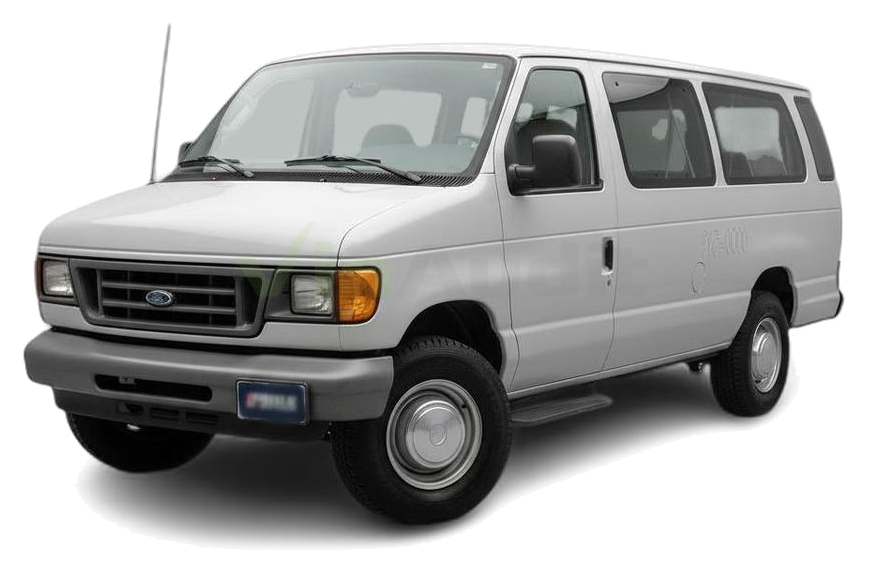
The Good
The 2006 Ford E-150 offers significant advantages, including its immense cargo and passenger capacity, robust V8 engine options providing reliable towing and hauling performance, and a durable, body-on-frame construction. Practical buyers appreciate its functional design, proven reliability for commercial use, and accessible maintenance. Emotionally, it provides a sense of rugged capability and versatility, making it a dependable partner for any demanding task or adventure with a large group. Its overall value, especially in the used market, is a strong draw.
The Bad
Known weaknesses for the 2006 Ford E-150 include its relatively poor fuel economy, especially with the larger V8 engines, and a somewhat dated interior design that lacks modern amenities. Owners also report common issues such as manifold exhaust leaks, potential transmission problems at higher mileages, and occasional electrical glitches. The ride can be truck-like and somewhat unrefined compared to newer vehicles, and its large size makes maneuvering in tight spaces challenging.
2006 Ford E-150: Quick Overview
Here is a summary of key specifications for the 2006 Ford E-150:
- Engine Options:
- 4.6L Triton SOHC V8: Standard engine, offering a balance of power and efficiency for lighter duties.
- 5.4L Triton SOHC V8: Optional, providing more power and torque for heavier hauling and towing.
- Horsepower:
- 4.6L V8: Approximately 220 hp at 4500 rpm.
- 5.4L V8: Approximately 255 hp at 4500 rpm.
- Fuel Economy (EPA Estimated):
- 4.6L V8: Around 14-15 MPG combined (e.g., 13 city / 17 highway for passenger models).
- 5.4L V8: Around 13-14 MPG combined (e.g., 12 city / 16 highway for passenger models). Fuel economy can vary significantly based on load, driving style, and configuration.
- 0-60 MPH Times:
- Exact manufacturer-published 0-60 times are not typically a primary selling point for full-size vans and can vary significantly with load. Estimates generally fall in the 9-11 second range for the 5.4L V8 and slightly slower for the 4.6L V8, when unladen.
- Towing Capacity:
- Towing capacity is a significant strong suit. Depending on the engine, axle ratio, and configuration (cargo vs. passenger), the 2006 E-150 can tow approximately 5,000 to 7,500 pounds. The 5.4L V8 with a proper towing package would be at the higher end of this range.
- Trim-Level Features:
- XL Trim: This is the base workhorse trim, typically featuring vinyl upholstery, manual windows and locks, an AM/FM stereo, and steel wheels. It's designed for utility and durability.
- XLT Trim: The XLT offers more comfort and convenience. Standard features often include cloth upholstery, power windows and door locks, air conditioning, an upgraded AM/FM/CD stereo, cruise control, and chrome exterior accents. Optional features might include keyless entry, power mirrors, alloy wheels, and a more comprehensive rear climate control system for passenger vans. Passenger models also include multiple rows of removable seating.
- Both trims could be optioned with various packages like heavy-duty alternators, trailer towing packages, limited-slip differentials, and diverse interior configurations for cargo or passenger models, including window delete options for cargo vans.
2006 Ford E-150 Specifications
Vehicle Information
| Year | 2006 |
| Make | Ford |
| Model | E-150 |
| Trim | - |
| Style | - |
| Type | Van |
| Category | Passenger Van |
Manufacturing Details
| Made In | United States |
| Manufacturing City | AVON LAKE |
Dimensions
| Doors | 3-Door |
| Curb Weight | 4690 pounds |
| Gross Vehicle Weight Rating | 6700 pounds |
| Overall Height | 80.90 inches |
| Overall Length | 211.90 inches |
| Overall Width | 79.30 inches |
| Wheelbase Length | 138.00 inches |
| Standard Seating | 2 |
Engine & Performance
| Engine | 4.6L V8 |
| Engine Size | 4.6L |
| Engine Cylinders | 8 |
| Transmission | 4-Speed Automatic |
| Transmission Type | Automatic |
| Transmission Speeds | 4-Speed |
| Drivetrain | Rear-Wheel Drive |
Additional Features
| Anti-Brake System | 4-Wheel ABS |
| Steering Type | Recirculating |
Pricing
| Manufacturer Suggested Retail Price (MSRP) | $23,180 |
| Invoice Price | $20,711 |
| Delivery Charges | $795 |
Vehicle History Report
Specifications
History
Events
History Check
Check
Check
Check
Check
Listings
Recalls
Check
Analysis
What Problems Does the 2006 Ford E-150 Have?
Spark plug ejection was a well-known problem with the Triton 4.6L and 5.4L V8 engines, particularly in earlier model years, though Ford implemented design changes over time. While less prevalent by 2006, it's still a possibility to watch for, characterized by a sudden loud "pop" and engine misfire. Relatedly, changing spark plugs can be challenging due to their design and location, sometimes leading to broken plugs in the cylinder head.
Transmission issues, particularly with the 4R70W/E automatic transmission, can arise at higher mileages. Symptoms include harsh shifting, delayed engagement, or complete failure. Regular fluid and filter changes are crucial for longevity, but these transmissions can still be a wear item. The rear differential can also develop leaks or excessive noise.
Electrical problems, though often minor, are not uncommon. These can range from faulty power windows and door locks to issues with the instrument cluster or exterior lighting.
Steering and suspension components are also prone to wear and tear, given the vehicle's size and potential for heavy use. Ball joints, tie rods, and bushings may need replacement over time, contributing to a looser steering feel or abnormal noises.
Regarding recalls, the 2006 E-150 had a few notable ones. One significant recall involved the speed control deactivation switch, which could overheat and potentially cause a fire, even when the vehicle was off. This recall affected many Ford trucks and SUVs from various years. Another recall addressed potential issues with certain aftermarket wheel hub assemblies, which could lead to wheel detachment. It's always advisable to check a specific vehicle's VIN for any outstanding recall campaigns.
Overall, the E-150's long-term reliability largely depends on consistent maintenance. While components are heavy-duty, they are still susceptible to wear, and certain design flaws in the engines can lead to costly repairs if not addressed preventatively.
How long will the 2006 Ford E-150 last?
However, reaching these high mileages requires consistent maintenance. Over time, weaknesses such as exhaust manifold leaks and potential spark plug issues can become more prevalent. Transmission wear is a significant factor, often requiring rebuilding or replacement between 150,000-200,000 miles if not properly maintained. Suspension and steering components will also demand attention as mileage accrues, including ball joints, tie rods, and bushings. Rust can become an issue in areas with harsh winters. Despite these common wear items, the core structure and engines are known for their longevity, making it a dependable vehicle if owners are prepared for routine high-mileage repairs.
What Technology & Safety Features are Included?
Built-in Tech & Entertainment:
Standard tech was sparse. The base XL model typically came with an AM/FM radio. The XLT trim upgraded to an AM/FM/CD player. Some models could be optioned with a cassette player, or even a basic in-dash CD changer. Auxiliary inputs or advanced connectivity like Bluetooth were not available. Passenger models (Club Wagon) could sometimes be equipped with an optional rear-seat entertainment system, typically a DVD player with a flip-down screen, largely to keep children entertained on long trips. Air conditioning was standard on most models, and the XLT offered power windows, locks, and mirrors, which were considered conveniences at the time.
Driver-Assistance Features:
Driver-assistance features were minimal. There were no advanced systems like adaptive cruise control, lane-keeping assist, or blind-spot monitoring. The primary driver-assistance aid was standard power steering and power anti-lock brakes (ABS). Some models might have included cruise control as an optional or standard feature on the XLT trim.
Safety Features:
Safety features were standard for the time but limited by modern standards. Key safety components included:
- Dual Front Airbags: Driver and front passenger airbags were standard.
- Anti-lock Braking System (ABS): Standard on all models, enhancing stopping power and control, especially in slippery conditions.
- Four-Wheel Disc Brakes: Providing more consistent stopping performance.
- Safety Belt Pretensioners: For the front seats.
- Side-impact door beams: Incorporated into the vehicle structure.
Crash-Test Ratings:
The National Highway Traffic Safety Administration (NHTSA) provided ratings for the 2006 Ford E-150 passenger van (Club Wagon).
- Frontal Crash: 3 out of 5 stars for the driver, 4 out of 5 stars for the passenger.
- Side Crash: No rating was typically provided for side-impact for vehicles without side airbags at that time, or the ratings were not fully applicable due to vehicle class.
- Rollover: 3 out of 5 stars, which is common for high-center-of-gravity vans.
What Colors Options are Available?
Exterior Colors
Interior Colors
2006 Ford E-150 Prices and Market Value
In the current used market (as of late 2023/early 2024), prices for a 2006 Ford E-150 can vary widely based on condition, mileage, and configuration. Expect to see prices anywhere from $4,000 for a high-mileage work van in fair condition to $12,000 or even $15,000+ for a very well-maintained, lower-mileage passenger or conversion van. Cargo vans generally hold less value than passenger or specialty conversion models.
Depreciation for the E-150 was significant in its early years, typical for commercial vehicles. However, after about 5-7 years, the depreciation curve flattens considerably. The E-150 benefits from its reputation as a durable workhorse, meaning it retains a functional value for a very long time. Factors affecting resale value include the overall mechanical condition, absence of rust, low mileage for its age, service records, and whether it's a passenger van (often more desirable for private buyers) or a well-outfitted cargo van for trades. The robust and straightforward nature of these vans ensures continued demand for specific uses, helping to stabilize their used prices at a functional level.
2006 Ford E-150 Cost of Ownership
2006 Ford E-150 Fuel Efficiency
2006 Ford E-150 Safety Rating
NHTSA
IIHS
2006 Ford E-150 Recalls & Defects
Fuel System, Gasoline:storage:tank Assembly
Equipment
Equipment Adaptive/Mobility
Equipment Adaptive/Mobility
Equipment Adaptive/Mobility
Visibility:windshield Wiper/Washer:motor
Fuel System, Gasoline
Equipment Adaptive/Mobility
Fuel System, Gasoline:fuel Injection System:fuel Rail
Equipment Adaptive/Mobility
Equipment Adaptive/Mobility
Equipment Adaptive/Mobility
Equipment Adaptive/Mobility
Equipment Adaptive/Mobility
Equipment Adaptive/Mobility
Equipment Adaptive/Mobility
2006 Ford E-150 Warranty
Basic
Powertrain
Rust
2006 Ford E-150 Insurance
reasonable repair costs.
How Does the 2006 Ford E-150 Compare to Other Van?
Performance:
The E-150's 4.6L and 5.4L V8 engines provided competitive power and strong towing capabilities, comparable to the Chevy/GMC's 4.3L V6 and 4.8L/5.3L V8 options. The E-150's engines were known for their torque, making them good for hauling. The ride quality was typically firm and truck-like across all these vans, prioritizing utility over comfort.
Features:
All rivals offered similar basic features: utilitarian interiors, AM/FM radios (with CD optional), manual or power accessories. The E-150's interior was functional but dated, as were its competitors'. None featured advanced driver-assistance tech. The Chevy Express/GMC Savana often had a slight edge in interior ergonomics and potentially better build quality in some areas, but it was largely a matter of preference. The Dodge Ram Van was discontinued before 2006, replaced by the full-size Ram Van, which had a more basic interior, while the Mercedes-Benz-derived Dodge Sprinter was a more modern, unibody, European-style van, offering better fuel economy and vastly more cargo space but at a higher price point and with more complex maintenance.
Reliability:
Reliability was a mixed bag across the board. The E-150 had its known issues with exhaust manifolds and spark plugs. The Chevrolet Express/GMC Savana were generally considered quite reliable, with their LS-based V8s being highly regarded, though they had their own share of electrical gremlins or less common transmission issues. All these vans are capable of high mileage with proper maintenance. The E-150's parts availability is excellent and repair costs are generally low for common issues.
Price:
New and used, the E-150 was competitively priced against the Chevrolet Express/GMC Savana. Pricing was often a key battleground, with fleet discounts heavily influencing final costs. On the used market, all these traditional American vans remain affordable, offering significant utility for the money.
Alternatives:
- Chevrolet Express/GMC Savana 1500: A very similar alternative, often seen as slightly more refined or having more robust engines (LS V8s). Worth considering for comparable utility and often similar pricing.
- Dodge Sprinter (Dodge Grand Caravan-based cargo van not full size): If cargo capacity and fuel efficiency are paramount, the Sprinter (though more expensive to buy and maintain) offers a completely different proposition with its high roof and diesel engine options. However, it's not a direct competitor in the traditional full-size American van segment.
The 2006 E-150 is a solid choice if you need a dependable, no-frills work or passenger van and are comfortable with its fuel consumption and older tech. Its rivals offer very similar packages, so choice often comes down to brand preference and specific vehicle condition.
Final Verdict: Is the 2006 Ford E-150 a Good Van?
It is definitely worth buying as a used vehicle, especially if found in good mechanical condition with service records. Opting for the XLT trim will provide a more comfortable and feature-rich experience, particularly if used as a daily driver or family hauler, offering power accessories and a better stereo. For purely commercial use, the XL trim is perfectly adequate.
However, prospective buyers must be prepared for its truck-like ride, dated interior, and high fuel consumption. Budget for potential maintenance on common issues like exhaust manifolds and transmission if buying a high-mileage example. Under these conditions, the 2006 E-150 offers immense value as a durable and highly functional workhorse.

Jovan
Jovan specializes in interpreting vehicle records and making sense of VIN data. With over 10 years of experience in the automotive data industry, his work ensures that every report is clear, accurate, and useful for car buyers.