
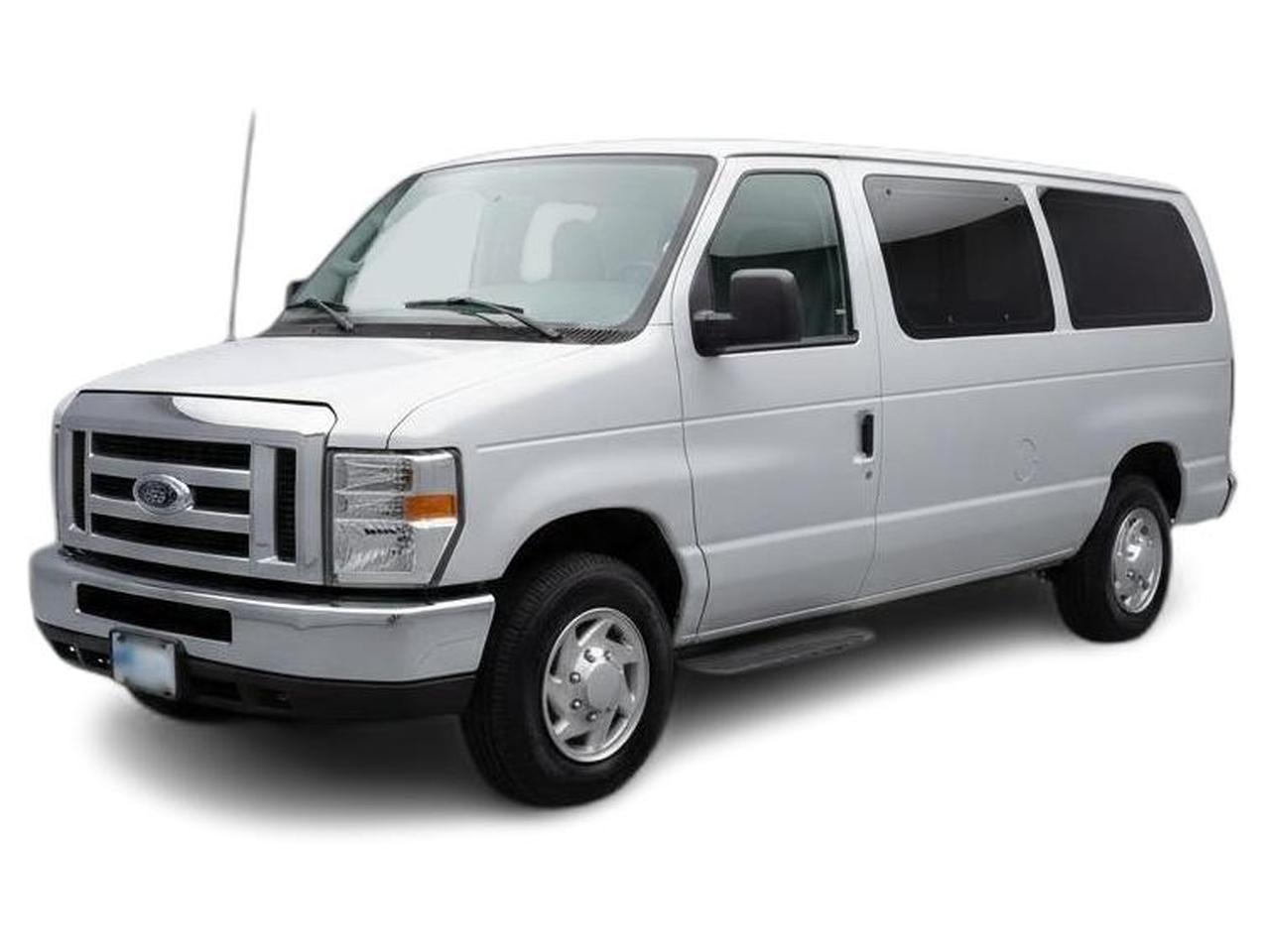
The Good
The 2013 E-150 offers exceptional hauling and towing prowess, embodying rugged reliability. Its spacious interior provides practical utility for cargo or passengers, while its commanding presence appeals to a sense of strength. It represents solid value for its capability and durability.
The Bad
Owners should be aware of potential issues like transmission problems, particularly with higher mileage. Fuel economy is also a notable drawback, and the interior, while functional, can feel dated compared to more modern competitors. Ride comfort can be firm, especially when unladen.
2013 Ford E-150: Quick Overview
- Engine Options: The 2013 Ford E-150 was offered with two primary engine choices:
- 4.6L V8: This was the standard engine.
- 5.4L V8: An optional, more powerful V8.
- Horsepower:
- 4.6L V8: Approximately 225 horsepower.
- 5.4L V8: Approximately 300 horsepower.
- Fuel Economy: As a large, heavy-duty vehicle, fuel economy was not a strong suit. Expect figures in the range of 10-14 MPG combined, varying significantly based on engine, load, and driving conditions.
- 4.6L V8: Around 12 MPG city / 15 MPG highway.
- 5.4L V8: Around 11 MPG city / 14 MPG highway.
- 0-60 Times: Due to its size and intended purpose, precise 0-60 times were not typically emphasized by manufacturers. Estimates place it in the 9-11 second range for heavier configurations, with the more powerful engine offering slightly quicker acceleration.
- Towing Capacity: Towing capacity varied considerably based on configuration, axle ratio, and installed towing packages. Properly equipped E-150s could tow substantial loads, often in the range of 7,000 to 10,000 lbs or more.
- Trim-Level Features:
- XL (Base): Typically featured vinyl seating, black bumpers, manual windows and locks, and basic instrumentation. It was primarily focused on utility and was often the choice for commercial applications.
- XLT (Mid-Level): Added a bit more comfort and convenience, often including cloth upholstery, power windows and locks, cruise control, a better sound system, and sometimes carpeted flooring.
- Optional Features: Depending on the trim and configuration, optional features could include upgraded audio systems, rear climate control, running boards, enhanced towing packages, and limited-slip differentials. Passenger versions would include seating for up to 8 or more occupants.
2013 Ford E-150 Specifications
Vehicle Information
| Year | 2013 |
| Make | Ford |
| Model | E-150 |
| Trim | - |
| Style | - |
| Type | Van |
| Category | Cargo Van |
Manufacturing Details
| Made In | United States |
| Manufacturing City | DEARBORN |
Dimensions
| Doors | 3-Door |
| Curb Weight | 5350 pounds |
| Gross Vehicle Weight Rating | 8600 pounds |
| Overall Height | 82.60 inches |
| Overall Length | 236.40 inches |
| Overall Width | 79.40 inches |
| Wheelbase Length | 138.00 inches |
| Standard Seating | 2 |
Engine & Performance
| Engine | 4.6L V8 |
| Engine Size | 4.6L |
| Engine Cylinders | 8 |
| Transmission | 4-Speed Automatic |
| Transmission Type | Automatic |
| Transmission Speeds | 4-Speed |
| Drivetrain | Rear-Wheel Drive |
Additional Features
| Anti-Brake System | 4-Wheel ABS |
| Steering Type | Recirculating |
Pricing
| Manufacturer Suggested Retail Price (MSRP) | $28,540 |
| Invoice Price | $26,328 |
| Delivery Charges | $995 |
Vehicle History Report
Specifications
History
Events
History Check
Check
Check
Check
Check
Listings
Recalls
Check
Analysis
What Problems Does the 2013 Ford E-150 Have?
Another area of concern is related to the powertrain cooling system. Issues such as coolant leaks, radiator problems, and thermostat failures have been noted. These can lead to overheating, which, if not addressed promptly, can cause severe damage to the engine.
The braking system also sees occasional complaints, with reports of premature wear on brake pads and rotors, or issues with brake fluid leaks. Some owners have also experienced problems with the exhaust system, such as catalytic converter failure or exhaust leaks, which can affect performance and emissions.
Electrical gremlins are not uncommon in older vehicles, and the E-150 is no exception. This can range from issues with power windows and locks to problems with the instrument cluster or sensors. While Ford does issue recalls periodically for various safety concerns, for the 2013 E-150, it's prudent to check for any open recalls that may not have been addressed by the previous owner. Common recalls for this era of E-Series often involved potential issues with the airbag system or certain electrical components. Long-term reliability can be excellent if well-maintained, but these potential weak points, particularly the transmission and cooling system, require vigilant attention and proactive maintenance.
How long will the 2013 Ford E-150 last?
What Technology & Safety Features are Included?
Driver-assistance features were very limited in 2013. The primary safety aids were basic ABS (Anti-lock Braking System) for the wheels, which was standard across all trims, and a brake assist system. Features like rearview cameras, parking sensors, or advanced driver aids such as blind-spot monitoring or adaptive cruise control were not available on the 2013 E-150.
Safety was primarily addressed through the vehicle's sturdy construction and standard airbags, including front-seat airbags for the driver and front passenger. Some models might have had optional side-curtain airbags for passenger variants.
Crash-test ratings for commercial vehicles like the E-150 are often not directly comparable to passenger cars and may not be as extensively tested or rated by organizations like the NHTSA or IIHS. However, its body-on-frame construction provides a robust structure. The focus was on structural integrity for load-bearing and occupant protection in common accident scenarios. The lack of advanced driver-assistance technologies means the driver bears the full responsibility for situational awareness and accident avoidance. The technological offerings are a reflection of its utilitarian purpose, prioritizing function over modern connectivity and advanced safety systems.
What Colors Options are Available?
2013 Ford E-150 Prices and Market Value
2013 Ford E-150 Cost of Ownership
2013 Ford E-150 Fuel Efficiency
2013 Ford E-150 Safety Rating
IIHS
2013 Ford E-150 Recalls & Defects
Equipment Adaptive/Mobility
Equipment Adaptive/Mobility
Equipment Adaptive/Mobility
Fuel System, Other:storage
Equipment Adaptive/Mobility
Equipment Adaptive/Mobility
2013 Ford E-150 Warranty
Basic
Powertrain
Rust
2013 Ford E-150 Insurance
reasonable repair costs.
How Does the 2013 Ford E-150 Compare to Other Van?
When it comes to features and interior amenities, the E-150 was generally more utilitarian. Rivals like the Sprinter offered a more modern, car-like interior and superior fuel efficiency due to its diesel engine options, though at a significantly higher price point. The Chevrolet Express and GMC Savana offered a similar, traditional van experience, often at a slightly lower price than the E-150, and shared many of the same mechanical components.
Reliability is a mixed bag. While the E-150 is built tough, common issues like transmission problems can arise, similar to many heavy-duty vehicles. The Sprinter, while more refined, had its own set of potential costly repairs, particularly concerning its diesel engines and complex electronics. The Express/Savana twins also had their share of reported issues, often mirroring those found in other GM trucks of the era.
Price-wise, the 2013 E-150 offered a good balance between capability and affordability when new. Used, it generally sits in a similar price bracket as the Express/Savana, while the Sprinter commands a premium.
**Alternatives:**
- Chevrolet Express/GMC Savana (2013-2014): Very similar in concept and capability to the E-150. If found in good condition and at a competitive price, they are a direct competitor.
- Mercedes-Benz Sprinter (2013-2014): If fuel efficiency, a more refined interior, and a higher payload/towing capacity are priorities, and budget allows, the Sprinter is a superior, albeit more expensive, option.
- Ford Transit (introduced for 2015): For those looking for a newer vehicle, the Ford Transit replaced the E-150 and offers significantly improved fuel economy, more modern features, and a more car-like driving experience.
Final Verdict: Is the 2013 Ford E-150 a Good Van?
It is worth buying, particularly on the used market, provided it has been well-maintained and has a clean history. Buyers should pay close attention to potential transmission issues and thoroughly inspect the vehicle. Opting for a van with the larger 5.4L V8 engine might be preferable for those who frequently tow or carry heavy loads. Cargo van versions are generally more practical for commercial use, while passenger versions can still serve large families. Given its age, buying used is the only option, and thorough pre-purchase inspections are highly recommended.

Jovan
Jovan specializes in interpreting vehicle records and making sense of VIN data. With over 10 years of experience in the automotive data industry, his work ensures that every report is clear, accurate, and useful for car buyers.