
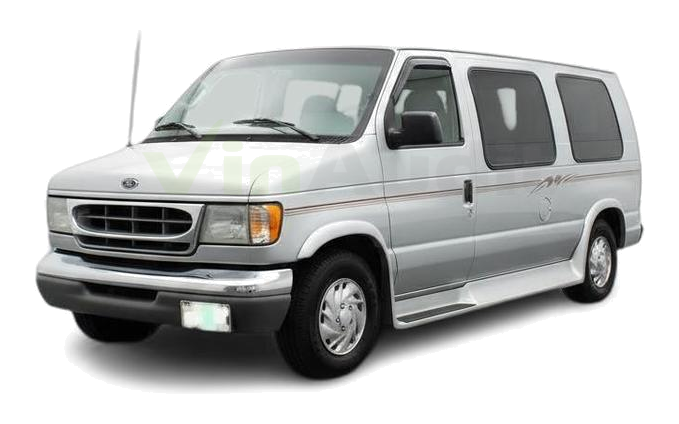
The Good
The 2000 Ford E-150 boasts strong V8 performance for towing and hauling, legendary Ford reliability, and a surprisingly comfortable ride for its class. Its practical, spacious interior appeals to hardworking individuals, while its van body style offers emotional appeal for adventure seekers and custom builders.
The Bad
When considering a 2000 Ford E-150, watch out for potential rust issues, especially around wheel wells and body panels. Transmission problems can arise with higher mileage. Older models may also suffer from aging interior components and outdated technology, impacting overall driver experience and comfort.
2000 Ford E-150: Quick Overview
- Engine Options: The 2000 Ford E-150 typically offered a choice of two gasoline V8 engines: a 4.2L V6 and a 4.6L Triton V8, with a larger 5.4L Triton V8 also being available, particularly in higher payload or towing configurations.
- Horsepower: Horsepower figures varied by engine. The 4.2L V6 generally produced around 200 horsepower. The 4.6L V8 offered approximately 215-220 horsepower, while the 5.4L V8 pushed out around 235 horsepower.
- Fuel Economy: Fuel economy for the 2000 Ford E-150 was not a strong suit, typical for large vans of its era. Expect combined city/highway MPG to be in the range of 12-15 MPG, heavily influenced by engine choice, load, and driving conditions.
- 0-60 Times: Official 0-60 mph times are rarely published for commercial vans, but with the V8 engines, acceleration would likely be in the 9-11 second range when unloaded, increasing significantly with added weight.
- Towing Capacity: The E-150 was designed with towing in mind. Depending on the configuration, axle ratio, and specific equipment, towing capacities could range from around 7,000 lbs to over 10,000 lbs, making it suitable for trailers and recreational vehicles.
- Trim-Level Features:
- Base Model: Typically included basic necessities like vinyl seating, manual windows and locks, and a simple AM/FM radio.
- XL Trim: Often added air conditioning, a more robust interior trim, and potentially power windows and door locks as optional upgrades.
- XLT Trim: This higher trim level usually featured upgraded cloth seating, cruise control, a better audio system, and often more convenience features. Passenger versions offered more creature comforts for occupants.
2000 Ford E-150 Specifications
Vehicle Information
| Year | 2000 |
| Make | Ford |
| Model | E-150 |
| Trim | - |
| Style | - |
| Type | Van |
| Category | Cargo Van |
Manufacturing Details
| Made In | United States |
| Manufacturing City | WAYNE |
Dimensions
| Doors | 3-Door |
| Curb Weight | 4645 pounds |
| Gross Vehicle Weight Rating | 6700 pounds |
| Overall Height | 80.70 inches |
| Overall Length | 211.90 inches |
| Overall Width | 79.30 inches |
| Wheelbase Length | 138.00 inches |
| Standard Seating | 2 |
Engine & Performance
| Engine | 4.6L V8 |
| Engine Size | 4.6L |
| Engine Cylinders | 8 |
| Transmission | 4-Speed Automatic |
| Transmission Type | Automatic |
| Transmission Speeds | 4-Speed |
| Drivetrain | Rear-Wheel Drive |
Additional Features
| Anti-Brake System | 2-Wheel ABS |
| Steering Type | Recirculating |
Pricing
| Manufacturer Suggested Retail Price (MSRP) | $20,380 |
| Invoice Price | $17,798 |
| Delivery Charges | - |
Vehicle History Report
Specifications
History
Events
History Check
Check
Check
Check
Check
Listings
Recalls
Check
Analysis
What Problems Does the 2000 Ford E-150 Have?
Rust is a significant long-term concern, especially for E-150s used in areas with harsh winters or exposed to road salt. Rust can appear on the frame, body panels (particularly around the wheel wells and rocker panels), and exhaust system. If not addressed promptly, it can compromise structural integrity.
Electrical problems can also surface over time. This might include issues with the alternator, starter, or power window/lock mechanisms. Aged wiring harnesses and connectors can become brittle or corroded, leading to intermittent or complete failures of various systems.
Ford issued several recalls for E-Series vans around this model year, though specific recalls for the 2000 model should be verified through the NHTSA database. Common recall areas for this generation could involve airbags, brake systems, or steering components.
While the V8 engines are generally robust, long-term reliability can be affected by the severity of use. Spark plug issues, particularly with the Triton engines (e.g., stripped spark plug threads), have been noted. Regular maintenance, including fluid changes and timely repairs, is crucial for maximizing the longevity of any 2000 E-150.
How long will the 2000 Ford E-150 last?
What Technology & Safety Features are Included?
Built-in Tech and Entertainment: Standard entertainment typically consisted of an AM/FM radio, often with an optional cassette player or a single-CD player. Higher trims like the XLT might have offered upgraded speaker systems. Climate control was generally manual, with basic air conditioning and heating systems. Power windows and door locks were often optional, especially on base and XL trims, becoming more common on the XLT. Cruise control was usually an option on most trims.
Driver-Assistance Features: Advanced driver-assistance systems were virtually non-existent in the 2000 E-150. Features like rearview cameras, lane departure warnings, or adaptive cruise control were not part of the available technology. Parking sensors were also not offered. The focus was on the driver's direct input and observation.
Safety Features: Standard safety equipment included front airbags for the driver and passenger. Anti-lock Braking System (ABS) was typically standard on the front wheels and often available on the rear, or standard on all four wheels depending on the specific configuration and market. Seatbelt pretensioners were also standard. Due to its body-on-frame construction and substantial mass, the E-150 offered a considerable degree of passive safety in frontal and side impacts for its time.
Crash-Test Ratings: Specific crash-test ratings for the 2000 Ford E-150 from agencies like the NHTSA or IIHS are difficult to find for this specific model year and vehicle type. However, for vans of this era, frontal crash protection was generally rated as acceptable to good, while side-impact protection varied. These vans were designed with safety in mind, but without modern crumple zones and advanced airbag systems, they would not perform as well in crash tests by today's standards.
What Colors Options are Available?
2000 Ford E-150 Prices and Market Value
Currently, the used market prices for a 2000 Ford E-150 are highly dependent on condition, mileage, and maintenance history. You can expect to find them ranging from as low as $2,000 for high-mileage, work-worn examples to $8,000 or more for exceptionally well-maintained or customized models.
Depreciation for the E-150 is significant in the first few years, typical for commercial vehicles. However, their robust nature means they hold value relatively well into older age, especially for utilitarian versions that are still functional. Factors affecting resale value include the presence of rust, transmission health, overall body condition, and whether it's a desirable configuration (e.g., cargo van for conversion, or passenger van with few seats). Well-maintained examples with lower mileage tend to command higher prices.
2000 Ford E-150 Cost of Ownership
2000 Ford E-150 Fuel Efficiency
2000 Ford E-150 Safety Rating
NHTSA
IIHS
2000 Ford E-150 Recalls & Defects
Seats
Fuel System, Gasoline:storage:tank Assembly
Equipment Adaptive/Mobility
Vehicle Speed Control
Vehicle Speed Control:cruise Control
Vehicle Speed Control
2000 Ford E-150 Warranty
Basic
Powertrain
Rust
2000 Ford E-150 Insurance
reasonable repair costs.
How Does the 2000 Ford E-150 Compare to Other Van?
Performance: In terms of performance, the E-150's available V8 engines generally offered comparable or slightly better power and torque than their direct competitors, particularly the 5.4L Triton. This made them adept at hauling and towing. The Chevrolet/GMC twins also offered robust V8 options, while the Dodge Ram Van often lagged slightly in raw power but offered a simpler, more utilitarian package.
Features: Feature-wise, the E-150 was fairly competitive for its time. While basic in modern terms, it offered available options like power amenities and cruise control, similar to the Express/Savana. The Dodge Ram Van was generally more spartan in its offerings. None of these vehicles were known for cutting-edge tech; comfort and utility were prioritized.
Reliability: Ford's E-Series vans have a reputation for ruggedness and longevity, and the 2000 model is no exception, often outlasting competitors in terms of overall mileage. However, specific issues like transmission problems can arise in any of these vans with age and mileage. The Chevrolet/GMC twins are also known for durability, but can sometimes face issues with interior components. The Ram Van, while mechanically simple, might have less refined interiors and fewer creature comforts.
Price: The E-150 was typically priced competitively with the Express/Savana, often offering a slightly better value proposition due to its strong reputation. The Ram Van could sometimes be found at a slightly lower price point.
Alternatives: Similar alternatives include the Chevrolet Express and GMC Savana, which offer comparable capabilities and are widely available. For those prioritizing extreme utility and simplicity, a used Dodge Ram Van might be an option, though potentially less refined. For a more modern, potentially more efficient, and feature-rich experience, you might look at newer generations of these vans or consider lighter-duty options depending on your needs, though none will match the sheer utilitarian charm and ruggedness of a well-maintained 2000 E-150.
Final Verdict: Is the 2000 Ford E-150 a Good Van?
It is absolutely worth buying as a used vehicle if you prioritize value and longevity, especially if you can find one with a documented maintenance history and minimal rust. Buying one requires a thorough inspection, particularly of the frame, transmission, and engine. Avoid high-mileage examples with significant rust or known transmission issues unless you are prepared for substantial repairs. Specific trims like the XLT offer more comfort for passenger use, while cargo variants are perfect for tradespeople or conversion projects. For its intended purpose, a well-maintained 2000 E-150 remains a solid, cost-effective investment.

Cathleen V
Cathleen is an exceptional freelance writer covering hot topics in the automotive world from a gearhead's perspective. Her articles delve into various aspects of automotive technology and history, offering readers detailed insights into engine performance, reliability, and maintenance. Through her engaging and informative writing, Cathleen provides valuable information to automotive enthusiasts and consumers alike, helping them make informed decisions about vehicle maintenance and purchases.