
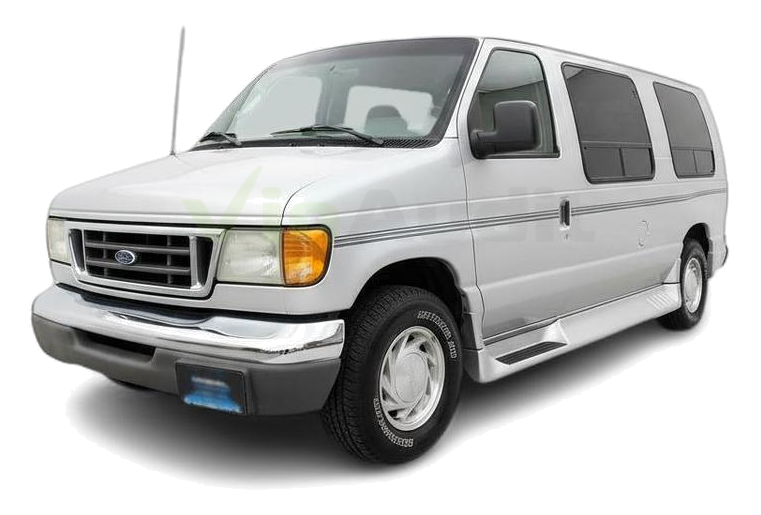
The 2003 Ford E-150 is a versatile full-size van, part of Ford's long-running E-Series. Produced across multiple generations, this model year offered a rugged and practical platform. Available in cargo and passenger configurations, key trims included the base XL and the more appointed XLT. New pricing ranged from approximately $23,000 to $30,000. Its popularity stems from its legendary durability, spacious interior, and adaptability for various needs, from commercial work to family hauling.
The Good
The 2003 E-150 excels in robust performance, legendary reliability, and ample interior space, appealing to practicality. Emotionally, its go-anywhere capability and customizable nature offer a sense of freedom and dependable utility for families and businesses alike.
The Bad
Owners should be aware of potential issues like transmission problems, especially in higher mileage vehicles. Rust, particularly around the wheel wells and underbody, can be a significant concern in certain climates. Fuel economy is also a notable drawback.
2003 Ford E-150: Quick Overview
- Engine Options: The 2003 Ford E-150 came with a choice of three V8 engines. The standard engine was a 4.2L V6, but most commonly, buyers opted for one of the V8s. These included a 4.6L Triton V8 and a larger 5.4L Triton V8.
- Horsepower: Horsepower figures varied depending on the engine. The 4.2L V6 produced around 202 horsepower, the 4.6L V8 offered approximately 215 horsepower, and the more powerful 5.4L V8 delivered around 235 horsepower.
- Fuel Economy: Fuel economy is not a strong suit for the E-150. Expect MPG figures in the range of 10-13 MPG in city driving and 14-17 MPG on the highway, depending on the engine and drivetrain configuration (2WD or 4WD).
- 0-60 Times: Due to its size and weight, the 0-60 MPH times are not particularly quick. With the 5.4L V8 engine, it could achieve 0-60 MPH in roughly 8-9 seconds. Smaller engines would be slower.
- Towing Capacity: The E-150 was designed with towing in mind. Depending on the configuration (engine, axle ratio, towing package), the towing capacity could range from approximately 5,000 lbs to well over 7,000 lbs, making it suitable for trailers, boats, and campers.
- Trim-Level Features:
XL Trim: Typically included basic amenities such as vinyl seating, manual windows and locks, a 2-speaker audio system, and minimal interior trim. Focused on utility and work. XLT Trim: Offered more comfort and convenience features, such as cloth seating, power windows and locks, cruise control, a better audio system (often with more speakers), and upgraded interior trim. Some models might also include features like a rear heater or air conditioning.
2003 Ford E-150 Specifications
Vehicle Information
| Year | 2003 |
| Make | Ford |
| Model | E-150 |
| Trim | - |
| Style | - |
| Type | Van |
| Category | Passenger Van |
Manufacturing Details
| Made In | United States |
| Manufacturing City | JEFFERSON COUNTY |
Dimensions
| Doors | 3-Door |
| Curb Weight | 4823 pounds |
| Gross Vehicle Weight Rating | 6700 pounds |
| Overall Height | 80.70 inches |
| Overall Length | 211.90 inches |
| Overall Width | 79.30 inches |
| Wheelbase Length | 138.00 inches |
| Standard Seating | 2 |
Engine & Performance
| Engine | 4.2L V6 |
| Engine Size | 4.2L |
| Engine Cylinders | 6 |
| Transmission | 4-Speed Automatic |
| Transmission Type | Automatic |
| Transmission Speeds | 4-Speed |
| Drivetrain | Rear-Wheel Drive |
Additional Features
| Anti-Brake System | 4-Wheel ABS |
| Steering Type | Recirculating |
Pricing
| Manufacturer Suggested Retail Price (MSRP) | $21,955 |
| Invoice Price | $19,297 |
| Delivery Charges | $735 |
Vehicle History Report
Vehicle
Specifications
Specifications
Ownership
History
History
All History
Events
Events
NMVTIS Title
History Check
History Check
Salvage/Rebuilt
Check
Check
Accident
Check
Check
Theft
Check
Check
Open Lien
Check
Check
Past Sale
Listings
Listings
Safety
Recalls
Recalls
Odometer
Check
Check
Market Price
Analysis
Analysis
What Problems Does the 2003 Ford E-150 Have?
The 2003 Ford E-150, like many vehicles of its era and type, has a known set of common issues that owners often report. One of the most frequently cited problems revolves around the transmission. Specifically, issues with the overdrive solenoid, torque converter shudder, and general transmission failure have been reported, especially as mileage increases. Regular fluid changes are crucial, but sometimes these transmissions require significant repairs or replacement.
Rust and corrosion are also significant long-term concerns, particularly in regions where salt is used on roads during winter. The body panels, especially around the rear wheel arches, rocker panels, and the undercarriage, can succumb to significant rust damage. This can affect structural integrity and lead to costly repairs if not addressed promptly.
Another area of concern is the cooling system. Leaks from the radiator, heater core, or hoses can lead to overheating, which can then cause further engine damage. Regular inspection and maintenance of the cooling system are advisable.
Electrical gremlins are not uncommon, with reports of issues with power windows, door locks, and sometimes the instrument cluster not functioning correctly. These can be intermittent and frustrating to diagnose.
Regarding recalls, specific to the 2003 model year, Ford issued recalls for various issues over the E-Series production. For instance, there have been recalls related to potential issues with the steering shaft, brake lines, or fuel pump assembly. It's essential for owners to check with Ford or NHTSA for any outstanding recalls applicable to their specific VIN.
In terms of long-term reliability, while the E-150 is generally considered a robust and durable vehicle, its older components and design mean that wear and tear are expected. The powertrains, especially the V8 engines, can last for hundreds of thousands of miles with proper maintenance. However, the supporting systems, like the transmission and various electrical components, are more prone to failure over time. Model year specific issues are less pronounced for the 2003 E-150 compared to some other vehicles, as it falls within a well-established generation, but the aforementioned general concerns apply.
Rust and corrosion are also significant long-term concerns, particularly in regions where salt is used on roads during winter. The body panels, especially around the rear wheel arches, rocker panels, and the undercarriage, can succumb to significant rust damage. This can affect structural integrity and lead to costly repairs if not addressed promptly.
Another area of concern is the cooling system. Leaks from the radiator, heater core, or hoses can lead to overheating, which can then cause further engine damage. Regular inspection and maintenance of the cooling system are advisable.
Electrical gremlins are not uncommon, with reports of issues with power windows, door locks, and sometimes the instrument cluster not functioning correctly. These can be intermittent and frustrating to diagnose.
Regarding recalls, specific to the 2003 model year, Ford issued recalls for various issues over the E-Series production. For instance, there have been recalls related to potential issues with the steering shaft, brake lines, or fuel pump assembly. It's essential for owners to check with Ford or NHTSA for any outstanding recalls applicable to their specific VIN.
In terms of long-term reliability, while the E-150 is generally considered a robust and durable vehicle, its older components and design mean that wear and tear are expected. The powertrains, especially the V8 engines, can last for hundreds of thousands of miles with proper maintenance. However, the supporting systems, like the transmission and various electrical components, are more prone to failure over time. Model year specific issues are less pronounced for the 2003 E-150 compared to some other vehicles, as it falls within a well-established generation, but the aforementioned general concerns apply.
How long will the 2003 Ford E-150 last?
The 2003 Ford E-150 is renowned for its potential for long-term service, with many owners reporting mileages exceeding 200,000 and even 300,000 miles. With diligent maintenance, including regular oil changes, transmission fluid services, and coolant flushes, these vans can serve reliably for 15-20 years or more. The core V8 engines are exceptionally durable and often outlast other components. However, weaknesses emerge over time. The transmission, while robust, can eventually require rebuilds. Rust accumulation, especially in rust-belt states, can significantly shorten its usable lifespan if not addressed. Electrical components and suspension parts also wear out with age and mileage, necessitating periodic repairs. Ultimately, its longevity is heavily dependent on the owner's commitment to upkeep and preventative maintenance.
What Technology & Safety Features are Included?
The 2003 Ford E-150 was designed with practicality and utility as its primary focus, so its technology, entertainment, and driver-assistance features are relatively basic by modern standards.
Built-in Tech & Entertainment: Standard features typically included an AM/FM radio and a cassette player. An optional CD player was available for those who wanted to upgrade their audio experience. Higher trims or optional packages might have offered a more advanced sound system with additional speakers. However, don't expect touchscreens, navigation systems, or smartphone integration; those were not common features in vans of this era.
Driver-Assistance Features: Driver-assistance technology was virtually non-existent in the 2003 E-150. Features like blind-spot monitoring, adaptive cruise control, lane departure warning, or automatic emergency braking were not offered. The focus was on the core driving mechanics. Some models might have had rear parking sensors as an optional add-on, but this was uncommon.
Safety Features: Standard safety equipment included front airbags for the driver and passenger. Anti-lock brakes (ABS) were also standard on all models, which is a crucial safety feature for a vehicle of this size and weight, helping to prevent wheel lock-up during hard braking. Seatbelts were, of course, standard. For passenger versions, especially those intended for carrying multiple people, features like child seat anchors (LATCH) would have been included.
Optional Features: Beyond the audio upgrades, optional features could include things like a rear heater/air conditioning unit for enhanced passenger comfort, captain's chairs in passenger variants, and sometimes upgraded interior trim. A trailer towing package was a popular option for those using the E-150 for work or recreation.
Crash-Test Ratings: Obtaining specific crash-test ratings for older commercial vehicles like the 2003 E-150 can be challenging as testing protocols and reporting have evolved significantly. However, in general, vans of this size and construction tend to perform moderately in frontal and side impact tests due to their substantial mass. The National Highway Traffic Safety Administration (NHTSA) and the Insurance Institute for Highway Safety (IIHS) tested vehicles of this era, but detailed results for every configuration of the E-150 might not be readily available or directly comparable to modern standards.
Built-in Tech & Entertainment: Standard features typically included an AM/FM radio and a cassette player. An optional CD player was available for those who wanted to upgrade their audio experience. Higher trims or optional packages might have offered a more advanced sound system with additional speakers. However, don't expect touchscreens, navigation systems, or smartphone integration; those were not common features in vans of this era.
Driver-Assistance Features: Driver-assistance technology was virtually non-existent in the 2003 E-150. Features like blind-spot monitoring, adaptive cruise control, lane departure warning, or automatic emergency braking were not offered. The focus was on the core driving mechanics. Some models might have had rear parking sensors as an optional add-on, but this was uncommon.
Safety Features: Standard safety equipment included front airbags for the driver and passenger. Anti-lock brakes (ABS) were also standard on all models, which is a crucial safety feature for a vehicle of this size and weight, helping to prevent wheel lock-up during hard braking. Seatbelts were, of course, standard. For passenger versions, especially those intended for carrying multiple people, features like child seat anchors (LATCH) would have been included.
Optional Features: Beyond the audio upgrades, optional features could include things like a rear heater/air conditioning unit for enhanced passenger comfort, captain's chairs in passenger variants, and sometimes upgraded interior trim. A trailer towing package was a popular option for those using the E-150 for work or recreation.
Crash-Test Ratings: Obtaining specific crash-test ratings for older commercial vehicles like the 2003 E-150 can be challenging as testing protocols and reporting have evolved significantly. However, in general, vans of this size and construction tend to perform moderately in frontal and side impact tests due to their substantial mass. The National Highway Traffic Safety Administration (NHTSA) and the Insurance Institute for Highway Safety (IIHS) tested vehicles of this era, but detailed results for every configuration of the E-150 might not be readily available or directly comparable to modern standards.
What Colors Options are Available?
2003 Ford E-150 Prices and Market Value
When new, the 2003 Ford E-150 had an MSRP typically ranging from $23,000 for a base XL cargo van to around $30,000 for a well-equipped XLT passenger van.
Currently, on the used market, prices for a 2003 Ford E-150 can vary significantly, often from $2,000 to $8,000 or more. This wide range is heavily influenced by mileage, overall condition, maintenance history, trim level, and regional demand.
Depreciation has been substantial, as is typical for vehicles of this age. Factors affecting resale value include its mechanical condition, the presence of significant rust (a major detractor), interior wear and tear, and whether it was a passenger or cargo configuration. Vans with lower mileage and a documented service history will command higher prices. Their utilitarian nature means they often hold value better than passenger cars when still functional for their intended purpose.
Currently, on the used market, prices for a 2003 Ford E-150 can vary significantly, often from $2,000 to $8,000 or more. This wide range is heavily influenced by mileage, overall condition, maintenance history, trim level, and regional demand.
Depreciation has been substantial, as is typical for vehicles of this age. Factors affecting resale value include its mechanical condition, the presence of significant rust (a major detractor), interior wear and tear, and whether it was a passenger or cargo configuration. Vans with lower mileage and a documented service history will command higher prices. Their utilitarian nature means they often hold value better than passenger cars when still functional for their intended purpose.
2003 Ford E-150 Cost of Ownership
Owning a 2003 Ford E-150 involves moderate to high ownership costs, making it less economical than smaller vehicles. Insurance premiums can be reasonable, especially for cargo vans, but will vary based on coverage and driver history. Fuel costs are significant due to its V8 engines and poor MPG. Routine maintenance, like oil changes and fluid checks, is standard. However, repair costs can become substantial over time, particularly for transmission issues or rust repair. While the initial purchase price might be low, ongoing expenses for fuel and potential major repairs mean it is not a cheap vehicle to own long-term, especially if not maintained meticulously.
2003 Ford E-150 Fuel Efficiency
Fuel Type
Gasoline
Fuel Capacity
35.00 gallons
City Mileage
13 miles/gallon
Highway Mileage
16 miles/gallon
2003 Ford E-150 Safety Rating
NHTSA
IIHS
2003 Ford E-150 Recalls & Defects
Electrical System:wiring
Recall date
2004-09-13
Recall no.
04v444000
Source
NHTSA
Summary
ON Certain Vans, A Diode IN THE Anti-Lock Braking System (Abs) Module MAY Experience AN Electrical Short.
Consequence
THE Electrical Short MAY Cause AN ABS Malfunction That Would Illuminate THE ABS Warning Light, or THE Module MAY Overheat Resulting IN A Burning Odor, Smoke, And/Or Fire. This Condition MAY Occur While THE Vehicle IS Being Driven or Unattended.
Remedy
Dealers Will Install A NEW Fuse IN THE ABS Circuit and Install A Heat Shield Over THE ABS Module. THE Recall Began ON October 15, 2004. Owners Should Contact Ford AT 1-800-392-3673. Also Ford IS Extending THE Limited Warranty (For A ONE Time Replacement) OF THE ABS Module FOR A Total OF 10 Years or 150,000 Miles From THE Warranty Start Date, Whichever Occurs First. IF Your Vehicle HAS Already Accumulated More Than 150,000 Miles, This Coverage Will Last Until September 30, 2005.
Notes
Ford Recall NO. 04s22/Customer Satisfaction Program 04n03.customers CAN Also Contact THE National Highway Traffic Safety Administration's Auto Safety Hotline AT 1-888-Dash-2-dot (1-888-327-4236).
Engine and Engine Cooling
Recall date
2004-09-13
Recall no.
04v445000
Source
NHTSA
Summary
ON Certain Vans, THE AIR Filter Element Material Process Resulted IN AN AIR Filter Paper Element That CAN Smolder or Burn. This Change IN Filter Paper Composition Combined With THE Configuration OF THE AIR Induction System, MAY Allow HOT Carbon Particles TO Contact THE AIR Filter Element During Certain Driving Conditions That Create HOT Particles.
Consequence
These HOT Particles MAY Ignite THE AIR Filter Element With THE Potential FOR AIR Induction System Damage or Underhood Fire.
Remedy
Dealers Will Inspect and Replace THE AIR Filter Element. THE Recall Began September 27, 2004. Owners Should Contact Ford AT 1-800-392-3673. Also Ford IS Extending THE Limited Warranty (For A ONE Time Replacement) OF THE ABS Module FOR A Total OF 10 Years or 150,000 Miles From THE Warranty Start Date, Whichever Occurs First. IF Your Vehicle HAS Already Accumulated More Than 150,000 Miles, This Coverage Will Last Until September 30, 2005.
Notes
Ford Recall NO. 04s23/Customer Satisfaction Program 04n03. Customers CAN Also Contact THE National Highway Traffic Safety Administration's Auto Safety Hotline AT 1-888-Dash-2-dot (1-888-327-4236).
Fuel System, Gasoline
Recall date
2006-06-13
Recall no.
06e056000
Source
NHTSA
Summary
Certain Aftermarket Fuel Filters Sold Under THE Purolator Brand Name, P/N F65277, Shipped From January 16 Through June 2, 2006, FOR USE ON THE Above Listed Passenger Vehicles. DUE TO Incorrect Design, THE Quick Connectors MAY NOT Fully Seat With THE Tube Interface, Even Though THE Person Making THE Connection MAY Believe That THE Quick Connector IS Fully Attached.
Consequence
Failure OF This Connection Could Lead TO Fuel Spillage And, IN THE Presence OF AN Ignition Source, A Fire Could Occur.
Remedy
UFI Will Notify Owners and Replace THE Filters Free OF Charge. THE Recall Began ON August 4, 2006. Owners MAY Contact UFI Filters USA AT 800-230-5876.
Notes
This Recall Only Pertains TO UFI Filters USA (Purolator) Aftermarket Fuel Filters and HAS NO Relation TO ANY Original Equipment Installed ON THE Listed Passenger Vehicles.customers MAY Contact THE National Highway Traffic Safety Administration's Vehicle Safety Hotline AT 1-888-327-4236 (Tty: 1-800-424-9153); or GO TO Http://Www.safercar.gov.
Vehicle Speed Control
Recall date
2007-08-03
Recall no.
07v336000
Source
NHTSA
Summary
ON Certain Pickup Trucks, Passenger Vehicles, Sport Utility Vehicles, and Motor Homes Chassis, THE Speed Control Deactivation Switch May, Under Certain Conditions, Leak Internally and Then Overheat, Smoke, or Burn.
Consequence
This Could Result IN AN Underhood Fire.
Remedy
Dealers Will Install A Fused Wiring Harness. Owners OF THE Passenger Cars Included IN This Campaign Will BE Instructed TO Return Their Vehicles TO Their Dealers TO Have THE Speed Control Deactivation Switch Disconnected AS AN Interim Repair. AS Soon AS Repair Parts ARE Available (Expected October 2007), Owners Will BE Instructed TO Return TO THE Dealers FOR Installation OF A Fused Wiring Harness. THE Recall Began ON August 13, 2007, and Mailing Completed BY September 19, 2007. Owners MAY Contact Ford AT 1-888-222-2751.
Notes
Ford Recall NO. 05s28.customers MAY Also Contact THE National Highway Traffic Safety Administration;s Vehicle Safety Hotline AT 1-888-327-4236 (Tty 1-800-424-9153), or GO TO Http://Www.safercar.gov.
Vehicle Speed Control:cruise Control
Recall date
2008-02-04
Recall no.
08v051000
Source
NHTSA
Summary
Ford IS Recalling 225,000 MY 1992-2003 Econoline, MY 1993-1995 Taurus Sho, MY 1992-1998 Crown Victoria, MY 1993 Bronco, F-series, MY 1995-1997 F-series Super Duty Stripped Chassis, MY 1992-1998 Mercury Grand Marquis, and MY 1992-1995 Lincoln Town Car Vehicles. THE Affected Vehicles Were Previously Repaired Using A Wiring Harness That IS NOT Compatible With THE Vehicle Circuit Polarity.
Consequence
AS A Result, THE Fuse IS Located IN THE Output Circuit Rather Than IN THE Intended Input Power Feed Circuit, and MAY NOT Offer THE Intended Protection IN THE Event OF AN Electrical Short TO Ground.
Remedy
Dealers Will Install A NEW Wiring Harness, or Replace THE Mating Electrical Component. THE Recall Began ON February 18, 2008. Owners MAY Contact Ford AT 1-800-392-3673.
Notes
Ford Recall NO. 08s01.customers MAY Also Contact THE National Highway Traffic Safety Administration's Vehicle Safety Hotline AT 1-888-327-4236 (Tty 1-800-424-9153), or GO TO Http://Www.safercar.gov.
Vehicle Speed Control
Recall date
2009-10-13
Recall no.
09v399000
Source
NHTSA
Summary
Ford IS Recalling Model Years 1995-2003 Windstar, 2000-2003 Excursion Diesel, 1993-1997 and 1999-2003 F-250 SD Through F-550 SD Diesel, 1992-2003 E-150 Through E-550, 1995-2002 Explorer, 1997 and 2002 Mercury Mountaineer, 1995-1997 and 2001-2003 Ranger, and 1994 F53 Vehicles Equipped With THE Texas Instruments Speed Control Deactivation Switch (Scds). THE Scds MAY Leak Internally and Then Overheat, Smoke, or Burn.
Consequence
A Vehicle Fire Could Occur With or Without THE Engine Running.
Remedy
Ford Will Notify Owners That Dealers Will Install A Fused Wiring Harness IN Line With THE Scds. ON 1999-2003 Windstar Vehicles With A Leaking Scds, Dealers Will Also Inspect THE ABS Control Module Connector and Repair AS Necessary. Repairs Will BE Completed Free OF Charge. THE Safety Recall Began ON October 27, 2009. Owners MAY Contact Ford AT 1-888-222-2751.
Notes
Ford's Recall Campaign Number IS 09s09.owners MAY Also Contact THE National Highway Traffic Safety Administration's Vehicle Safety Hotline AT 1-888-327-4236 (Tty 1-800-424-9153), or GO TO <A Href=http://Www.safercar.gov>http://www.safercar.gov</a> .
2003 Ford E-150 Warranty
Basic
Original warranty
36 months / 36,000 miles
Estimated remaining
Expired
Powertrain
Original warranty
36 months / 36,000 miles
Estimated remaining
Expired
Rust
Original warranty
60 months / unlimited miles
Estimated remaining
Expired
2003 Ford E-150 Insurance
Insurance for a 2003 Ford E-150 is moderately priced, reflecting its status as a Van with strong safety ratings and
reasonable repair costs.
How Does the 2003 Ford E-150 Compare to Other Van?
The 2003 Ford E-150 competed in the full-size van segment primarily against the Chevrolet Express/GMC Savana twins and the Dodge Ram Van (though the Ram Van was nearing the end of its run by 2003).
Performance: The E-150, especially with its optional 5.4L V8, offered strong towing and hauling capabilities, generally on par with or slightly exceeding the base engines of its rivals. The Chevrolet/GMC twins often had similar engine options and performance characteristics. The Dodge Ram Van was also known for its robust powertrain options.
Features: In terms of features, the 2003 E-150 was fairly comparable to its competitors. All offered basic amenities, with higher trims adding more creature comforts. Ford's interior design was functional but not particularly luxurious. The Chevrolet/GMC vans offered a similar utilitarian feel. By 2003, the Dodge Ram Van was an older design and lagged behind in modern features and safety.
Reliability: The Ford E-150 has a strong reputation for overall durability and longevity, particularly its powertrains. However, it is prone to transmission issues and rust over time. The Chevrolet Express and GMC Savana also boast good reliability, though they share some common powertrain issues with other GM vehicles of that era. The Dodge Ram Van was generally considered reliable but less refined.
Price: The 2003 E-150 was competitively priced when new, similar to its direct competitors. On the used market, its price point is generally in line with comparable Chevrolet/GMC vans, often offering slightly better value due to Ford's perceived ruggedness. The Dodge Ram Van, being older, might be found at a lower price but comes with the baggage of its age.
Recommendations/Alternatives:
- Similar: The Chevrolet Express/GMC Savana (same platform) are very similar alternatives offering comparable performance, features, and reliability. They are often found in similar price ranges on the used market.
- Alternative: If seeking a more modern van experience and willing to spend more, consider a newer model year of the E-150 or its competitors, or look into the Nissan NV series (though newer and pricier) or a used Mercedes-Benz Sprinter (more premium but also higher maintenance costs). For purely commercial work, specialized cargo vans from Ram (ProMaster) or Ford (Transit) offer more modern features but are significantly newer and more expensive.
Performance: The E-150, especially with its optional 5.4L V8, offered strong towing and hauling capabilities, generally on par with or slightly exceeding the base engines of its rivals. The Chevrolet/GMC twins often had similar engine options and performance characteristics. The Dodge Ram Van was also known for its robust powertrain options.
Features: In terms of features, the 2003 E-150 was fairly comparable to its competitors. All offered basic amenities, with higher trims adding more creature comforts. Ford's interior design was functional but not particularly luxurious. The Chevrolet/GMC vans offered a similar utilitarian feel. By 2003, the Dodge Ram Van was an older design and lagged behind in modern features and safety.
Reliability: The Ford E-150 has a strong reputation for overall durability and longevity, particularly its powertrains. However, it is prone to transmission issues and rust over time. The Chevrolet Express and GMC Savana also boast good reliability, though they share some common powertrain issues with other GM vehicles of that era. The Dodge Ram Van was generally considered reliable but less refined.
Price: The 2003 E-150 was competitively priced when new, similar to its direct competitors. On the used market, its price point is generally in line with comparable Chevrolet/GMC vans, often offering slightly better value due to Ford's perceived ruggedness. The Dodge Ram Van, being older, might be found at a lower price but comes with the baggage of its age.
Recommendations/Alternatives:
- Similar: The Chevrolet Express/GMC Savana (same platform) are very similar alternatives offering comparable performance, features, and reliability. They are often found in similar price ranges on the used market.
- Alternative: If seeking a more modern van experience and willing to spend more, consider a newer model year of the E-150 or its competitors, or look into the Nissan NV series (though newer and pricier) or a used Mercedes-Benz Sprinter (more premium but also higher maintenance costs). For purely commercial work, specialized cargo vans from Ram (ProMaster) or Ford (Transit) offer more modern features but are significantly newer and more expensive.
Final Verdict: Is the 2003 Ford E-150 a Good Van?
The 2003 Ford E-150 is ideal for budget-conscious individuals or businesses needing a robust, no-frills vehicle for hauling cargo, transporting people, or serving as a base for conversion projects. It's a workhorse built for utility, not luxury.
It is worth buying, but primarily on the used market. Buying new is no longer an option, and a pristine 2003 model would be rare and likely overpriced. Look for well-maintained examples with lower mileage and evidence of regular servicing. The XLT trim offers more comfort for passenger versions. Be prepared for potential repair costs, especially concerning the transmission and rust. If you prioritize sheer capability, durability, and a lower initial outlay over modern features and fuel efficiency, the 2003 E-150 remains a viable choice.
