
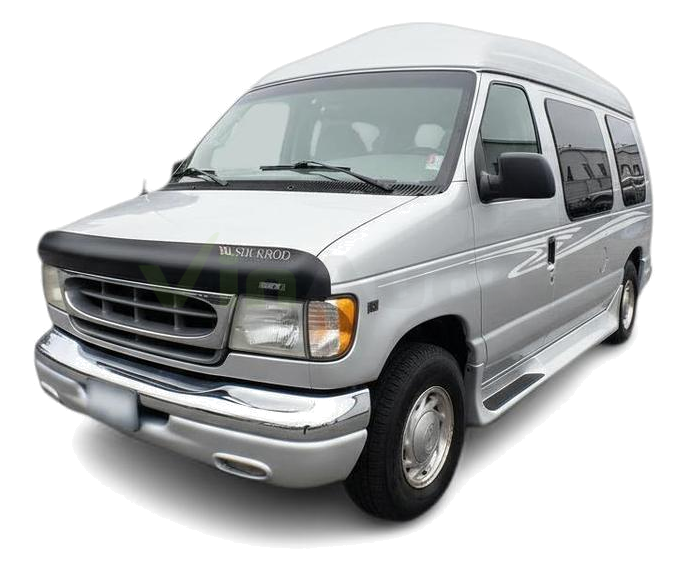
The Good
The 2001 Ford E-150 offers robust performance for hauling and towing, renowned reliability built on a solid chassis, and a surprisingly comfortable ride for its class. Its practical, no-nonsense design prioritizes utility, while its proven durability provides peace of mind and strong value for budget-conscious buyers seeking a dependable workhorse or versatile family vehicle.
The Bad
Potential buyers of the 2001 Ford E-150 should watch out for common issues like interior wear and tear, potential rust on the body, particularly around wheel wells and door bottoms, and occasional electrical glitches. Transmission issues can arise with higher mileage, and brake wear is also a frequent concern due to the vehicle's weight.
2001 Ford E-150: Quick Overview
- Engine Options: The 2001 Ford E-150 offered a range of V8 engine options to cater to different needs.
- 4.2L V6 engine (less common in E-150, more in E-100 if it existed in 2001, but V8s were dominant for E-150).
- 4.6L Triton V8 engine
- 5.4L Triton V8 engine
- Horsepower:
- The 4.6L V8 typically produced around 215 horsepower.
- The 5.4L V8 generally offered around 235 horsepower.
- Fuel Economy: Fuel economy for the 2001 Ford E-150 was not a strong suit, as is typical for large vans. Expect estimates in the range of 11-14 MPG city and 14-17 MPG highway, depending heavily on the engine, drivetrain (RWD/4WD), and load.
- 0-60 Times: 0-60 MPH times were generally in the 9-11 second range for V8 models, again varying with engine and configuration.
- Towing Capacity: The E-150 was designed for towing. Depending on configuration, wheelbase, axle ratio, and towing package, its towing capacity could range from approximately 7,000 lbs up to 10,000 lbs.
- Trim-Level Features: Trims varied from basic cargo configurations to more passenger-oriented models.
- Base/XL: Focused on utility with standard vinyl seating, minimal amenities, manual windows, and locks.
- XLT: Offered more comfort and convenience features like upgraded cloth seating, power windows and locks, air conditioning, and cruise control. Passenger versions often included more seating rows, carpeting, and interior lighting.
- Optional Features: Could include things like a rear-view camera (rare for the time), upgraded sound systems, limited-slip differential, and various fleet-focused options.
2001 Ford E-150 Specifications
Vehicle Information
| Year | 2001 |
| Make | Ford |
| Model | E-150 |
| Trim | - |
| Style | - |
| Type | Van |
| Category | Cargo Van |
Manufacturing Details
| Made In | United States |
| Manufacturing City | LORAIN |
Dimensions
| Doors | 3-Door |
| Curb Weight | 4778 pounds |
| Gross Vehicle Weight Rating | 6700 pounds |
| Overall Height | 80.70 inches |
| Overall Length | 211.90 inches |
| Overall Width | 79.30 inches |
| Wheelbase Length | 138.00 inches |
| Standard Seating | 2 |
Engine & Performance
| Engine | 4.2L V6 |
| Engine Size | 4.2L |
| Engine Cylinders | 6 |
| Transmission | 4-Speed Automatic |
| Transmission Type | Automatic |
| Transmission Speeds | 4-Speed |
| Drivetrain | Rear-Wheel Drive |
Additional Features
| Anti-Brake System | 2-Wheel ABS |
| Steering Type | Recirculating |
Pricing
| Manufacturer Suggested Retail Price (MSRP) | $21,055 |
| Invoice Price | $18,693 |
| Delivery Charges | $690 |
Vehicle History Report
Specifications
History
Events
History Check
Check
Check
Check
Check
Listings
Recalls
Check
Analysis
What Problems Does the 2001 Ford E-150 Have?
Another area to scrutinize is the cooling system. Radiator leaks, thermostat failures, and coolant hose deterioration can lead to overheating, which can cause significant engine damage if not addressed promptly. The ignition system, including spark plugs and coils, can also be a source of trouble, leading to misfires and rough running, especially on the Triton V8 engines.
Body rust is a perennial concern for vehicles of this age, particularly in regions with harsh winters and road salt. Look closely at the rocker panels, wheel wells, door bottoms, and frame rails for signs of corrosion. The exhaust system can also succumb to rust and leaks.
Inside, wear and tear on seats, dashboards, and trim pieces are common. Electrical gremlins, while not necessarily widespread, can occur, affecting things like power windows, door locks, or the infotainment system.
Regarding recalls, specific recalls for the 2001 model year would need to be checked against the vehicle's VIN. However, Ford E-Series vans have historically had recalls related to various components including airbags, fuel systems, and braking systems over their production run. Long-term reliability is generally considered good if the vehicle has been well-maintained, but the aforementioned components are the most likely to require attention as the van ages. The 5.4L Triton V8 is generally more robust than the 4.6L, but both can be reliable with proper care. Focus on maintenance history when evaluating a used E-150.
How long will the 2001 Ford E-150 last?
What Technology & Safety Features are Included?
Built-in Tech & Entertainment: Standard features typically included an AM/FM radio, often with a cassette player. An optional CD player was available on higher trims or as an upgrade. Air conditioning was standard on most trims. Power windows and door locks were often available on XLT models or as options, but manual operation was common on base trims. The dashboard layout was straightforward and functional, prioritizing ease of use for the driver.
Driver-Assistance Features: Driver-assistance features were virtually non-existent in the modern sense. There were no advanced cruise control systems, lane-keeping assist, or blind-spot monitoring. The primary focus was on the driving dynamics and visibility from the driver's seat.
Safety Features: Standard safety features for the 2001 E-150 included front airbags for the driver and passenger. Antilock Braking System (ABS) was typically standard or available on most models, which is crucial for controlling such a large vehicle, especially under heavy braking. Seatbelts were, of course, standard. For passenger versions, features like rear seat heating and child seat anchor points (LATCH system) would have been present.
Optional Features: Beyond the typical comfort options, some fleet-oriented or specialized options might have been available, but advanced tech was not a selling point.
Crash-Test Ratings: Specific crash-test ratings for the 2001 Ford E-150 from agencies like the NHTSA or IIHS are not readily available for this model year and type of vehicle in the same detailed format as passenger cars. However, as a large, body-on-frame vehicle, it inherently offered a substantial level of passive protection due to its mass and construction. Nonetheless, the lack of modern electronic stability control and advanced crumple zones means it would not perform comparably to contemporary passenger vehicles in impact scenarios.
What Colors Options are Available?
2001 Ford E-150 Prices and Market Value
Today, the used market prices for a 2001 Ford E-150 vary significantly based on mileage, condition, trim level, and location. You might find models in fair condition with high mileage for as little as $2,000 to $4,000. Well-maintained examples with lower mileage and desirable features could command anywhere from $5,000 to $9,000, and sometimes more for exceptional specimens.
Depreciation on the E-150 is quite gradual after its initial years, especially for cargo versions prized for their utility. Factors affecting resale value include the overall condition (mechanical and cosmetic), maintenance history, mileage, and whether it was used for heavy commercial duty versus personal use. Rust and a worn interior will significantly depress its value.
2001 Ford E-150 Cost of Ownership
2001 Ford E-150 Fuel Efficiency
2001 Ford E-150 Safety Rating
NHTSA
IIHS
2001 Ford E-150 Recalls & Defects
Fuel System, Gasoline:storage:tank Assembly
Vehicle Speed Control
Vehicle Speed Control:cruise Control
Vehicle Speed Control
2001 Ford E-150 Warranty
Basic
Powertrain
Rust
2001 Ford E-150 Insurance
reasonable repair costs.
How Does the 2001 Ford E-150 Compare to Other Van?
Performance: The E-150 generally offered competitive V8 engine options, with the 5.4L Triton V8 providing robust power for towing and hauling, comparable to or slightly better than base V8s in its rivals. Its ride quality was often considered a bit firmer than the Express/Savana, but still comfortable for a van of its era.
Features: In 2001, features were basic across all vans. The E-150's XLT trim offered comparable amenities to similarly equipped Chevrolet or Dodge models, with power accessories and upgraded seating. None of these vans offered advanced tech by today's standards.
Reliability: The Ford E-Series has a reputation for robust construction and durability, often considered on par with or slightly superior to the GM twins for long-term mechanical longevity, although both have their known issues. The Dodge Ram Van was often considered less reliable and had a more dated design by this point.
Price: Pricing was competitive across the board when new. In the used market, the 2001 E-150 typically holds its value well due to its reputation.
Alternatives:
- Similar: The Chevrolet Express/GMC Savana twins are very similar in their purpose and capability. They offer comparable V8 engines and a spacious interior. Reliability is generally good, though some find the Ford powertrain more enduring.
- Potentially Better (depending on needs): If a more modern interior and slightly better fuel efficiency (though still poor) were desired, one might consider a used Ford Transit Connect (smaller van, different class) or look at later model year E-150s if budget allows. However, for sheer brute strength, capacity, and proven utility, the 2001 E-150 remains a strong contender. Newer full-size vans like the Ford Transit or Ram ProMaster offer significantly more modern features, safety tech, and often better fuel efficiency but come at a much higher price point, even used.
Final Verdict: Is the 2001 Ford E-150 a Good Van?
Conditions for purchase: Look for well-maintained examples, ideally with documented service history. Cargo versions often offer better long-term value if utility is the main goal. Passenger trims are great for larger families or groups. Prioritize examples with minimal rust and functioning mechanicals, especially the transmission and engine. Avoid those that have been heavily abused or neglected. If you need a dependable, utilitarian vehicle that can still haul or carry a significant load without breaking the bank, the 2001 E-150 is a solid choice under the right circumstances.

Cathleen V
Cathleen is an exceptional freelance writer covering hot topics in the automotive world from a gearhead's perspective. Her articles delve into various aspects of automotive technology and history, offering readers detailed insights into engine performance, reliability, and maintenance. Through her engaging and informative writing, Cathleen provides valuable information to automotive enthusiasts and consumers alike, helping them make informed decisions about vehicle maintenance and purchases.