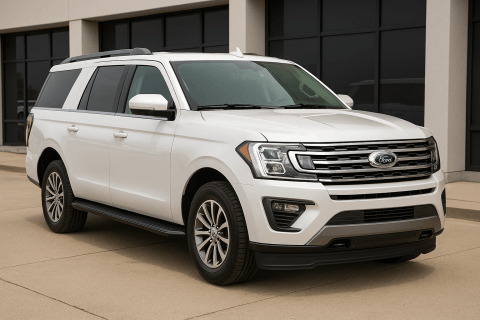
The 2013 GMC Yukon XL is a full-size SUV, part of the fourth generation (2007-2014) of the Yukon line. Known for its substantial size and V8 power, it offers impressive hauling and passenger capacity. Key trims included the SLE, SLT, and the more luxurious Denali. Its popularity stems from its truck-like capabilities combined with a relatively refined interior, making it a capable family hauler and tow vehicle.
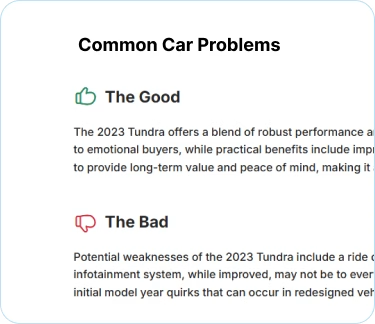
The Good
The 2013 Yukon XL excels in brute strength and spaciousness, offering a comfortable ride for long journeys and ample cargo room. Its V8 engines deliver robust performance for towing and hauling. For the practical buyer, it's a workhorse; for the emotional buyer, it provides a sense of security and capability.
The Bad
Potential buyers should be aware of its thirsty V8 engines and the considerable size, which can make parking and maneuvering challenging. Some owners report interior wear and tear over time, and certain electrical components can be prone to issues.
2013 GMC Yukon XL: Quick Overview
- Engine Options: The 2013 GMC Yukon XL was primarily offered with two V8 engine options:
- 4.8L V8
- 5.3L V8 (standard on most trims)
- 6.2L V8 (available on Denali trim)
- Horsepower:
- 4.8L V8: Approximately 315 hp
- 5.3L V8: Approximately 320 hp
- 6.2L V8: Approximately 403 hp
- Fuel Economy (EPA Estimates):
- 4.8L V8 (2WD): Around 13-14 MPG city / 19-20 MPG highway
- 5.3L V8 (2WD): Around 15 MPG city / 21 MPG highway
- 5.3L V8 (4WD): Around 14 MPG city / 20 MPG highway
- 6.2L V8 (Denali): Around 12 MPG city / 18 MPG highway
- 0-60 Times: Varies significantly by engine and configuration, but generally in the 7-9 second range for the 5.3L V8 models. The Denali with the 6.2L V8 can achieve 0-60 mph in under 7 seconds.
- Towing Capacity: The Yukon XL is a capable tow vehicle. When properly equipped, towing capacities typically range from around 8,000 lbs to over 9,000 lbs, depending on the configuration (engine, drivetrain, towing package).
- Trim-Level Features:
- SLE: Often included basic amenities like cloth upholstery, power accessories, cruise control, and a CD player.
- SLT: Typically added features like leather upholstery, heated front seats, power-adjustable pedals, a rearview camera, and improved audio system.
- Denali: The top-tier trim featured the more powerful 6.2L V8 engine, unique exterior styling, premium leather, a more advanced infotainment system, navigation, and a magnetic ride control suspension for a smoother ride.
2013 GMC Yukon XL Specifications
Vehicle Information
| Year | 2013 |
| Make | GMC |
| Model | Yukon XL |
| Trim | - |
| Style | 4WD |
| Type | Sport Utility Vehicle |
| Category | Minivan |
Manufacturing Details
| Made In | United States |
| Manufacturing City | ARLINGTON |
Dimensions
| Doors | 4-Door |
| Curb Weight | - |
| Gross Vehicle Weight Rating | - |
| Overall Height | - |
| Overall Length | - |
| Overall Width | - |
| Wheelbase Length | - |
| Standard Seating | - |
Engine & Performance
| Engine | 6.0L V8 OHV 16V FFV |
| Engine Size | 6L |
| Engine Cylinders | 8 |
| Transmission | 6-Speed Automatic |
| Transmission Type | Automatic |
| Transmission Speeds | 6-Speed |
| Drivetrain | Four-Wheel Drive |
Additional Features
| Anti-Brake System | - |
| Steering Type | - |
Pricing
| Manufacturer Suggested Retail Price (MSRP) | - |
| Invoice Price | - |
| Delivery Charges | - |
Vehicle History Report
Vehicle
Specifications
Specifications
Ownership
History
History
All History
Events
Events
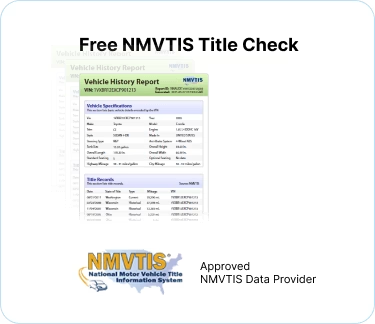
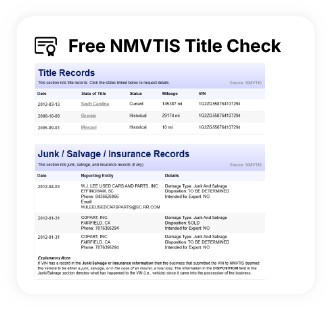
NMVTIS Title
History Check
History Check
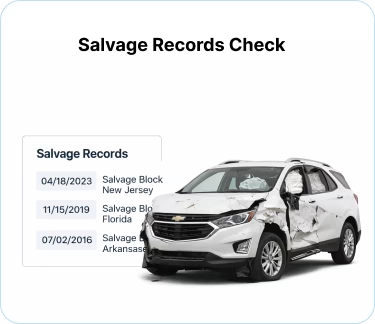
Salvage/Rebuilt
Check
Check
Accident
Check
Check
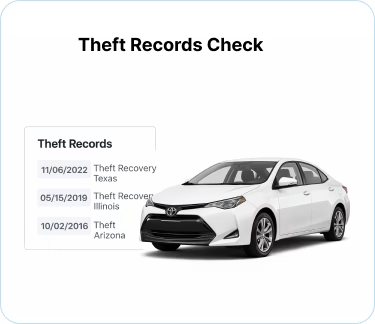
Theft
Check
Check
Open Lien
Check
Check
Past Sale
Listings
Listings
Safety
Recalls
Recalls
Odometer
Check
Check
Market Price
Analysis
Analysis
What Problems Does the 2013 GMC Yukon XL Have?
The 2013 GMC Yukon XL, like many vehicles of its era, has some reported common issues. A frequent concern involves the transmission, with some owners experiencing rough shifting, slipping, or premature failure. This can be an expensive repair. Another notable issue relates to the fuel pump, which has a tendency to fail, sometimes without warning, leading to stalling and inability to start.
Electrical gremlins are also not uncommon. Owners have reported problems with the power windows and locks, as well as issues with the infotainment system freezing or malfunctioning. The ABS and traction control warning lights illuminating are another recurring complaint, often linked to faulty wheel speed sensors or the ABS module itself.
Engine issues can also arise, particularly with the Active Fuel Management (AFM) system found in the 5.3L V8. This system deactivates cylinders to save fuel but can sometimes lead to oil consumption or lifter problems if not properly maintained. Some owners have also experienced exhaust manifold leaks, which can cause ticking noises and reduced engine performance.
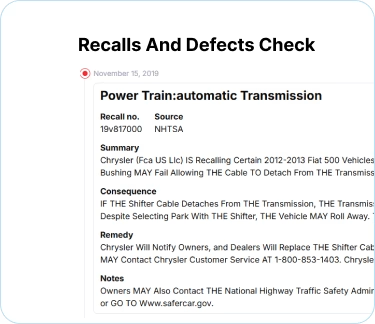
Regarding recalls, specific to the 2013 model year, there have been recalls concerning issues like the brake pedal bracket potentially detaching, and in some cases, issues with the rearview mirror potentially detaching. It's always recommended for potential buyers to check the NHTSA website for the most up-to-date recall information specific to the vehicle's VIN.
Long-term reliability can be a mixed bag. While the robust V8 engines and sturdy chassis are generally durable, the proliferation of complex electronics and the potential for transmission issues mean that ongoing maintenance and potential repairs should be factored into ownership. Vehicles with meticulous maintenance records tend to fare better.
Electrical gremlins are also not uncommon. Owners have reported problems with the power windows and locks, as well as issues with the infotainment system freezing or malfunctioning. The ABS and traction control warning lights illuminating are another recurring complaint, often linked to faulty wheel speed sensors or the ABS module itself.
Engine issues can also arise, particularly with the Active Fuel Management (AFM) system found in the 5.3L V8. This system deactivates cylinders to save fuel but can sometimes lead to oil consumption or lifter problems if not properly maintained. Some owners have also experienced exhaust manifold leaks, which can cause ticking noises and reduced engine performance.
Regarding recalls, specific to the 2013 model year, there have been recalls concerning issues like the brake pedal bracket potentially detaching, and in some cases, issues with the rearview mirror potentially detaching. It's always recommended for potential buyers to check the NHTSA website for the most up-to-date recall information specific to the vehicle's VIN.
Long-term reliability can be a mixed bag. While the robust V8 engines and sturdy chassis are generally durable, the proliferation of complex electronics and the potential for transmission issues mean that ongoing maintenance and potential repairs should be factored into ownership. Vehicles with meticulous maintenance records tend to fare better.
How long will the 2013 GMC Yukon XL last?
Based on owner data and typical maintenance, a well-maintained 2013 GMC Yukon XL can reasonably expect to reach between 150,000 to 200,000 miles or more. Some owners have reported pushing them even further, beyond 250,000 miles. The long-term durability of the core powertrain, especially the V8 engines, is generally considered strong. However, the longevity is significantly influenced by diligent maintenance, particularly fluid changes for the transmission and engine oil, and addressing minor issues promptly. Weaknesses that tend to emerge over time include potential transmission problems, electrical glitches, and wear on interior components, especially if used heavily for family transport or towing.
What Technology & Safety Features are Included?
The 2013 GMC Yukon XL offered a decent suite of technology and safety features for its time, though it may feel less advanced compared to modern vehicles. Standard tech often included a basic AM/FM/CD/MP3 audio system with auxiliary input, and power accessories. Higher trims, particularly the SLT and Denali, significantly enhanced the tech experience.
Entertainment and Convenience Features:
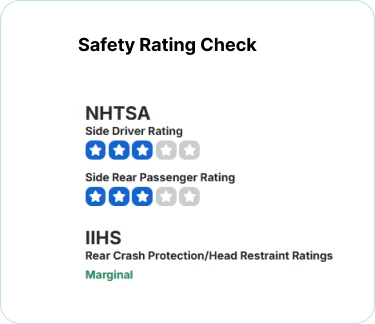
The 2013 GMC Yukon (standard wheelbase) received good ratings in crash tests conducted by the NHTSA and IIHS. For instance, it typically earned 4 out of 5 stars in frontal and side crash tests from NHTSA. The IIHS often rated it as "Good" in its core crashworthiness tests. However, it's important to note that the XL variant, being longer, might have slightly different dynamics, but it generally retained good safety performance for its class and era.
Entertainment and Convenience Features:
- Infotainment System: Available touch-screen navigation systems were offered on higher trims, often paired with a premium Bose sound system. Bluetooth connectivity for hands-free calling was also becoming more common.
- Rear-Seat Entertainment: Optional rear-seat DVD players with screens were popular for families, helping to keep passengers occupied on long trips.
- Climate Control: Dual-zone automatic climate control was often standard on SLT and Denali models, allowing driver and front passenger to set different temperatures.
- Other Conveniences: Features like power-adjustable pedals, a power liftgate, and remote start were available on upper trims, enhancing driver comfort and convenience.
- Standard Safety: All Yukon XL models came equipped with a comprehensive set of airbags (front, side-impact, and curtain), anti-lock disc brakes (ABS), and stability control (StabiliTrak).
- Driver Assistance: A rearview camera was available on many models, greatly assisting with parking the large SUV. Rear parking sensors were also an option. Cruise control was standard.
- Optional Features: Features like a blind-spot monitoring system were not widely available or standard on the 2013 model year, as advanced driver-assistance systems were still emerging.
The 2013 GMC Yukon (standard wheelbase) received good ratings in crash tests conducted by the NHTSA and IIHS. For instance, it typically earned 4 out of 5 stars in frontal and side crash tests from NHTSA. The IIHS often rated it as "Good" in its core crashworthiness tests. However, it's important to note that the XL variant, being longer, might have slightly different dynamics, but it generally retained good safety performance for its class and era.
What Colors Options are Available?
2013 GMC Yukon XL Prices and Market Value
When new, the 2013 GMC Yukon XL had an MSRP that ranged significantly depending on the trim level. Base SLE models typically started in the low to mid-$40,000s, while the upscale SLT could push into the high $40,000s, and the premium Denali trim often exceeded $50,000.
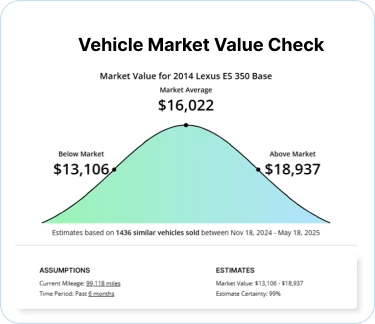
Currently, the used market prices for a 2013 GMC Yukon XL vary widely based on mileage, condition, trim level, and location. You can expect to find them generally ranging from $8,000 to $18,000, with Denali models in excellent condition commanding higher figures.
The Yukon XL has experienced typical SUV depreciation. While it lost value significantly in its first few years, it holds its value relatively well compared to some other vehicle types, especially the more powerful engine and premium trims. Factors affecting resale value include maintenance history, overall condition, mileage, presence of the towing package, and any notable repairs or recalls addressed. A well-maintained Yukon XL with lower mileage will always fetch a higher price.
Currently, the used market prices for a 2013 GMC Yukon XL vary widely based on mileage, condition, trim level, and location. You can expect to find them generally ranging from $8,000 to $18,000, with Denali models in excellent condition commanding higher figures.
The Yukon XL has experienced typical SUV depreciation. While it lost value significantly in its first few years, it holds its value relatively well compared to some other vehicle types, especially the more powerful engine and premium trims. Factors affecting resale value include maintenance history, overall condition, mileage, presence of the towing package, and any notable repairs or recalls addressed. A well-maintained Yukon XL with lower mileage will always fetch a higher price.
2013 GMC Yukon XL Cost of Ownership
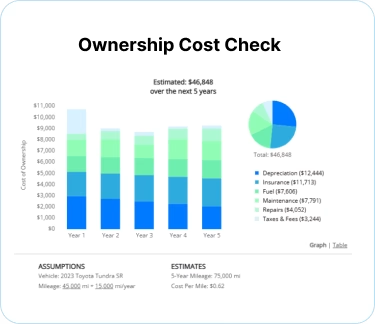
Owning a 2013 GMC Yukon XL is generally considered moderately to costly. Fuel costs are a significant factor due to the V8 engines' thirst, with average MPG often in the mid-to-high teens. Insurance rates will vary based on your profile and location but can be higher than smaller vehicles due to its size and engine. Maintenance, if kept up, is comparable to other large SUVs, but potential repairs, especially transmission or electrical issues, can be quite expensive. Overall, it's not an economical vehicle to own, particularly for those with long commutes or who are sensitive to fuel prices.
2013 GMC Yukon XL Fuel Efficiency
Fuel Type
Gasoline
Fuel Capacity
-
City Mileage
-
Highway Mileage
-
2013 GMC Yukon XL Safety Rating
NHTSA
2013 GMC Yukon XL Warranty
Basic
Original warranty
0 months / No data
Estimated remaining
Expired
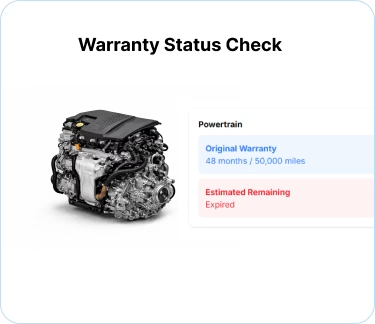
Powertrain
Original warranty
0 months / No data
Estimated remaining
Expired
Rust
Original warranty
0 months / No data
Estimated remaining
Expired
2013 GMC Yukon XL Insurance
Insurance for a 2013 GMC Yukon XL is moderately priced, reflecting its status as a Sport Utility Vehicle with strong safety ratings and
reasonable repair costs.
How Does the 2013 GMC Yukon XL Compare to Other Sport Utility Vehicle?
The 2013 GMC Yukon XL competed in a segment dominated by large, body-on-frame SUVs. Its primary rivals included the Chevrolet Tahoe/Suburban (closely related mechanically), Ford Expedition EL, and sometimes the Toyota Sequoia.
Performance: The Yukon XL's V8 engines offered strong towing and hauling capabilities, generally on par with or exceeding the Ford Expedition EL. The available 6.2L V8 in the Denali provided a noticeable performance edge. The Chevrolet Tahoe/Suburban offered similar powertrain options. The Toyota Sequoia, while also powerful, often had a slightly less refined on-road feel.
Features: Feature-wise, the Yukon XL, especially in SLT and Denali trims, was competitive. It offered amenities like leather interiors, navigation, and premium audio. The Ford Expedition EL was also well-equipped. However, compared to the Toyota Sequoia, the Yukon XL might have felt a bit more truck-like in its interior design and materials.
Reliability: Reliability can be a mixed bag for all these vehicles. The GM siblings (Yukon/Tahoe/Suburban) share some common powertrain and electrical issues. The Ford Expedition EL generally had a good reputation for its powertrain but could have its own set of electrical quirks. The Toyota Sequoia is renowned for its robust reliability, often being the benchmark in this category, though it came at a higher purchase price and with less potent standard engines.
Price: When new, the Yukon XL was typically priced competitively within the segment, often slightly above its Chevrolet counterparts and generally below the Toyota Sequoia. On the used market, the 2013 models offer good value, with prices often undercutting comparable Ford or Toyota models, especially for non-Denali trims.
Alternatives:
Performance: The Yukon XL's V8 engines offered strong towing and hauling capabilities, generally on par with or exceeding the Ford Expedition EL. The available 6.2L V8 in the Denali provided a noticeable performance edge. The Chevrolet Tahoe/Suburban offered similar powertrain options. The Toyota Sequoia, while also powerful, often had a slightly less refined on-road feel.
Features: Feature-wise, the Yukon XL, especially in SLT and Denali trims, was competitive. It offered amenities like leather interiors, navigation, and premium audio. The Ford Expedition EL was also well-equipped. However, compared to the Toyota Sequoia, the Yukon XL might have felt a bit more truck-like in its interior design and materials.
Reliability: Reliability can be a mixed bag for all these vehicles. The GM siblings (Yukon/Tahoe/Suburban) share some common powertrain and electrical issues. The Ford Expedition EL generally had a good reputation for its powertrain but could have its own set of electrical quirks. The Toyota Sequoia is renowned for its robust reliability, often being the benchmark in this category, though it came at a higher purchase price and with less potent standard engines.
Price: When new, the Yukon XL was typically priced competitively within the segment, often slightly above its Chevrolet counterparts and generally below the Toyota Sequoia. On the used market, the 2013 models offer good value, with prices often undercutting comparable Ford or Toyota models, especially for non-Denali trims.
Alternatives:
- Chevrolet Suburban: If you need even more cargo space than the Yukon XL, the mechanically identical Chevrolet Suburban is a strong contender.
- Ford Expedition EL: A solid alternative, offering a slightly different driving dynamic and often a more modern interior feel depending on the trim.
- Toyota Sequoia: For buyers prioritizing long-term reliability above all else and willing to pay a premium, the Sequoia is an excellent choice, though it might feel less luxurious in top trims.
Final Verdict: Is the 2013 GMC Yukon XL a Good Sport Utility Vehicle?
The 2013 GMC Yukon XL is ideal for large families, individuals who frequently tow trailers or boats, or those who need substantial cargo capacity on a regular basis. Its commanding presence and V8 power appeal to buyers who value capability and a sense of robustness.

Whether it's worth buying depends heavily on its condition and price. As a used vehicle, it can represent good value if you find one with a thorough maintenance history and minimal wear and tear. The Denali trim offers a more luxurious experience, while the SLT provides a good balance of features and price.
It is generally not recommended to buy new due to significant depreciation and the availability of newer, more technologically advanced models. Focus on well-maintained used examples, inspect for common issues like transmission problems or electrical gremlins, and be prepared for higher fuel and potential repair costs. If reliability is your absolute top priority, you might consider alternatives like the Toyota Sequoia.

Whether it's worth buying depends heavily on its condition and price. As a used vehicle, it can represent good value if you find one with a thorough maintenance history and minimal wear and tear. The Denali trim offers a more luxurious experience, while the SLT provides a good balance of features and price.
It is generally not recommended to buy new due to significant depreciation and the availability of newer, more technologically advanced models. Focus on well-maintained used examples, inspect for common issues like transmission problems or electrical gremlins, and be prepared for higher fuel and potential repair costs. If reliability is your absolute top priority, you might consider alternatives like the Toyota Sequoia.