
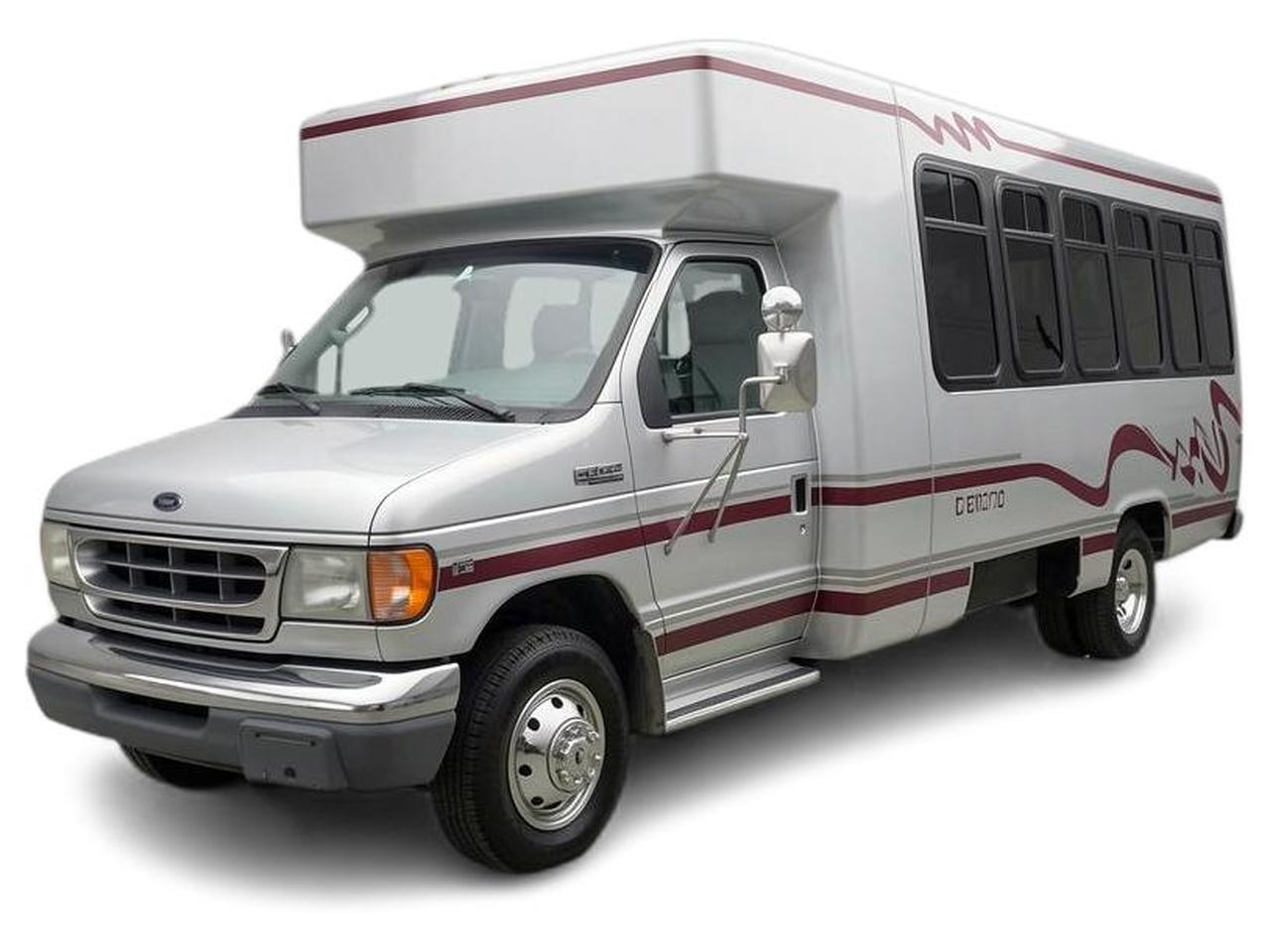
The 2000 Ford E-450 is a versatile full-size van, part of Ford's E-Series lineup, which has been a staple for commercial and recreational use for decades. Production for the E-Series spanned from 1961 to 2014. For the 2000 model year, the E-450 was primarily offered in cargo and passenger van configurations, with specialized cutaway chassis variants readily available for custom upfitting. While specific trims were less defined than in passenger cars, its popularity stemmed from its robust construction, modularity for various applications, and the availability of powerful V8 engines, making it a go-to for fleet operators and RV manufacturers.
The Good
The 2000 Ford E-450 excels in raw capability and dependable service. Its powerful V8 options offer reassuring performance for hauling, while its sturdy build inspires confidence. For practical buyers, its value proposition as a workhorse is undeniable. Emotionally, it provides a sense of security and the freedom to customize for any adventure.
The Bad
Common issues to watch for in a 2000 Ford E-450 include potential transmission problems, particularly with prolonged heavy use. Electrical gremlins, such as faulty sensors or wiring issues, can also arise. Fuel economy is inherently a weak point due to its size and engine options.
2000 Ford E-450: Quick Overview
- Engine Options: The 2000 Ford E-450 was typically equipped with one of two V8 gasoline engines:
- 4.6L Triton V8
- 5.4L Triton V8
- Horsepower:
- 4.6L V8: Approximately 215 hp
- 5.4L V8: Approximately 235 hp
- 7.3L Power Stroke V8 Diesel: Approximately 215 hp
- Fuel Economy: Fuel economy for the E-450 is not a strong suit and varies significantly based on engine, configuration, and load. Expect in the range of 10-14 MPG combined for gasoline engines, and slightly better for the diesel, especially when not heavily loaded. Official EPA ratings are not readily available for this model year and configuration as it was often used for commercial purposes.
- 0-60 Times: 0-60 MPH times are not typically a relevant metric for the E-450 due to its intended purpose as a work van or chassis. When tested with a load, acceleration would be considerably slower, likely in the 15-20+ second range depending on the configuration.
- Towing Capacity: The towing capacity of the 2000 Ford E-450 is substantial. Depending on the specific configuration (GVWR, axle ratios, engine), it could tow upwards of 7,500 lbs to over 10,000 lbs. This makes it suitable for towing large trailers, RVs, or heavy equipment.
- Trim-Level Features: As a commercial-oriented vehicle, the E-450 did not have traditional 'trim levels' in the consumer car sense. The base configurations typically included essential features for functionality. Optional features for passenger versions might include upgraded seating, air conditioning, power windows and locks (often on higher-spec models or as fleet options), and a basic sound system. Cargo vans were more utilitarian, focusing on durability and space. Cutaway chassis versions provided a bare frame and powertrain for custom body builders.
2000 Ford E-450 Specifications
Vehicle Information
| Year | 2000 |
| Make | Ford |
| Model | E-450 |
| Trim | - |
| Style | XL Cutaway RWD 4AT 7.3L V8 |
| Type | Cutaway |
| Category | commercial |
Manufacturing Details
| Made In | United States |
| Manufacturing City | ATLANTA |
Dimensions
| Doors | 4-Door |
| Curb Weight | 8000 pounds |
| Gross Vehicle Weight Rating | 14000 pounds |
| Overall Height | 81 inches |
| Overall Length | 228 inches |
| Overall Width | 96 inches |
| Wheelbase Length | 138 inches |
| Standard Seating | 2 |
Engine & Performance
| Engine | 7.3L V8 |
| Engine Size | 7.3L |
| Engine Cylinders | 8 |
| Transmission | 4-Speed Automatic |
| Transmission Type | Automatic |
| Transmission Speeds | 4-Speed |
| Drivetrain | Rear-Wheel Drive |
Additional Features
| Anti-Brake System | 4-Wheel ABS |
| Steering Type | Recirculating Ball |
Pricing
| Manufacturer Suggested Retail Price (MSRP) | $30,000 |
| Invoice Price | $27,000 |
| Delivery Charges | $800 |
Vehicle History Report
Vehicle
Specifications
Specifications
Ownership
History
History
All History
Events
Events
NMVTIS Title
History Check
History Check
Salvage/Rebuilt
Check
Check
Accident
Check
Check
Theft
Check
Check
Open Lien
Check
Check
Past Sale
Listings
Listings
Safety
Recalls
Recalls
Odometer
Check
Check
Market Price
Analysis
Analysis
What Problems Does the 2000 Ford E-450 Have?
The 2000 Ford E-450, like many vehicles of its era, can exhibit specific issues that owners should be aware of. A frequently reported concern across E-Series vans, including the E-450, revolves around the transmission. While generally robust, the automatic transmissions, especially the 4R70W and the heavier-duty variants used in the E-450, can experience wear over time, particularly with consistent heavy use or towing. Symptoms can include slipping gears, delayed shifts, or complete failure. Regular fluid and filter changes are crucial to prolong transmission life.
Another area of concern can be the ignition system. Spark plug blowouts were a known issue with the Triton V8 engines, especially the 5.4L, in certain model years leading up to and around 2000. This can manifest as a loss of power on one or more cylinders and a distinct ticking sound. While Ford issued some service bulletins, it required proper repair to prevent recurrence.
Electrical gremlins are also not uncommon in older vehicles. Owners have reported issues with instrument cluster failures, faulty sensors (like the ABS sensor or O2 sensors), and problems with the power windows and locks if equipped. Corroded wiring harnesses, particularly in areas exposed to moisture, can also lead to intermittent electrical problems.
Regarding recalls, it's important to check the National Highway Traffic Safety Administration (NHTSA) database for any specific recalls that may apply to a 2000 Ford E-450. These can range from braking system issues to potential fuel system leaks. Long-term reliability is generally considered good if properly maintained, especially with the robust 7.3L Power Stroke diesel engine, which is known for its durability. However, the gasoline V8s and transmissions are more likely to require attention as mileage accumulates. Regular maintenance, addressing minor issues promptly, and using quality parts are key to ensuring the longevity of a 2000 E-450.
Another area of concern can be the ignition system. Spark plug blowouts were a known issue with the Triton V8 engines, especially the 5.4L, in certain model years leading up to and around 2000. This can manifest as a loss of power on one or more cylinders and a distinct ticking sound. While Ford issued some service bulletins, it required proper repair to prevent recurrence.
Electrical gremlins are also not uncommon in older vehicles. Owners have reported issues with instrument cluster failures, faulty sensors (like the ABS sensor or O2 sensors), and problems with the power windows and locks if equipped. Corroded wiring harnesses, particularly in areas exposed to moisture, can also lead to intermittent electrical problems.
Regarding recalls, it's important to check the National Highway Traffic Safety Administration (NHTSA) database for any specific recalls that may apply to a 2000 Ford E-450. These can range from braking system issues to potential fuel system leaks. Long-term reliability is generally considered good if properly maintained, especially with the robust 7.3L Power Stroke diesel engine, which is known for its durability. However, the gasoline V8s and transmissions are more likely to require attention as mileage accumulates. Regular maintenance, addressing minor issues promptly, and using quality parts are key to ensuring the longevity of a 2000 E-450.
How long will the 2000 Ford E-450 last?
The 2000 Ford E-450 is a vehicle built for the long haul, with many examples still in service today. With diligent maintenance, including regular oil changes, transmission fluid flushes, and addressing any emerging issues promptly, it's not uncommon for these vans to reach 200,000 to 300,000 miles or even exceed that. The 7.3L Power Stroke diesel engine is particularly noted for its exceptional durability, often lasting well over 400,000 miles with proper care. The gasoline V8 engines are also capable of high mileage, though they may require more attention to components like the ignition system and cooling system over time. Weaknesses that tend to appear with age and mileage include wear on suspension components, potential for rust in certain climates, and the aforementioned transmission and electrical system issues. However, its strong underlying chassis and powertrain design contribute to its overall long-term viability as a workhorse.
What Technology & Safety Features are Included?
The 2000 Ford E-450, being primarily a commercial vehicle or chassis, is not equipped with the advanced technology and driver-assistance features found in modern passenger cars. Its focus is on utility and basic functionality.
Technology and Entertainment: Standard equipment would typically include a basic AM/FM radio, often with an optional cassette or CD player. Speakers would be positioned for functional listening rather than premium audio experience. Climate control was usually manual, with options for air conditioning. Power windows and door locks might have been available as optional equipment, particularly on passenger van configurations or as fleet upgrades.
Driver-Assistance Features: Driver-assistance systems were virtually nonexistent for this model year. Features like cruise control were optional. Rear parking sensors or backup cameras were not offered. The primary driver aids were the vehicle's large mirrors for visibility.
Safety Features: Standard safety features included seatbelts for all occupants. Anti-lock Braking System (ABS) was typically standard on the E-450, enhancing braking control, especially during emergency stops. Airbags for the driver and front passenger were also standard. Side-impact airbags were not a common offering for this class of vehicle in 2000.
Optional Features: Beyond the radio and climate control, optional features could include upgraded interior materials for passenger versions, a limited-slip rear differential for improved traction, and potentially heavier-duty alternator and battery packages for commercial use. For cutaway chassis models, the options were dictated by the upfitter creating the final vehicle.
Crash-Test Ratings: Specific crash-test ratings for the 2000 Ford E-450 are not readily available in the same way they are for consumer SUVs and cars. Ford E-Series vans, in general, were built with a robust frame designed for heavy-duty use. While they offer a commanding presence and solid construction, the lack of advanced crumple zones and modern safety structures means they would likely not perform as well as contemporary passenger vehicles in severe frontal or side-impact collisions. However, the ABS and airbags provided a baseline level of occupant protection for its intended purpose.
Technology and Entertainment: Standard equipment would typically include a basic AM/FM radio, often with an optional cassette or CD player. Speakers would be positioned for functional listening rather than premium audio experience. Climate control was usually manual, with options for air conditioning. Power windows and door locks might have been available as optional equipment, particularly on passenger van configurations or as fleet upgrades.
Driver-Assistance Features: Driver-assistance systems were virtually nonexistent for this model year. Features like cruise control were optional. Rear parking sensors or backup cameras were not offered. The primary driver aids were the vehicle's large mirrors for visibility.
Safety Features: Standard safety features included seatbelts for all occupants. Anti-lock Braking System (ABS) was typically standard on the E-450, enhancing braking control, especially during emergency stops. Airbags for the driver and front passenger were also standard. Side-impact airbags were not a common offering for this class of vehicle in 2000.
Optional Features: Beyond the radio and climate control, optional features could include upgraded interior materials for passenger versions, a limited-slip rear differential for improved traction, and potentially heavier-duty alternator and battery packages for commercial use. For cutaway chassis models, the options were dictated by the upfitter creating the final vehicle.
Crash-Test Ratings: Specific crash-test ratings for the 2000 Ford E-450 are not readily available in the same way they are for consumer SUVs and cars. Ford E-Series vans, in general, were built with a robust frame designed for heavy-duty use. While they offer a commanding presence and solid construction, the lack of advanced crumple zones and modern safety structures means they would likely not perform as well as contemporary passenger vehicles in severe frontal or side-impact collisions. However, the ABS and airbags provided a baseline level of occupant protection for its intended purpose.
What Colors Options are Available?
2000 Ford E-450 Prices and Market Value
When new, the 2000 Ford E-450's price varied significantly based on its configuration (cargo van, passenger van, cutaway chassis) and chosen options. Base models likely started in the range of $25,000 to $35,000. Specialized upfitted vehicles, like RV conversions or commercial work vans, could easily push the price upwards of $40,000 to $60,000 or more.
Currently, the used market for a 2000 Ford E-450 reflects its age and utility. Prices can range widely from $3,000 to $10,000 for models in fair to good condition with higher mileage, to potentially $15,000 or more for exceptionally well-maintained examples, especially those with the desirable 7.3L Power Stroke diesel engine. Depreciation has been substantial, as expected for a commercial vehicle. Factors affecting resale value include the condition of the engine and transmission, mileage, the presence of rust, the type of previous use (e.g., former commercial fleet vs. personal RV), and the overall mechanical and cosmetic state. Well-maintained diesel models hold their value better than gasoline variants.
2000 Ford E-450 Cost of Ownership
Owning a 2000 Ford E-450 can be economical for its intended purpose if sourced at a good price and maintained. Insurance costs will vary based on usage (personal, commercial) and location but are generally moderate for a commercial van. Fuel costs are a significant consideration, especially with the gasoline engines, which are thirsty. Maintenance is straightforward, with parts readily available. Repairs can range from minor to substantial, with transmission or diesel engine work being the most costly. Overall, while its purchase price can be low on the used market, fuel and potential repair costs can make it a moderately costly vehicle to own long-term, especially if not used consistently for profitable commercial work or well-serviced.
2000 Ford E-450 Fuel Efficiency
Fuel Type
Diesel
Fuel Capacity
38 gallons
City Mileage
12 miles/gallon
Highway Mileage
15 miles/gallon
2000 Ford E-450 Recalls & Defects
Recall date
2006-08-01
Recall no.
Source
NHTSA
Summary
ON Certain Trucks Equipped With Speed Control, Gasoline or Natural GAS Engines, THE Speed Control Deactivation Switch MAY Overheat.
Consequence
Overheating Could Result IN Smoke or Burn and AN Underhood Fire.
Remedy
Dealers Will Install A Fused Wiring Harness Into THE Speed Control System Free OF Charge. THE Recall Began ON August 7, 2006. Owners MAY Contact Ford AT 1-866-436-7332. (Note: Also SEE Recalls 05v017 and 05v388)
Notes
Recall date
2008-10-06
Recall no.
Source
NHTSA
Summary
Mobilityworks IS Recalling 133 MY 2005-2006 Ford E250, MY 2000, 2004-2006 E350, MY 2000, 2005 E450, MY 2005-2006 GMC 2500, GMC 3500, and MY 2006 Dodge 2500 Vans Equipped With Ricon Platform Style Wheelchair Lifts. These Lifts Fail TO Comply With THE Requirements OF Federal Motor Vehicle Safety Standard NO. 403, "platform Lift Systems FOR Motor Vehicles." THE Anti-stow Interlock MAY NOT Detect THE Presence OF A Wheelchair or Mobility AID User. THE Pressure Sensing Switch That Detects THE Presence OF Weight ON THE Platform WAS NOT Adjusted TO THE Necessary Sensitivity Level. THE Lift Could Stow Even Though Someone or Something IS Still ON THE Lift.
Consequence
A Lift Occupant CAN BE Injured Should THE Lift Begin TO Stow Unintentionally.
Remedy
Mobilityworks IS Working With Ricon TO Correct THE Wheelchair Lifts Free OF Charge (Please SEE 07e097). Owners MAY Contact Ricon AT 1-818-267-3000 or Mobilityworks AT 1-800-769-8267.
Notes
Recall date
2009-10-13
Recall no.
Source
NHTSA
Summary
Ford IS Recalling Model Years 1995-2003 Windstar, 2000-2003 Excursion Diesel, 1993-1997 and 1999-2003 F-250 SD Through F-550 SD Diesel, 1992-2003 E-150 Through E-550, 1995-2002 Explorer, 1997 and 2002 Mercury Mountaineer, 1995-1997 and 2001-2003 Ranger, and 1994 F53 Vehicles Equipped With THE Texas Instruments Speed Control Deactivation Switch (Scds). THE Scds MAY Leak Internally and Then Overheat, Smoke, or Burn.
Consequence
A Vehicle Fire Could Occur With or Without THE Engine Running.
Remedy
Ford Will Notify Owners That Dealers Will Install A Fused Wiring Harness IN Line With THE Scds. ON 1999-2003 Windstar Vehicles With A Leaking Scds, Dealers Will Also Inspect THE ABS Control Module Connector and Repair AS Necessary. Repairs Will BE Completed Free OF Charge. THE Safety Recall Began ON October 27, 2009. Owners MAY Contact Ford AT 1-888-222-2751.
Notes
2000 Ford E-450 Warranty
Basic
Original warranty
0 months / No data
Estimated remaining
Expired
Powertrain
Original warranty
0 months / No data
Estimated remaining
Expired
Rust
Original warranty
0 months / No data
Estimated remaining
Expired
2000 Ford E-450 Insurance
Insurance for a 2000 Ford E-450 is moderately priced, reflecting its status as a Cutaway with strong safety ratings and
reasonable repair costs.
How Does the 2000 Ford E-450 Compare to Other Cutaway?
The 2000 Ford E-450 competed in a segment dominated by body-on-frame vans, with its primary rivals being the Chevrolet Express 4500 and the Dodge Ram Van (though the Ram Van was nearing the end of its lifecycle).
Performance: In terms of raw power and towing capability, the E-450, especially with the 7.3L Power Stroke diesel, was a strong contender. Its V8 gasoline engines offered adequate power for general use. The Chevrolet Express 4500 offered comparable V8 gasoline options and a diesel option that, while different in design, was also capable. The Dodge Ram Van, particularly in its later years, was less performance-oriented compared to its rivals.
Features: Feature sets were basic across all these vehicles in 2000. The E-450 offered functional, no-frills interiors. The Express was similar, with both offering a degree of modularity for commercial upfitting. Neither provided advanced technology or extensive comfort features by today's standards. The Dodge Ram Van was often seen as more utilitarian and less refined.
Reliability: The Ford E-Series, especially with the 7.3L Power Stroke diesel, has a reputation for excellent long-term reliability and durability, often outlasting competitors. The Chevrolet Express also has a decent reliability record, though perhaps not as stellar as the Ford diesel. The Dodge Ram Van's reliability could be more hit-or-miss in its later production years.
Price: When new, prices were competitive within the segment. On the used market, the 2000 Ford E-450, particularly diesel variants, often holds its value better than competitors due to its robust reputation.
Alternatives: For a similar-purpose vehicle, one might consider a used Chevrolet Express 4500. If seeking a more modern driving experience, albeit at a higher cost, newer generation vans like the Ford Transit or Mercedes-Benz Sprinter would be alternatives, though they represent a different class and price point. For a robust, older, and potentially more reliable diesel option, the Ford E-450 with the 7.3L Power Stroke remains a highly recommended choice within its class, often surpassing its direct competitors in long-term durability.
Performance: In terms of raw power and towing capability, the E-450, especially with the 7.3L Power Stroke diesel, was a strong contender. Its V8 gasoline engines offered adequate power for general use. The Chevrolet Express 4500 offered comparable V8 gasoline options and a diesel option that, while different in design, was also capable. The Dodge Ram Van, particularly in its later years, was less performance-oriented compared to its rivals.
Features: Feature sets were basic across all these vehicles in 2000. The E-450 offered functional, no-frills interiors. The Express was similar, with both offering a degree of modularity for commercial upfitting. Neither provided advanced technology or extensive comfort features by today's standards. The Dodge Ram Van was often seen as more utilitarian and less refined.
Reliability: The Ford E-Series, especially with the 7.3L Power Stroke diesel, has a reputation for excellent long-term reliability and durability, often outlasting competitors. The Chevrolet Express also has a decent reliability record, though perhaps not as stellar as the Ford diesel. The Dodge Ram Van's reliability could be more hit-or-miss in its later production years.
Price: When new, prices were competitive within the segment. On the used market, the 2000 Ford E-450, particularly diesel variants, often holds its value better than competitors due to its robust reputation.
Alternatives: For a similar-purpose vehicle, one might consider a used Chevrolet Express 4500. If seeking a more modern driving experience, albeit at a higher cost, newer generation vans like the Ford Transit or Mercedes-Benz Sprinter would be alternatives, though they represent a different class and price point. For a robust, older, and potentially more reliable diesel option, the Ford E-450 with the 7.3L Power Stroke remains a highly recommended choice within its class, often surpassing its direct competitors in long-term durability.
Final Verdict: Is the 2000 Ford E-450 a Good Cutaway?

The 2000 Ford E-450 is an ideal vehicle for small businesses, tradespeople, contractors, or individuals requiring a dependable workhorse for hauling, towing, or custom conversion into recreational vehicles. It is absolutely worth buying if you prioritize robust construction, strong towing capabilities, and long-term durability over modern amenities and fuel efficiency. The best conditions for purchase are on the used market, with a strong preference for models equipped with the 7.3L Power Stroke diesel engine. Thorough pre-purchase inspection is crucial, focusing on the transmission, frame for rust, and overall mechanical condition. Avoid models with a history of extreme abuse or neglect. It represents excellent value when bought with realistic expectations for its age and capabilities.