by VIN, Year, Make, Model by License Plate

1986 Ford E-350 Overview, Reviews, Ratings & Specs

Rating: 0.00
Based on 0 Owner Reviews
Eugene S | October 24, 2025
The 1986 Ford E-350 is a full-size van, part of Ford's E-Series lineup, which debuted in 1961 and saw continuous production for decades. Available in various body styles including cargo, passenger, and cutaway chassis, it offered different wheelbase lengths. Key trims typically included basic models and more upscale Chateau configurations. Pricing when new varied significantly based on configuration but generally positioned it as a capable, work-oriented or family-hauling vehicle. Its popularity stemmed from its robust construction, versatile platform, and range of powertrain options, making it a dependable choice for businesses and large families.


The Good

The 1986 E-350 boasts impressive towing and hauling prowess, a hallmark of Ford trucks. Its legendary reliability means peace of mind for practical buyers, while its spacious interior offers comfort for passengers. The rugged, no-nonsense design appeals to those who value function over form, and its enduring value makes it a wise investment for work or adventure.

The Bad

Potential buyers of the 1986 E-350 should watch out for rust, especially around wheel wells, rocker panels, and the undercarriage. Aging electrical components can be a concern, as can wear and tear on older powertrains, particularly if maintenance has been neglected. Transmission issues and brake wear are also common points to inspect.

1986 Ford E-350: Quick Overview

  • Engine Options: The 1986 Ford E-350 was offered with a choice of robust gasoline engines. The standard engine was typically a 4.9L inline-six (300 cubic inches). Optional V8 engines included a 5.8L (351 cubic inches) and a larger 7.5L (460 cubic inches) big-block V8, which was a popular choice for heavy-duty applications. Diesel options were also available in some configurations, notably the 7.3L IDI diesel.
  • Horsepower: Horsepower varied significantly by engine. The 4.9L inline-six produced around 145-150 horsepower. The 5.8L V8 typically offered in the range of 180-185 horsepower. The formidable 7.5L V8 pushed out approximately 225-240 horsepower. Diesel engines generally produced less horsepower but significantly more torque.
  • Fuel Economy: Fuel economy for the 1986 E-350 was not a strong suit, typical of large, heavy vans from this era. Expect figures ranging from single-digit MPG in city driving for the larger engines to perhaps low to mid-teens on the highway, especially when loaded or towing. Exact figures were not widely advertised and varied greatly with engine choice, load, and driving conditions.
  • 0-60 Times: 0-60 mph times were not a primary focus for this utilitarian vehicle. For loaded configurations and the larger engines, times could easily exceed 15-20 seconds. Even with the most powerful options, brisk acceleration was not its forte.
  • Towing Capacity: The towing capacity of the 1986 E-350 was a significant advantage. Depending on the configuration (GVWR, axle ratio, engine, chassis type), towing capacities could range from a substantial 7,500 lbs to well over 10,000 lbs, making it suitable for heavy trailers, RV conversions, and commercial use.
  • Trim-Level Features:
    • Base/Standard: Focused on utility, featuring vinyl seating, basic instrumentation, minimal sound deadening, and essential amenities for work.
    • Chateau: Offered a more comfortable and passenger-oriented experience with upgraded interior trim, cloth or carpeted upholstery, additional sound insulation, optional captain's chairs, enhanced lighting, and sometimes amenities like air conditioning and power windows/locks (though less common on base models).
    • Cutaway Chassis: Provided a bare chassis and powertrain for custom body construction (e.g., RVs, specialized vocational vehicles).

1986 Ford E-350 Specifications

Vehicle Information
Year 1986
Make Ford
Model E-350
Trim -
Style -
Type Van
Category Cargo Van
Manufacturing Details
Made In United States
Manufacturing City HIROSHIMA
Dimensions
Doors -
Curb Weight -
Gross Vehicle Weight Rating -
Overall Height -
Overall Length -
Overall Width -
Wheelbase Length -
Standard Seating -
Engine & Performance
Engine 4.9-L L-6
Engine Size 4.9L
Engine Cylinders 6
Transmission 3-Speed Automatic
Transmission Type Automatic
Transmission Speeds 3-Speed
Drivetrain Rear-Wheel Drive
Additional Features
Anti-Brake System -
Steering Type -
Pricing
Manufacturer Suggested Retail Price (MSRP) -
Invoice Price -
Delivery Charges -

Vehicle History Report

Vehicle
Specifications
Ownership
History
All History
Events
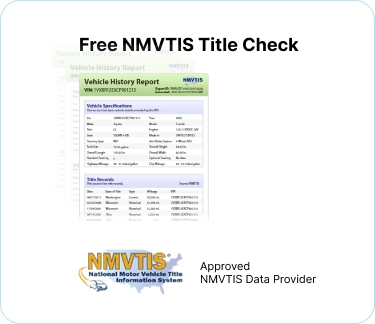
NMVTIS Title
History Check
Salvage/Rebuilt
Check
Accident
Check
Theft
Check
Open Lien
Check
Past Sale
Listings
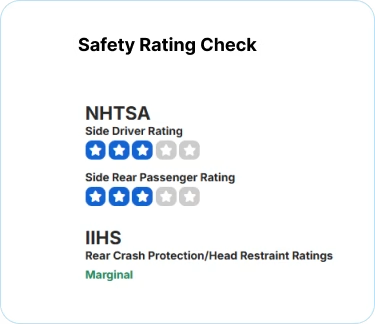
Safety
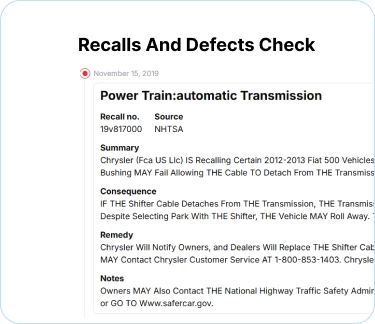
Recalls
Odometer
Check
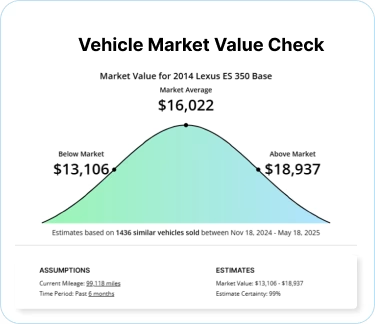
Market Price
Analysis

What Problems Does the 1986 Ford E-350 Have?

The 1986 Ford E-350, while generally considered a robust and reliable workhorse, is not without its potential issues, especially considering its age. One of the most common concerns across many vehicles from this era, including the E-350, is rust. Areas prone to significant corrosion include the rocker panels, wheel wells, floor pans, frame rails, and around the rear bumper. The salt used in winter climates can accelerate this degradation.

Another area to inspect carefully is the powertrain. While Ford's engines and transmissions were durable, age and mileage can lead to wear. For gasoline engines, issues like worn valve seals, head gasket leaks (especially on the 7.5L V8 under heavy use), and carburetor problems (if equipped) can arise. The 7.3L IDI diesel, while known for longevity, can suffer from injector pump issues, glow plug failures, and sometimes head gasket problems. The transmissions, whether automatic (like the C6 or E4OD) or manual, can develop internal wear, leading to slipping, hard shifting, or leaks, particularly if they haven't been regularly serviced.

Electrical systems can also present challenges as insulation degrades and connections corrode over time. This can manifest as intermittent power losses, non-functioning accessories, or dashboard warning lights. Alternator and starter motor failures are also common wear-and-tear items.

Brake systems, especially on heavily used vans, will require regular maintenance and replacement of components like rotors, pads, and potentially brake lines. Suspension components, including ball joints, tie rod ends, and bushings, can also wear out, leading to steering looseness or tire wear.

Specific model year recalls for the E-350 in the mid-1980s were not as extensive as some later vehicles, but owners should always verify if any recall campaigns were applicable and addressed. Long-term reliability largely depends on the vehicle's history of maintenance and how it was used. A well-maintained E-350 can still be a very dependable vehicle, but expect to address age-related issues and routine wear and tear. For example, the introduction of electronic fuel injection on some engines in later years (though the 1986 model predominantly featured carburetors or early EFI systems) might introduce different sets of potential electronic gremlins compared to earlier carbureted versions.

How long will the 1986 Ford E-350 last?

The 1986 Ford E-350 is renowned for its long-term durability, with many examples exceeding 200,000 to 300,000 miles with proper care. It is not uncommon for these vans to remain in service for 20 years or more, particularly those used for light-duty commercial work or as personal vehicles with consistent maintenance. Its robust construction, particularly the chassis and powertrain options like the 4.9L inline-six or the 7.3L diesel, contributes significantly to this longevity. However, weaknesses that emerge over time are primarily related to the aging of components such as the rust susceptibility (especially in harsher climates), wear on suspension and brake systems, and potential electrical gremlins. Neglected maintenance, particularly with transmission fluid and engine oil changes, can significantly shorten its service life. Overall, the E-350 is built to last, but owner diligence is key to maximizing its lifespan.

What Technology & Safety Features are Included?

The 1986 Ford E-350, by modern standards, is decidedly basic in terms of technology, entertainment, and driver-assistance features, reflecting the era in which it was built. Its primary focus was utility and functionality, not high-tech gadgetry.

Built-in Tech & Entertainment:
The core technology revolved around the mechanical systems. Entertainment options were limited to an AM/FM radio, with an optional cassette player being a premium upgrade. Some higher trims might have offered rudimentary speaker systems. Analog gauges were standard for speed, fuel level, engine temperature, and oil pressure.

Driver-Assistance Features:
Driver-assistance features were virtually non-existent. Power steering was standard on most models, making maneuvering easier. Optional power brakes were also available to reduce pedal effort. Cruise control was a notable, albeit optional, convenience feature for highway driving.

Safety Features:
Safety features were also quite rudimentary. Standard equipment included seat belts, including lap belts for center passengers and shoulder belts for outboard front seats in passenger van configurations. A sturdy frame construction was the primary passive safety feature. Disc brakes were typically found on the front wheels, with rear drums. Anti-lock braking systems (ABS) were not yet widely available or standard on vehicles of this type in 1986.

Optional Features:
Beyond the radio and cruise control, common options included air conditioning, tinted glass, and interior upgrades for passenger models like upgraded upholstery and carpeting. For commercial use, features like heavy-duty alternators, auxiliary fuel tanks, and specific towing packages were available.

Crash-Test Ratings:
Crash-test ratings as we know them today (like those from the NHTSA or IIHS) were not as comprehensive or publicly available for commercial vans in 1986. The focus of testing was primarily on lighter passenger cars. While Ford would have conducted internal testing and met basic regulatory standards of the time, specific numerical ratings or detailed frontal/side impact scores for the 1986 E-350 are not readily found. The vehicle's robust, body-on-frame construction provided a degree of inherent strength, but it lacked the advanced safety structures and restraint systems found in modern vehicles.

What Colors Options are Available?

We’re working on this section!
In the meantime, feel free to explore the other sections for more content.

1986 Ford E-350 Prices and Market Value

When new, the 1986 Ford E-350's price varied dramatically based on its configuration, from a base cargo van starting around $15,000 to $20,000, to more feature-laden passenger versions or chassis cabs for custom builds reaching well into the $20,000s or $30,000s.

Currently, the used market for a 1986 E-350 sees prices ranging widely, typically from $3,000 to $10,000 for models in average condition with higher mileage. Pristine, low-mileage examples, especially those with desirable configurations like RV conversions or sought-after trims, can command prices upwards of $10,000 to $15,000+.

Depreciation was significant in the first 5-10 years, typical for most vehicles. However, the E-350 has reached a point where its value is more stable, often appreciating in specific niches. Factors affecting resale value include rust presence (a major detractor), overall mechanical condition, mileage, the presence of desirable conversions (like camper setups), and the rarity of specific engine or trim combinations. Well-maintained, rust-free examples are increasingly valuable for their utility and classic appeal.

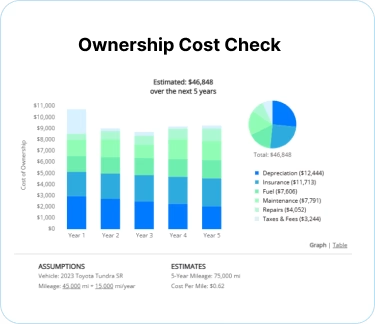
1986 Ford E-350 Cost of Ownership

Owning a 1986 Ford E-350 can be economical or costly depending heavily on usage and maintenance. Insurance is typically reasonable for a vehicle of this age, especially for commercial use or if it's a second vehicle. Fuel costs are a significant factor; expect poor MPG, especially with larger engines. Maintenance is generally straightforward and parts are readily available and affordable for common items. However, unexpected repairs, particularly for older powertrains or body rust issues, can become expensive. While the purchase price might be low, the cumulative costs of fuel and potential repairs mean it's not a budget-friendly vehicle for daily commuting but can be cost-effective for specific vocational needs or recreational use if kept in good order.

1986 Ford E-350 Fuel Efficiency

Fuel Type Gasoline
Fuel Capacity -
City Mileage -
Highway Mileage -

1986 Ford E-350 Warranty

Basic
Original warranty 0 months / No data
Estimated remaining Expired
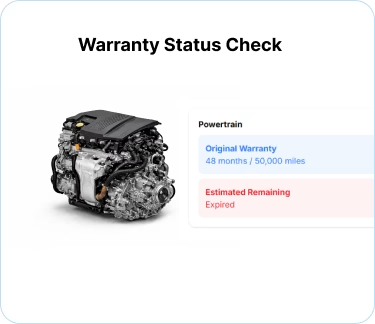
Powertrain
Original warranty 0 months / No data
Estimated remaining Expired
Rust
Original warranty 0 months / No data
Estimated remaining Expired

1986 Ford E-350 Insurance

Insurance for a 1986 Ford E-350 is moderately priced, reflecting its status as a Van with strong safety ratings and
reasonable repair costs.

How Does the 1986 Ford E-350 Compare to Other Van?

In 1986, the Ford E-350 competed primarily against the Chevrolet C/K Vans (Express/GMC Vandura) and Dodge Ram Vans.

Performance: The E-350 often offered potent V8 engine options, particularly the 7.5L, giving it an edge in raw power and towing capacity over many comparable Chevrolet and Dodge offerings, which also had strong V8s but sometimes slightly less torque. The Ford's handling was truck-like across the board.

Features: Feature-wise, all three were utilitarian. The E-350's available trims like Chateau aimed for a more comfortable interior than base models, comparable to Chevrolet's higher trims. Dodge vans were also known for their sturdy build. Modern amenities were sparse for all, with radio and air conditioning being the key optional upgrades.

Reliability: Ford's E-Series reputation for durability is legendary. While all these vans were built tough, the E-350 often stood out for its longevity and robustness, especially the diesel variants. Chevrolet vans were also reliable but sometimes prone to more electrical gremlins. Dodge vans had a reputation for ruggedness but could be more susceptible to rust.

Price: Pricing when new was competitive across the segment, with configurations dictating the final cost. Used market prices today vary greatly, but the E-350 often holds its value well due to its perceived reliability and towing capability.

Alternatives:
* 1986 Chevrolet C/K Van (Express/Gvandura): A very similar option, offering comparable utility and powertrain choices. Reliability is generally good, but may not match the E-350's legendary status for extreme longevity.
* 1986 Dodge Ram Van: Known for its strong V8 engines and durable chassis. Rust can be a more significant issue than with the E-350.
* Later Model Vans (e.g., 1990s Ford Econoline, Chevy Express, Dodge Ram Van): If modern safety features, slightly better fuel economy, and improved handling are priorities, looking at newer generations of these vans would be advisable, though they will come at a higher purchase price. However, for sheer towing grunt and proven mechanical simplicity, the 1986 E-350 remains a strong contender.

Final Verdict: Is the 1986 Ford E-350 a Good Van?

The 1986 Ford E-350 is ideal for individuals or businesses needing a dependable workhorse for towing, hauling, or conversion into a camper or specialized vehicle. It's best suited for those who prioritize mechanical simplicity, robust build quality, and proven longevity over modern creature comforts and advanced safety features.

It is absolutely worth buying, but only under specific conditions. As a used vehicle, it represents significant value for its capabilities. Buyers should focus on finding examples with minimal rust and a solid maintenance history. Specific trims with the larger V8 or diesel engines are particularly desirable for power and torque. A 1986 E-350 in good condition is a robust investment for its intended purpose, offering years of service if properly cared for, especially for those undertaking DIY projects or commercial ventures.

1986 Ford E-350 Owner Reviews

0.00
Consumer Rating, Based on 0 Consumer Reviews
Overall rating
Cancel
Thank You for Your Review!

We truly appreciate the time and effort you took to share your experience with us.

Uh oh!

Something went wrong, please try again later.

Author Image
Eugene S

Eugene is an automotive enthusiast with over 15 years of experience in the used car market. As a writer at VINCheck.info, he brings deep industry insight and a passion for cars, helping readers make smart, informed decisions. Eugene has written hundreds of used car reviews and is known for breaking down complex automotive topics into clear, actionable advice. Over the years, he has driven and worked on a wide range of vehicles—starting with tuning street cars in his early days and eventually focusing on performance upgrades and reliability improvements. Today, he specializes in evaluating used vehicles through the lens of real-world ownership and enthusiast needs. A longtime fan of Porsche, Eugene especially appreciates vehicles that blend durability with driving enjoyment.