
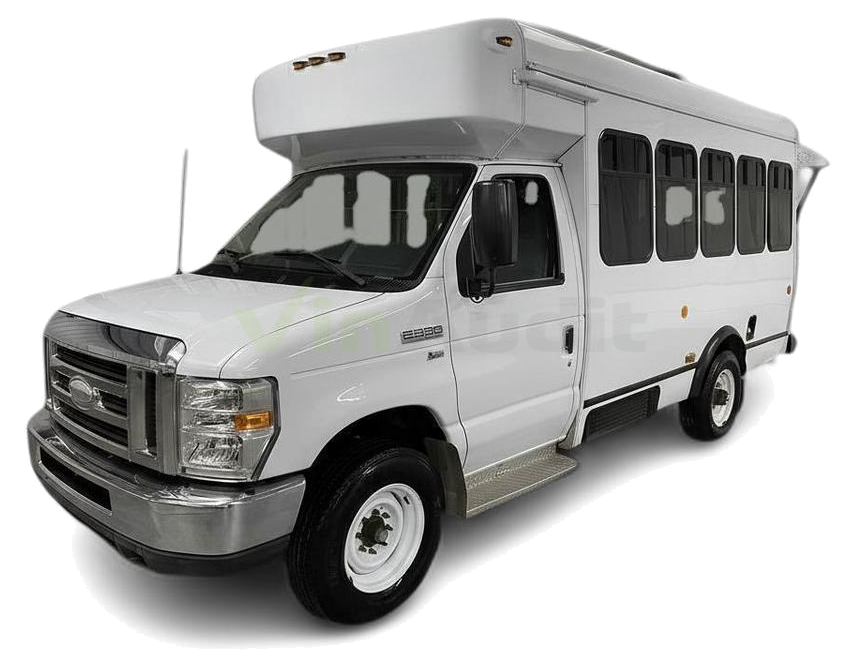
The Good
The 2014 Ford E-350 excels in raw capability and unwavering reliability, offering potent performance for hauling and towing. Its spacious interior provides practical comfort for long hauls, while its utilitarian design prioritizes function. This van represents exceptional value for its rugged build and dependable service, appealing to those who demand a workhorse they can count on.
The Bad
Owners of the 2014 Ford E-350 should be aware of potential issues with its aging technology, particularly in infotainment and driver aids which are basic. Fuel economy is not a strong suit, and some models may exhibit wear on suspension components or exhaust systems due to their commercial-oriented use.
2014 Ford E-350: Quick Overview
- Engine Options: The 2014 Ford E-350 typically offered two primary engine choices:
- 4.6L Triton V8: A capable, though less powerful, option for general use.
- 5.4L Triton V8: A more potent engine providing increased torque and power for heavier loads.
- 5.4L V8 (Flex Fuel capable on some models).
- 4.6L Triton V8: A capable, though less powerful, option for general use.
- Horsepower:
- 4.6L V8: Approximately 225 horsepower.
- 5.4L V8: Approximately 255 horsepower.
- 4.6L V8: Approximately 225 horsepower.
- Fuel Economy: Due to its size and engine displacement, fuel economy is modest. Expect figures in the range of 10-14 MPG combined for most configurations, varying significantly with load and driving conditions. Specific EPA estimates were not always readily available for all configurations due to its commercial nature.
- 0-60 Times: Precise 0-60 mph times are rarely a focus for this type of vehicle and vary greatly depending on configuration (cargo vs. passenger), engine, and load. Generally, expect times to be in the 9-12 second range for unloaded passenger versions with the larger V8.
- Towing Capacity: The E-350 is designed for towing. Depending on the configuration (axle ratio, engine, payload package), towing capacities could range from approximately 6,000 lbs to over 10,000 lbs, making it suitable for trailers, boats, and equipment.
- Trim-Level Features:
- XL Trim: The base model, focused on utility and durability. Typically includes vinyl flooring, manual windows and locks, basic AM/FM stereo, and heavy-duty vinyl seating. Essential for work applications.
- XLT Trim: Adds a degree of comfort and convenience over the XL. Features may include power windows and door locks, cruise control, a more comfortable cloth seat trim, an upgraded stereo system with CD player, and sometimes a tilt steering wheel.
- Optional Features: Available options across trims could include rear air conditioning, upgraded audio systems, privacy glass (for passenger models), tow mirrors, and various upfitter packages for specialized commercial use.
- XL Trim: The base model, focused on utility and durability. Typically includes vinyl flooring, manual windows and locks, basic AM/FM stereo, and heavy-duty vinyl seating. Essential for work applications.
2014 Ford E-350 Specifications
Vehicle Information
| Year | 2014 |
| Make | Ford |
| Model | E-350 |
| Trim | - |
| Style | XL Van RWD 4AT 5.4L V8 |
| Type | Van |
| Category | commercial |
Manufacturing Details
| Made In | United States |
| Manufacturing City | AVON LAKE |
Dimensions
| Doors | 3-Door |
| Curb Weight | 6000 pounds |
| Gross Vehicle Weight Rating | 10000 pounds |
| Overall Height | 81 inches |
| Overall Length | 219 inches |
| Overall Width | 79 inches |
| Wheelbase Length | 138 inches |
| Standard Seating | 2 |
Engine & Performance
| Engine | 5.4L V8 |
| Engine Size | 5.4L |
| Engine Cylinders | 8 |
| Transmission | 4-Speed Automatic |
| Transmission Type | Automatic |
| Transmission Speeds | 4-Speed |
| Drivetrain | Rear-Wheel Drive |
Additional Features
| Anti-Brake System | 4-Wheel ABS |
| Steering Type | Recirculating Ball |
Pricing
| Manufacturer Suggested Retail Price (MSRP) | $30,900 |
| Invoice Price | $29,000 |
| Delivery Charges | $995 |
Vehicle History Report
Specifications
History
Events
History Check
Check
Check
Check
Check
Listings
Recalls
Check
Analysis
What Problems Does the 2014 Ford E-350 Have?
While specific widespread recalls for the 2014 model year are not as prominent as for some other Ford vehicles, it's always prudent to check the NHTSA website for any outstanding safety recalls that might apply. Long-term reliability is generally good for the powertrain if maintained meticulously, but like many vehicles of this age and type, expect to face typical wear-and-tear items. This can include exhaust system corrosion, suspension component wear (bushings, ball joints), and potential electrical gremlins, though the latter are not as frequently reported as mechanical issues. For models equipped with the 5.4L V8, watch for potential intake manifold leaks, a known Ford V8 issue over the years, though less common in later iterations. Regular maintenance, including timely fluid changes and inspections, is paramount to mitigating many of these potential problems and ensuring the E-350's continued dependable service.
How long will the 2014 Ford E-350 last?
What Technology & Safety Features are Included?
Driver-assistance features are virtually non-existent in the modern sense. There are no advanced systems like adaptive cruise control, lane departure warning, or automatic emergency braking. The focus is on fundamental safety and driver control. Standard safety features include front airbags, anti-lock brakes (ABS) for improved stopping power, and possibly a tire pressure monitoring system (TPMS). For models configured as passenger vans, seat belts for all occupants are, of course, a primary safety component. Optional features might have included a rearview camera system, particularly on models designated for fleet use or equipped with larger infotainment screens, though this was not standard.
Crash-test ratings for commercial vehicles like the E-350 are often less comprehensive than for passenger cars. While the E-350 generally benefits from its substantial frame and construction, specific frontal, side, and rollover impact ratings from organizations like the NHTSA or IIHS are not always readily available or directly comparable to smaller vehicles. The robust construction contributes to its inherent safety, but the lack of modern driver-assist technologies means the driver bears the primary responsibility for safe operation. The technology is functional and reliable for its intended purpose, but lacks the sophistication found in many contemporary vehicles.
What Colors Options are Available?
2014 Ford E-350 Prices and Market Value
2014 Ford E-350 Cost of Ownership
2014 Ford E-350 Fuel Efficiency
2014 Ford E-350 Insurance
reasonable repair costs.
How Does the 2014 Ford E-350 Compare to Other Van?
Performance: In terms of raw power and towing capability, the E-350's V8 engines were competitive, often offering more grunt than the base V6 engines found in some rivals or the less powerful diesel options in the Sprinter. The Chevrolet Express and GMC Savana offered comparable V8 performance, often with slightly better handling characteristics due to their chassis tuning.
Features: The E-350 was generally the most basic in terms of modern amenities and technology compared to rivals. While it offered essential functionality, the Chevrolet Express and GMC Savana were also fairly utilitarian, though they might have offered slightly more accessible interior options or fewer dated designs. The Mercedes-Benz Sprinter, however, was in a different league, offering advanced safety features, more refined interiors, and highly efficient diesel powertrains, albeit at a significantly higher price point.
Reliability: The Ford E-350 has a strong reputation for mechanical robustness and long-term durability, particularly its powertrain, when properly maintained. The Chevrolet Express/GMC Savana twins are also known for reliability, benefiting from a long, consistent production run. The Sprinter, while sophisticated, could sometimes be more costly to maintain and repair due to its European origins and complex systems, though its diesel engines offered excellent longevity.
Price: The E-350 was typically positioned as a more affordable option than the Mercedes-Benz Sprinter, often being priced comparably or slightly less than the Chevrolet Express/GMC Savana when new, depending on configuration. Used, the E-350 often represents excellent value for its capability.
Alternatives:
- Similar: The Chevrolet Express and GMC Savana (2014 models) are direct competitors offering similar utility and V8 power. They are often considered when looking for a rugged, no-frills van.
- Consider if Budget Allows: The Mercedes-Benz Sprinter (2014 model) offers superior refinement, fuel efficiency (with diesel), and advanced features, but at a considerably higher cost.
- Modern Alternative (Newer Used Market): If seeking more modern tech, safety, and fuel efficiency in a used van, consider later-model Ford Transit vans or the Ram ProMaster, though these might carry a higher price tag for comparable utility.
Final Verdict: Is the 2014 Ford E-350 a Good Van?

Drew B
Drew is a seasoned automotive expert and contributor to VinCheck.info. With nearly 15 years of experience as a former Porsche technician, he brings a wealth of hands-on knowledge to his writing. Born in North Carolina, a region renowned for its deep-rooted NASCAR culture, Drew developed a passion for cars early in life, often building and working on vehicles from a young age. At VINCheck, Drew leverages his extensive technical background to provide in-depth analyses of various vehicles. His articles often focus on engine performance, reliability, and maintenance insights, offering readers practical information grounded in real-world experience. Some of his notable contributions include reviews on the Mazda CX-5's longevity and detailed examinations of engine options for models like the 2011 Toyota Camry and Tacoma