
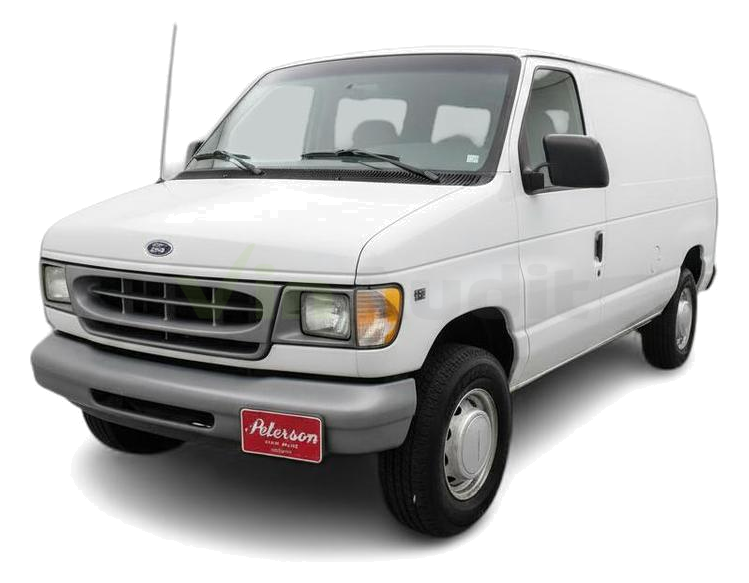
The Good
The 1998 Ford E-350 boasts impressive towing and payload capacity thanks to its powerful V8, V10, and durable 7.3L Power Stroke diesel engines, appealing to practical buyers needing a true workhorse. Its simple, robust design contributes to high long-term reliability and excellent value as an affordable, capable platform for work or adventure conversions, offering endless possibilities for emotional buyers.
The Bad
Known weaknesses for the 1998 Ford E-350 include notoriously poor fuel economy, especially with gasoline engines, and a utilitarian, dated interior lacking modern comfort. Potential issues involve rust on the body and frame, especially in salt-belt regions, and common wear-and-tear items on older, heavy-duty vehicles like suspension components and brakes.
1998 Ford E-350: Quick Overview
- Engine Options:
The 1998 Ford E-350 offered several robust engine choices designed for heavy-duty applications:
- 5.4L Triton V8: A popular gasoline engine, known for its balance of power and efficiency (relative to its class).
- 6.8L Triton V10: The most powerful gasoline option, providing significant torque and horsepower for demanding tasks.
- 7.3L Power Stroke Turbo-Diesel V8: Highly regarded for its exceptional durability, longevity, and immense torque, making it ideal for heavy towing and commercial use.
- Horsepower:
- 5.4L Triton V8: Approximately 235 hp @ 4250 rpm
- 6.8L Triton V10: Approximately 265 hp @ 4250 rpm
- 7.3L Power Stroke Turbo-Diesel V8: Approximately 215-235 hp @ 2600 rpm (depending on calibration)
- Fuel Economy:
Official EPA figures for vehicles of this class and era are often scarce or optimistic. Real-world fuel economy is generally poor across all engine options due to the vehicle's size and weight.
- Gasoline V8/V10: Typically 10-15 MPG (combined city/highway)
- 7.3L Power Stroke Diesel: Typically 12-18 MPG (combined city/highway), often providing better economy under load.
- 0-60 Times:
Performance statistics like 0-60 mph times are not a primary focus for a heavy-duty van and are generally slow. Estimates typically range from 9-12 seconds for gasoline models and 12-15+ seconds for diesel models, reflecting their purpose as utility vehicles rather than speed demons. - Towing Capacity:
One of the E-350's strongest attributes, its towing capacity varied significantly based on engine, axle ratio, and configuration.
- Depending on setup, towing capacity could range from approximately 7,000 lbs to over 10,000 lbs, with the 7.3L Power Stroke diesel often leading the pack.
- Trim-Level Features:
The 1998 E-350 was offered in several configurations:
- XL Trim: The base model, primarily aimed at commercial use or as a cargo van. Features were basic, often including manual windows and locks, vinyl seating, and an AM/FM radio.
- XLT Trim: Offered more comfort and convenience features, typically including power windows and door locks, cloth upholstery, air conditioning, and a slightly upgraded stereo system. Often found in passenger van (Club Wagon) configurations.
- Club Wagon: Dedicated passenger models available in XL and XLT variants, providing multiple rows of seating for up to 15 passengers, additional interior trim, and rear air conditioning/heating options.
- Cutaway Chassis: A chassis-cab configuration used as a base for custom bodies like ambulances, box trucks, or RVs.
1998 Ford E-350 Specifications
Vehicle Information
| Year | 1998 |
| Make | Ford |
| Model | E-350 |
| Trim | - |
| Style | XL Van RWD 4AT 5.4L V8 |
| Type | Van |
| Category | passenger |
Manufacturing Details
| Made In | United States |
| Manufacturing City | LORAIN |
Dimensions
| Doors | 3-Door |
| Curb Weight | 5500 pounds |
| Gross Vehicle Weight Rating | 8500 pounds |
| Overall Height | 81 inches |
| Overall Length | 219 inches |
| Overall Width | 79 inches |
| Wheelbase Length | 138 inches |
| Standard Seating | 2 |
Engine & Performance
| Engine | 5.4L V8 |
| Engine Size | 5.4L |
| Engine Cylinders | 8 |
| Transmission | 4-Speed Automatic |
| Transmission Type | Automatic |
| Transmission Speeds | 4-Speed |
| Drivetrain | Rear-Wheel Drive |
Additional Features
| Anti-Brake System | 4-Wheel ABS |
| Steering Type | Recirculating Ball |
Pricing
| Manufacturer Suggested Retail Price (MSRP) | $25,000 |
| Invoice Price | - |
| Delivery Charges | - |
Vehicle History Report
Specifications
History
Events
History Check
Check
Check
Check
Check
Listings
Recalls
Check
Analysis
What Problems Does the 1998 Ford E-350 Have?
Transmission concerns typically involve the E4OD/4R100 automatic transmission, which, especially under heavy loads or if maintenance is neglected, can experience shift solenoid issues, hard shifting, or outright failure. Fluid and filter changes are critical for its longevity. The rear differential can also develop leaks or excessive play.
Chassis and suspension components, given the vehicle's heavy-duty nature and age, frequently require attention. Worn ball joints, tie rods, and leaf spring bushings are common. Brake components, including rotors and calipers, are prone to wear and warping, especially with frequent heavy braking. ABS module failures are also reported.
Electrical issues can range from minor annoyances like power window motor failures or HVAC blend door actuators to more serious concerns with the charging system. Rust is a significant long-term reliability concern, especially in areas where salt is used on roads, affecting body panels, frame, and brake lines.
Regarding recalls for the 1998 E-350, notable ones include: A recall for the speed control deactivation switch (NHTSA Recall 99V315000), which could overheat and cause a fire, impacting many Ford models of that era. Another concerned a potential issue with seat belt anchorages (NHTSA Recall 98V206000) for some passenger vans. Owners should always check specific VINs for any open recalls.
How long will the 1998 Ford E-350 last?
Long-term durability is a hallmark, but weaknesses emerge with age. Rust is a primary enemy, severely impacting structural integrity and resale value. Suspension and steering components will inevitably wear out due to the vehicle's weight and usage. Electrical glitches and general wear on interior components also become more common. However, the core mechanicals, especially the engine and transmission (if well-maintained), prove remarkably resilient over time.
What Technology & Safety Features are Included?
Driver-assistance features were virtually non-existent by modern standards. There were no blind-spot monitoring, lane-keeping assist, adaptive cruise control, or parking sensors. The driver's primary assistance came from large mirrors and the driver's own situational awareness.
Safety features were also rudimentary compared to contemporary vehicles. Standard safety equipment included driver and front passenger airbags, 3-point seatbelts for front occupants (and most outboard rear seats in passenger versions), and potentially a basic anti-lock braking system (ABS), which was often optional or standard depending on the trim and configuration. Traction control and electronic stability control were not available. For large vans of this vintage, comprehensive crash-test ratings from organizations like NHTSA or IIHS are typically not available in the same standardized format as for passenger cars. If any ratings exist, they would be very limited and difficult to compare to modern standards, primarily focusing on basic front impact. Buyers should understand that safety technology has advanced significantly since 1998, and the E-350 offers only fundamental passive safety measures.
What Colors Options are Available?
1998 Ford E-350 Prices and Market Value
Depreciation has largely bottomed out, meaning these vehicles are now bought for their utility rather than as appreciating assets. Factors affecting current resale value include the engine type (7.3L diesel commands a premium), overall condition (rust-free examples are highly valued), mileage, maintenance history, and any professional conversions (e.g., camper vans). Modified or poorly maintained examples fetch the lowest prices.
1998 Ford E-350 Cost of Ownership
1998 Ford E-350 Fuel Efficiency
1998 Ford E-350 Insurance
reasonable repair costs.
How Does the 1998 Ford E-350 Compare to Other Van?
Regarding features, all three brands offered similar utilitarian packages. Base models were sparse, while higher trims (like Ford's XLT or Club Wagon) provided creature comforts such as air conditioning, power windows/locks, and improved upholstery. None boasted advanced infotainment or driver-assistance systems common today. Ford's Club Wagon often felt a bit more refined for passenger duty than its Chevy/Dodge counterparts.
Reliability is a strong suit for all these workhorses, with the 7.3L Power Stroke in the Ford often cited as the gold standard for diesel longevity. The gasoline engines across all brands were generally robust, though each had specific known issues (e.g., Ford's spark plug issues, GM's intake manifold gaskets). Overall, well-maintained examples of any of these rivals offer good long-term service.
In terms of price on the used market, all three have significantly depreciated and are found at similar low price points, with the Ford 7.3L diesel versions often commanding a slight premium due to demand. For alternatives, if budget is paramount, the direct rivals (Chevy Express/GMC Savana 3500, Dodge Ram Van 3500) from the same era are strong contenders. If modern amenities, fuel efficiency, and safety are priorities and budget allows, newer full-size vans like the Ford Transit, Mercedes-Benz Sprinter, or Ram ProMaster are superior, but at a vastly higher cost.
Final Verdict: Is the 1998 Ford E-350 a Good Van?
It should only be considered as a used purchase. Focus on models with a verifiable maintenance history, minimal rust, and consider the 7.3L Power Stroke diesel for unparalleled longevity and better long-term value, even if it comes at a slight premium. Be prepared for regular maintenance, dated technology, and substantial fuel costs. For those seeking a highly capable, affordable, and durable platform for work or adventure, the 1998 E-350 remains an excellent, if unrefined, choice.

Drew B
Drew is a seasoned automotive expert and contributor to VinCheck.info. With nearly 15 years of experience as a former Porsche technician, he brings a wealth of hands-on knowledge to his writing. Born in North Carolina, a region renowned for its deep-rooted NASCAR culture, Drew developed a passion for cars early in life, often building and working on vehicles from a young age. At VINCheck, Drew leverages his extensive technical background to provide in-depth analyses of various vehicles. His articles often focus on engine performance, reliability, and maintenance insights, offering readers practical information grounded in real-world experience. Some of his notable contributions include reviews on the Mazda CX-5's longevity and detailed examinations of engine options for models like the 2011 Toyota Camry and Tacoma