
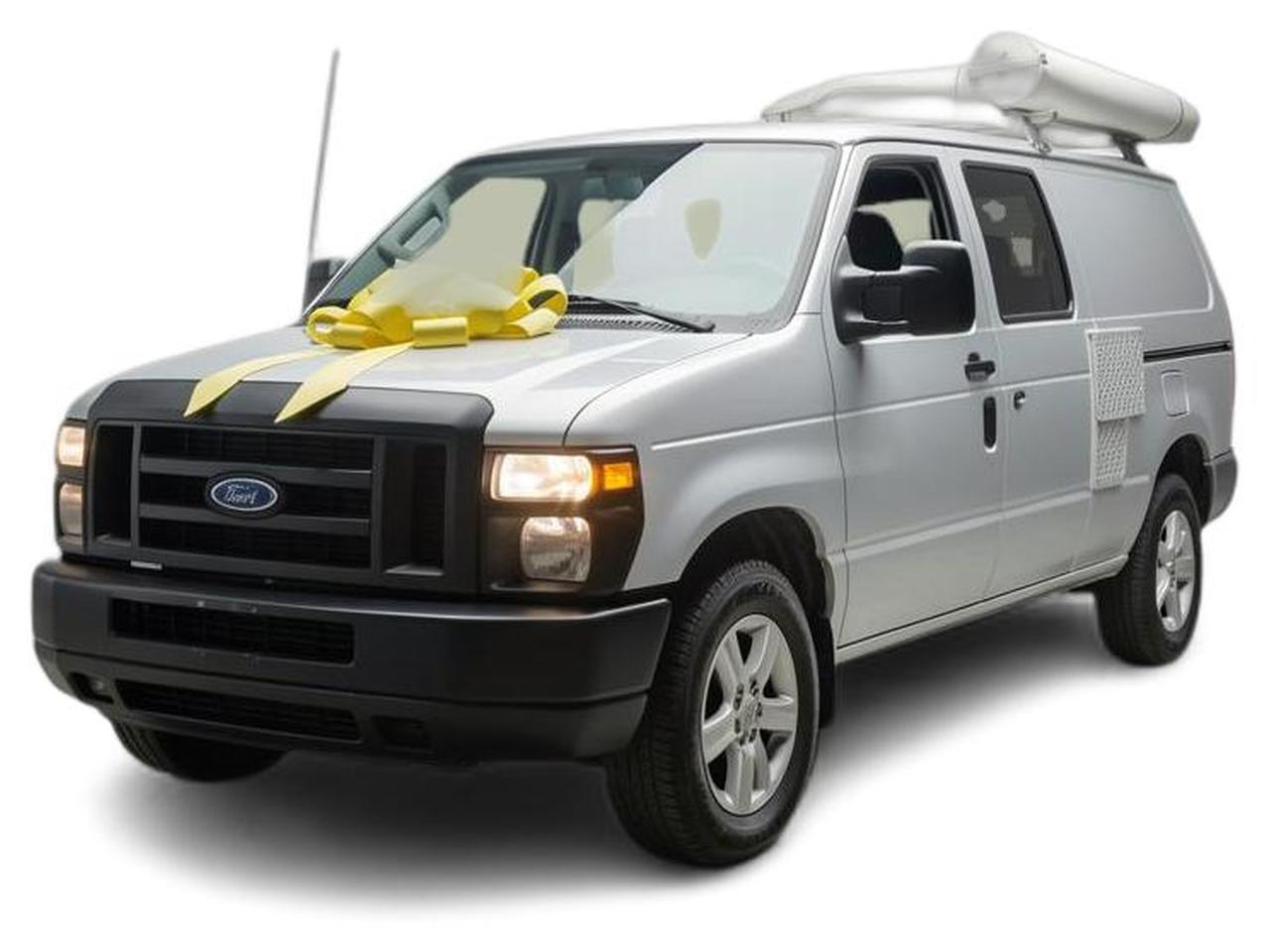
The Good
The 2008 E-350 excels in raw capability and hauling power, appealing to those needing dependable workhorses. Its spacious interior offers ample room for customization, while its robust build promises longevity. For families or businesses, its sheer utility and value proposition are significant draws.
The Bad
Potential buyers should be aware of common issues like transmission problems, especially with higher mileage, and potential rust on the undercarriage, particularly in regions with harsh winters. Fuel economy is also a significant drawback for this heavy-duty vehicle.
2008 Ford E-350: Quick Overview
- Engine Options: The 2008 Ford E-350 offered a choice between a 5.4L Triton V8 and a larger 6.8L Triton V10. A 4.6L V8 was also available on some configurations.
- Horsepower: The 4.6L V8 produced around 215-232 horsepower, the 5.4L V8 offered approximately 255 horsepower, and the 6.8L V10 delivered about 305 horsepower.
- Fuel Economy: Official EPA estimates were not as consistently reported for commercial vehicles of this era, but real-world figures were generally poor, often in the single digits for city driving and low to mid-teens for highway, especially with the V10.
- 0-60 Times: Due to its size and weight, 0-60 mph times were not a primary focus and were generally slow, typically ranging from 9 to 12 seconds depending on engine and load.
- Towing Capacity: The E-350 was a capable hauler. Towing capacities varied significantly based on configuration (GVWR, axle ratios, etc.) but could easily exceed 7,000 pounds and reach up to 10,000 pounds or more for properly equipped models.
- Trim-Level Features:
XL Trim: This was the base trim, focused on utility and durability. Standard features typically included vinyl flooring, manual windows and locks, basic AM/FM radio, and heavy-duty suspension. It was the workhorse configuration.
XLT Trim: The XLT offered a more comfortable and feature-rich experience. It often included upgrades like cloth seating, power windows and locks, cruise control, a better stereo system, and sometimes carpeting. Passenger versions in XLT trim would have more amenities for comfort during longer journeys.
2008 Ford E-350 Specifications
Vehicle Information
| Year | 2008 |
| Make | Ford |
| Model | E-350 |
| Trim | - |
| Style | Limited Van RWD 4AT 5.4L V8 |
| Type | Van |
| Category | passenger |
Manufacturing Details
| Made In | United States |
| Manufacturing City | JEFFERSON COUNTY |
Dimensions
| Doors | 4-Door |
| Curb Weight | 6000 pounds |
| Gross Vehicle Weight Rating | 10000 pounds |
| Overall Height | 81 inches |
| Overall Length | 219 inches |
| Overall Width | 79 inches |
| Wheelbase Length | 138 inches |
| Standard Seating | 12 |
Engine & Performance
| Engine | 5.4L V8 |
| Engine Size | 5.4L |
| Engine Cylinders | 8 |
| Transmission | 4-Speed Automatic |
| Transmission Type | Automatic |
| Transmission Speeds | 4-Speed |
| Drivetrain | Rear-Wheel Drive |
Additional Features
| Anti-Brake System | 4-Wheel ABS |
| Steering Type | Recirculating Ball |
Pricing
| Manufacturer Suggested Retail Price (MSRP) | $35,000 |
| Invoice Price | - |
| Delivery Charges | - |
Vehicle History Report
Specifications
History
Events
History Check
Check
Check
Check
Check
Listings
Recalls
Check
Analysis
What Problems Does the 2008 Ford E-350 Have?
Ignition system problems, such as failing ignition coils and spark plugs, have also been noted, leading to misfires and rough running. This can manifest as a loss of power or the check engine light illuminating.
Fuel system issues, including fuel pump failures and clogged fuel injectors, can also occur, impacting engine performance and fuel efficiency.
Rust and corrosion are significant long-term concerns, especially for E-350s that have been driven in areas with road salt or high humidity. The frame, body panels, and undercarriage are susceptible. Regular inspection and undercoating can help mitigate this.
Recalls for the 2008 model year, while not overwhelmingly numerous, did exist. Common recall areas for Ford vans of this period sometimes included issues related to the airbag system (specifically the Takata airbag inflator recalls, though this might vary by specific production dates) or potential problems with the fuel system or brake components. It is crucial for potential buyers to check the VIN against the NHTSA database for any outstanding recalls.
Regarding long-term reliability, the E-350 is generally considered a robust vehicle built for heavy use. However, its reliability is heavily contingent on maintenance. Vehicles that have been regularly serviced, with fluid changes and timely repairs, tend to fare much better. Those used in heavy-duty commercial applications or not maintained diligently may exhibit more significant issues sooner.
How long will the 2008 Ford E-350 last?
What Technology & Safety Features are Included?
Built-in Tech and Entertainment: Standard entertainment systems typically consisted of an AM/FM radio with a single-CD player. Optional upgrades could include a more advanced audio system with more speakers, and potentially an auxiliary input jack for connecting external music devices. Navigation systems were rare and considered a high-end option. For cargo van versions, the focus was on simplicity and durability rather than luxury amenities. Passenger versions, particularly in XLT trim, might have offered features like cruise control and a tachometer.
Driver-Assistance Features: Driver-assistance technologies were virtually non-existent in the 2008 E-350. Features like parking sensors, rearview cameras, or advanced adaptive cruise control were not available. The primary driving aids were basic, such as power steering and ABS brakes.
Safety Features: Standard safety equipment included front airbags for the driver and passenger, and anti-lock braking system (ABS) for improved stopping control. Seatbelt pretensioners were also standard. Higher trims or optional packages might have offered side-curtain airbags for enhanced protection in passenger configurations.
Optional Features: Beyond the upgraded audio systems, optional features could include rear climate control for passenger variants, a trailer tow package (essential for its towing capabilities), and heavier-duty suspension options. Some models might have been equipped with keyless entry.
Crash-Test Ratings: Official crash-test ratings from organizations like the NHTSA or IIHS for commercial vans like the 2008 Ford E-350 are often limited or not directly comparable to passenger vehicles due to their different design purpose and weight classes. However, the E-350 was built on a strong, body-on-frame chassis, which generally offers good structural integrity in a frontal or side impact. While it might not have achieved the highest ratings in modern testing standards designed for smaller, lighter vehicles, its robust construction was a key safety aspect for its intended use.
What Colors Options are Available?
2008 Ford E-350 Prices and Market Value
Currently, the used market prices for a 2008 E-350 are generally very affordable, often ranging from around $5,000 to $15,000, heavily dependent on mileage, condition, and specific configuration.
Depreciation for these workhorses is relatively slow once they pass their initial steep drop, especially for well-maintained cargo versions. Factors affecting resale value include mileage (lower is better), overall condition (mechanical and cosmetic), maintenance history, and whether it has been used for heavy commercial duty. Rust is a major detractor. Passenger versions tend to depreciate slightly faster than specialized cargo or cutaway models.
2008 Ford E-350 Cost of Ownership
2008 Ford E-350 Fuel Efficiency
2008 Ford E-350 Insurance
reasonable repair costs.
How Does the 2008 Ford E-350 Compare to Other Van?
Performance: The E-350, with its V8 and V10 engine options, offered strong towing and hauling power, often surpassing the base engines of the Express/Savana. The Dodge Sprinter, with its diesel engines, provided better fuel economy and a more car-like driving experience but less raw grunt for extreme towing.
Features: In 2008, interior features across all these vans were relatively basic, focusing on utility. The E-350 and its GM counterparts were quite similar in their standard offerings, with optional upgrades. The Sprinter, however, generally offered a more refined interior and advanced options for its time, reflecting its European origins and higher price.
Reliability: The E-350 is known for its robust, truck-like construction, making it reliable for heavy-duty use if maintained. The Chevrolet Express/GMC Savana also share a long history of reliability in commercial applications. The Dodge Sprinter, while capable, could be more expensive to repair due to specialized parts and complexity.
Price: The E-350 and its GM rivals were typically more affordable when new and on the used market compared to the Dodge Sprinter. This made them the go-to for budget-conscious businesses and individuals.
Alternatives:
- Chevrolet Express/GMC Savana (2008 and similar years): These are very similar in concept and capability to the E-350, offering comparable V8 power and utility. They are a strong, direct alternative.
- Dodge Sprinter (2008 and similar years): If fuel efficiency and a more modern, refined driving experience are priorities and budget is less of a concern, the Sprinter is a better choice, especially the diesel models. However, maintenance and repair costs are typically higher.
- Ford Transit (later model years): If a newer vehicle is an option, the Ford Transit (which replaced the E-Series in many markets) offers better fuel economy, more modern technology, and a more versatile platform, though it might be more expensive.
For those prioritizing brute strength and towing capacity at a lower cost, the 2008 E-350 or its GM counterparts remain excellent choices. If efficiency and refinement are key, and the budget allows, the Sprinter is worth considering.
Final Verdict: Is the 2008 Ford E-350 a Good Van?
It is worth buying if your primary need is raw utility and you can find one in good condition with a documented maintenance history. It's far more economical to purchase used than new.
Conditions under which it is a smart buy include:
- Used: Absolutely. The steep depreciation means you get incredible capability for the price.
- Specific Trims: Cargo versions (XL) are best for commercial use, while XLT passenger versions offer more comfort for families or people movers.
- Inspected Thoroughly: Prioritize vehicles with minimal rust and a clean engine/transmission history.
- Fuel Economy Awareness: Be prepared for high fuel costs. If fuel efficiency is a major concern, this is likely not the best fit.

Drew B
Drew is a seasoned automotive expert and contributor to VinCheck.info. With nearly 15 years of experience as a former Porsche technician, he brings a wealth of hands-on knowledge to his writing. Born in North Carolina, a region renowned for its deep-rooted NASCAR culture, Drew developed a passion for cars early in life, often building and working on vehicles from a young age. At VINCheck, Drew leverages his extensive technical background to provide in-depth analyses of various vehicles. His articles often focus on engine performance, reliability, and maintenance insights, offering readers practical information grounded in real-world experience. Some of his notable contributions include reviews on the Mazda CX-5's longevity and detailed examinations of engine options for models like the 2011 Toyota Camry and Tacoma