
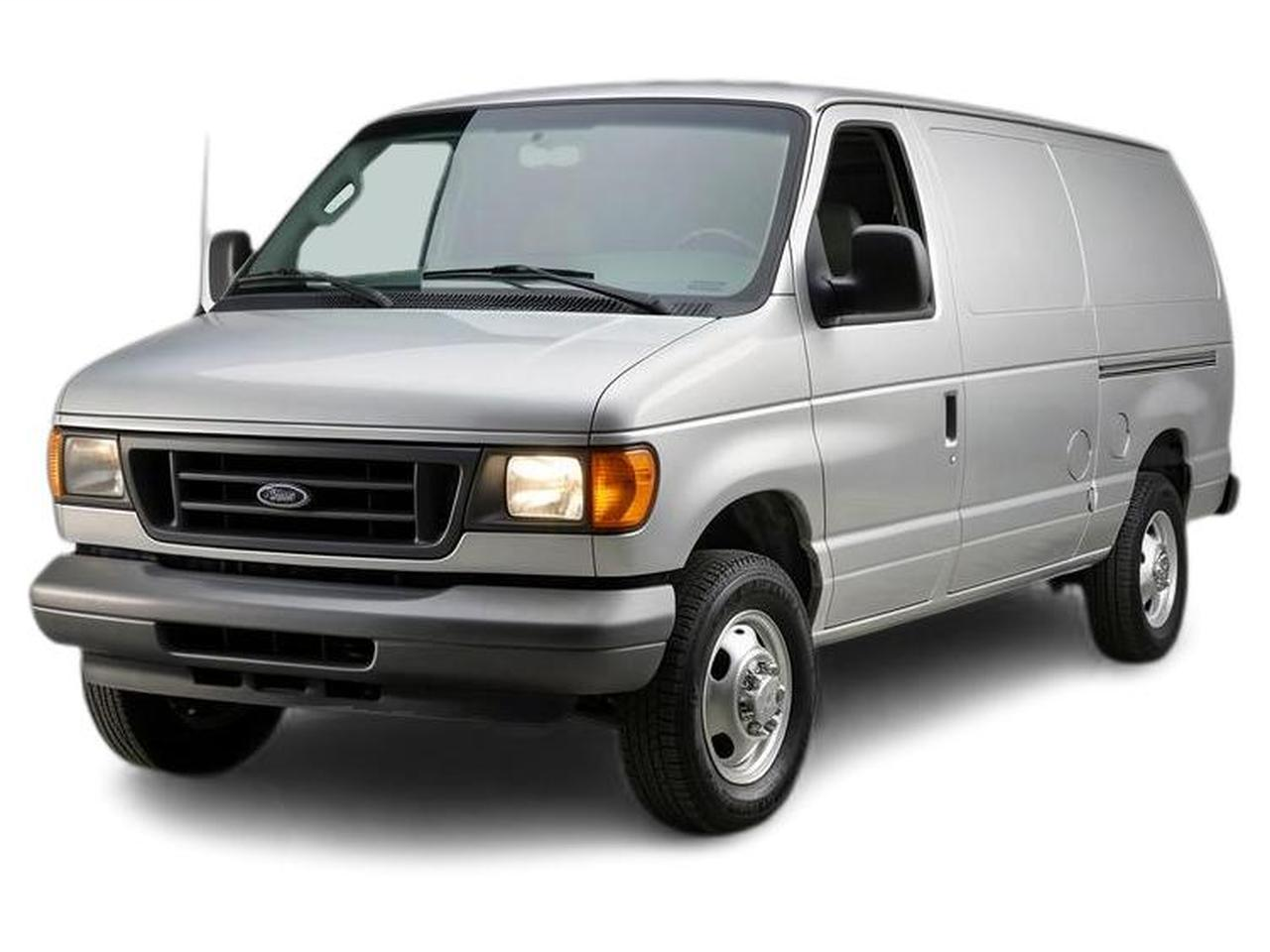
The Good
The 2005 E-350 boasts strong towing and hauling capability, dependable V8 performance, and a proven chassis, offering practical peace of mind. Its spacious interior provides comfort for long journeys and ample cargo room, appealing to families and professionals alike who value utility and resilience.
The Bad
Potential buyers should watch for rust, particularly on the frame and body panels, especially in harsher climates. Transmission issues, electrical gremlins, and wear on suspension components are also common concerns that may require attention over time.
2005 Ford E-350: Quick Overview
- Engine Options:
- 4.6L Triton V8
- 5.4L Triton V8
- 6.8L Triton V10 - Horsepower:
- 4.6L V8: Approximately 215-232 hp
- 5.4L V8: Approximately 255 hp
- 6.8L V10: Approximately 305 hp - Fuel Economy:
- Generally poor due to large size and powerful engines. Expect single-digit MPG in city driving and low double-digits on the highway. Specific figures vary greatly with engine, load, and driving conditions. Estimates range from 8-12 MPG combined. - 0-60 Times:
- Highly dependent on configuration, engine, and load. Typically in the 9-12 second range for lighter configurations, potentially longer when heavily loaded. - Towing Capacity:
- Substantial. Configurations can tow from approximately 7,000 lbs up to over 10,000 lbs, depending on axle ratio, engine, and chassis package. - Trim-Level Features:
XL: Basic work-oriented trim, often including vinyl seats, manual windows and locks, and a basic audio system. Focus is on utility.
XLT: More comfort-oriented, often featuring cloth seats, power windows and locks (may be optional on some), upgraded audio system, and enhanced interior trim. Air conditioning is typically standard. Passenger versions would include seating for up to 10-15 people with varying configurations. Options could include rear climate control, upgraded carpeting, and power mirrors.
2005 Ford E-350 Specifications
Vehicle Information
| Year | 2005 |
| Make | Ford |
| Model | E-350 |
| Trim | - |
| Style | XL Van RWD 4AT 5.4L V8 |
| Type | Van |
| Category | commercial |
Manufacturing Details
| Made In | United States |
| Manufacturing City | LORAIN |
Dimensions
| Doors | 3-Door |
| Curb Weight | 6000 pounds |
| Gross Vehicle Weight Rating | 10000 pounds |
| Overall Height | 81 inches |
| Overall Length | 219 inches |
| Overall Width | 79 inches |
| Wheelbase Length | 138 inches |
| Standard Seating | 5 |
Engine & Performance
| Engine | 5.4L V8 |
| Engine Size | 5.4L |
| Engine Cylinders | 8 |
| Transmission | 4-Speed Automatic |
| Transmission Type | Automatic |
| Transmission Speeds | 4-Speed |
| Drivetrain | Rear-Wheel Drive |
Additional Features
| Anti-Brake System | 4-Wheel ABS |
| Steering Type | Recirculating Ball |
Pricing
| Manufacturer Suggested Retail Price (MSRP) | $29,000 |
| Invoice Price | $27,000 |
| Delivery Charges | $800 |
Vehicle History Report
Specifications
History
Events
History Check
Check
Check
Check
Check
Listings
Recalls
Check
Analysis
What Problems Does the 2005 Ford E-350 Have?
Another prevalent issue is rust. Ford vans from this period are known to develop significant rust, especially on the frame rails, rocker panels, wheel wells, and around the doors. This is particularly true for vehicles used in areas with road salt or high humidity. Early detection and treatment are crucial for longevity.
Engine cooling system problems are also not uncommon. Radiator leaks, failing water pumps, and thermostat issues can lead to overheating, which, if not addressed promptly, can cause severe engine damage. Spark plug blowouts, especially in the Triton V8 engines, were a known concern in earlier model years and could persist.
Regarding recalls, it's essential to check the specific vehicle's VIN for any outstanding campaigns. For the 2005 model year, recalls might have addressed issues such as fuel tank strap corrosion, airbag inflator concerns, or potential brake system issues, depending on the exact production date and configuration.
Long-term reliability is often tied to meticulous maintenance. However, components like the exhaust system can be prone to corrosion and failure. Electrical issues, such as faulty sensors, door lock actuators, or power window motors, can also arise with age and mileage. While the E-350 is built to be durable, consistent attention to fluid changes, especially transmission and coolant, and proactive rust prevention will significantly contribute to its overall lifespan and reliability.
How long will the 2005 Ford E-350 last?
What Technology & Safety Features are Included?
Driver-assistance features were virtually nonexistent. There were no advanced systems like cruise control with adaptive capabilities, lane departure warnings, or blind-spot monitoring. The focus was on the driver's direct control and awareness.
Safety features for the 2005 E-350 included standard front airbags for the driver and front passenger. Antilock Braking System (ABS) was also a standard safety feature, crucial for maintaining steering control during emergency braking maneuvers. Seatbelt pretensioners were included to enhance occupant protection in a collision. Higher trim levels or optional packages might have offered features like rear privacy glass for passenger models.
Crash-test ratings for commercial vehicles like the E-350 are often not directly comparable to passenger cars and may be limited. However, Ford generally aimed to meet or exceed federal safety standards. The sturdy construction of the E-350 contributed to its inherent structural integrity. For specific crash-test data, it would be necessary to consult the National Highway Traffic Safety Administration (NHTSA) or the Insurance Institute for Highway Safety (IIHS) archives, though comprehensive ratings for this specific model year and vehicle type may be scarce.
What Colors Options are Available?
2005 Ford E-350 Prices and Market Value
2005 Ford E-350 Cost of Ownership
2005 Ford E-350 Fuel Efficiency
2005 Ford E-350 Insurance
reasonable repair costs.
How Does the 2005 Ford E-350 Compare to Other Van?
In terms of performance, the E-350 often offered a slightly more powerful engine lineup, particularly with the available V10, giving it an edge in towing and hauling compared to base models of the Chevy/GMC twins. The ride quality in the E-350 was generally considered robust and truck-like.
For features, the E-350 was fairly comparable to its direct competitors. All offered basic amenities. Passenger versions were configurable for seating, while cargo versions focused on utility. None offered advanced tech by today's standards. The E-350's cabin, while functional, could feel dated.
Regarding reliability, the E-350 and the Chevy/GMC twins generally shared a reputation for durability, with many owners reporting high mileage. However, both had their share of common issues, such as transmission problems and rust. Specific issues like spark plug blowouts were more prominent in Ford's Triton engines during certain periods.
In terms of price, used 2005 E-350s are typically found in a similar price bracket to comparable Chevrolet Express or GMC Savana vans. The Dodge Ram Van, being discontinued earlier, might be harder to find in this specific model year.
Alternatives: For those prioritizing modern technology and safety, newer models of the Ford Transit or Mercedes-Benz Sprinter are significantly better but come at a much higher cost. For a similar utilitarian purpose and value on the used market, a 2005 Chevrolet Express or GMC Savana would be a very close alternative. If pure cargo capacity and a simpler mechanical design are paramount, and if rust is less of a concern, older models of these vans remain viable. However, for a balance of capability and availability, the 2005 E-350 and its immediate rivals are strong contenders in the used full-size van market.
Final Verdict: Is the 2005 Ford E-350 a Good Van?
Buying this vehicle is most advisable when purchased used, given its age. Focus on models with thorough maintenance records, inspect carefully for rust (especially on the frame), and ideally opt for one with the more powerful V8 or V10 engine if towing is a requirement. Avoid models with known transmission issues. For its intended purpose of hauling people or cargo reliably, it remains a capable and often affordable option if acquired wisely.

Eugene S
Eugene is an automotive enthusiast with over 15 years of experience in the used car market. As a writer at VINCheck.info, he brings deep industry insight and a passion for cars, helping readers make smart, informed decisions. Eugene has written hundreds of used car reviews and is known for breaking down complex automotive topics into clear, actionable advice. Over the years, he has driven and worked on a wide range of vehicles—starting with tuning street cars in his early days and eventually focusing on performance upgrades and reliability improvements. Today, he specializes in evaluating used vehicles through the lens of real-world ownership and enthusiast needs. A longtime fan of Porsche, Eugene especially appreciates vehicles that blend durability with driving enjoyment.