The 1983 Ford E-350 is a full-size van, part of the long-running Ford E-Series lineup that debuted in the early 1960s and continued for decades. Known for its robust construction and versatility, it was offered in various body styles including passenger wagons and cargo vans. Key trims often denoted payload capacity or specific configurations. While new pricing varied significantly based on options, its popularity stemmed from its rugged nature, ample interior space, and ability to be customized for a wide range of needs, from family hauling to commercial use.


The Good
The 1983 E-350 offers impressive practicality with its cavernous interior and robust towing capabilities, appealing to the pragmatic buyer. Emotionally, its nostalgic, utilitarian design and the freedom it represents for adventure or business ventures are significant draws.
The Bad
Common weaknesses include potential rust, especially around wheel wells and rocker panels, and aging fuel systems. Older suspension components can also wear out. Electrical gremlins and the wear and tear on older powertrains are also important considerations.
1983 Ford E-350: Quick Overview
- Engine Options: The 1983 Ford E-350 was available with a selection of robust gasoline engines and, in some configurations, a diesel option. Common gasoline choices included the 4.9L (300 cubic inch) inline-six, the 5.0L (302 cubic inch) V8, and the larger 5.8L (351 cubic inch) V8. A 6.9L naturally aspirated diesel engine was also offered for those prioritizing torque and fuel efficiency over outright power.
- Horsepower: Horsepower figures varied by engine and year, but generally ranged from approximately 115-145 hp for the inline-six, 140-185 hp for the V8s, and around 170 hp for the diesel engine. These figures were modest by modern standards but provided adequate power for the van's intended purposes.
- Fuel Economy: Fuel economy was not a strong suit for the E-350, especially given its size and weight. Expect figures in the single digits to low teens for city driving, with highway mileage potentially reaching the mid-to-high teens for the most efficient configurations (often the diesel).
- 0-60 Times: Official 0-60 mph times were rarely published for these workhorse vans. Given their weight and engine output, expect acceleration to be leisurely, likely in the 15-25 second range depending on the engine and load.
- Towing Capacity: The E-350 was designed with towing in mind. Depending on the specific configuration, axle ratios, and trailer towing packages, its towing capacity could range significantly, often starting around 7,000 lbs and potentially exceeding 10,000 lbs for properly equipped heavy-duty models.
- Trim-Level Features: Trims varied, but often included basic cargo van configurations focused on utility, and more comfortable passenger wagon versions. Standard features might include vinyl seating, AM radio, and basic instrumentation. Optional features could include air conditioning, power steering, power brakes, upgraded interior trim, dual fuel tanks, and heavy-duty suspension components. Higher-end trims might offer more comfortable seating and sound deadening.
1983 Ford E-350 Specifications
Vehicle Information
| Year | 1983 |
| Make | Ford |
| Model | E-350 |
| Trim | - |
| Style | - |
| Type | Van |
| Category | Cargo Van |
Manufacturing Details
| Made In | United States |
| Manufacturing City | LORAIN |
Dimensions
| Doors | - |
| Curb Weight | - |
| Gross Vehicle Weight Rating | - |
| Overall Height | - |
| Overall Length | - |
| Overall Width | - |
| Wheelbase Length | - |
| Standard Seating | - |
Engine & Performance
| Engine | 7.5-L V-8 OHV 16V |
| Engine Size | 7.5L |
| Engine Cylinders | 8 |
| Transmission | 3-Speed Automatic |
| Transmission Type | Automatic |
| Transmission Speeds | 3-Speed |
| Drivetrain | Rear-Wheel Drive |
Additional Features
| Anti-Brake System | - |
| Steering Type | - |
Pricing
| Manufacturer Suggested Retail Price (MSRP) | - |
| Invoice Price | - |
| Delivery Charges | - |
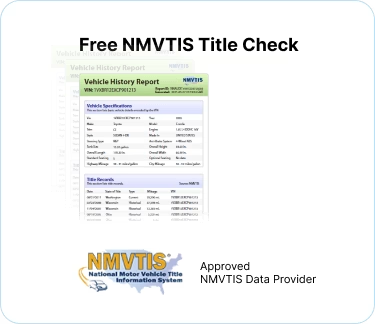
Vehicle History Report
Vehicle
Specifications
Specifications
Ownership
History
History
All History
Events
Events
NMVTIS Title
History Check
History Check
Salvage/Rebuilt
Check
Check
Accident
Check
Check
Theft
Check
Check
Open Lien
Check
Check
Past Sale
Listings
Listings
Safety
Recalls
Recalls
Odometer
Check
Check
Market Price
Analysis
Analysis
What Problems Does the 1983 Ford E-350 Have?
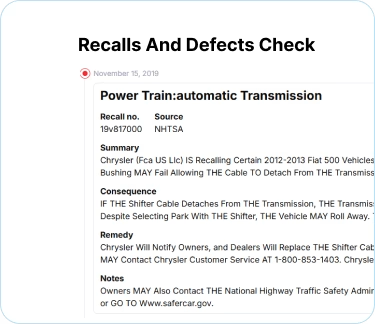
The 1983 Ford E-350, being an older vehicle, is prone to age-related issues rather than specific model-year recalls that would still be active. One of the most prevalent concerns across many vehicles of this era is rust, particularly in areas exposed to road salt and moisture, such as the rocker panels, wheel wells, and floor pans. Structural integrity can be compromised over time if rust is not addressed. The older fuel systems, including fuel pumps, lines, and carburetors (on gasoline engines), can develop leaks or become clogged with sediment, leading to starting issues or poor running conditions. The engines themselves, while generally robust, can suffer from worn components like piston rings, valve seals, and head gaskets, especially with high mileage. Cooling systems are also a point of concern; radiators can leak or become clogged, and water pumps can fail, leading to overheating, which can cause significant engine damage. On diesel models, glow plug issues and injector pump problems are not uncommon. Transmission issues, whether manual or automatic, can arise from wear and tear on clutch packs, torque converters, or seals, leading to slipping or erratic shifting. The suspension and steering components, such as ball joints, tie rod ends, and bushings, will also likely require attention on older E-350s, potentially leading to noisy operation or poor handling. Electrical gremlins, including issues with the alternator, starter, wiring harnesses, and dashboard components, can also manifest over time. While specific recalls for the 1983 model are unlikely to be relevant now, it's always wise to check for any safety campaigns that may have existed. Overall, long-term reliability heavily depends on the vehicle's maintenance history and the owner's proactive approach to addressing wear and tear.
How long will the 1983 Ford E-350 last?
Given their robust build, 1983 Ford E-350s, with diligent maintenance, can achieve well over 200,000 miles and continue in service for 20-30 years or more. Many examples have seen active use as work vans or RV conversions, easily surpassing 300,000 miles. The core drivetrain components, particularly the inline-six and V8 gasoline engines and the diesel option, are known for their longevity. However, their long-term durability is intrinsically tied to how well they were maintained. Neglected cooling systems, lack of regular fluid changes, and exposure to harsh elements accelerate wear. Weaknesses that emerge over time are typically related to wear and tear on suspension, brakes, and exhaust systems, along with the aforementioned rust issues. The chassis and frame are generally very strong, offering a solid foundation for extended service life.
What Technology & Safety Features are Included?
The 1983 Ford E-350 represents a period where automotive technology was significantly simpler, particularly in commercial and utility vehicles. Built-in tech and entertainment features were rudimentary by today's standards. Standard entertainment typically consisted of an AM radio, with an AM/FM radio often available as an optional upgrade. There were no integrated infotainment systems, touchscreens, or digital displays. Driver-assistance features were virtually nonexistent; modern amenities like ABS, traction control, or parking sensors were not part of the package. The focus was purely on mechanical function.
Safety features were also basic. Standard equipment would have included lap belts for occupants, and potentially shoulder belts depending on seating position and configuration. Power steering and power brakes were often optional but highly recommended for ease of driving and control, especially when loaded or towing. The robust, body-on-frame construction provided a degree of inherent passive safety due to its sheer mass and structural integrity.
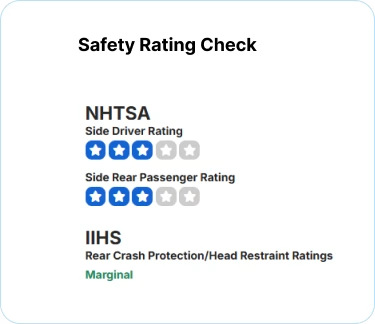
There were no comprehensive crash-test ratings available for commercial vans like the E-350 from agencies like the NHTSA or IIHS in the way we see them today. Testing protocols and public disclosure of such results were not standard practice for these types of vehicles during that era. The emphasis was on durability and utility rather than crashworthiness metrics. Any modern safety expectations should be tempered by the vehicle's vintage; owners seeking advanced safety systems would need to consider aftermarket additions or look to much newer vehicles.
Safety features were also basic. Standard equipment would have included lap belts for occupants, and potentially shoulder belts depending on seating position and configuration. Power steering and power brakes were often optional but highly recommended for ease of driving and control, especially when loaded or towing. The robust, body-on-frame construction provided a degree of inherent passive safety due to its sheer mass and structural integrity.
There were no comprehensive crash-test ratings available for commercial vans like the E-350 from agencies like the NHTSA or IIHS in the way we see them today. Testing protocols and public disclosure of such results were not standard practice for these types of vehicles during that era. The emphasis was on durability and utility rather than crashworthiness metrics. Any modern safety expectations should be tempered by the vehicle's vintage; owners seeking advanced safety systems would need to consider aftermarket additions or look to much newer vehicles.
What Colors Options are Available?
1983 Ford E-350 Prices and Market Value
When new, the 1983 Ford E-350's price varied considerably based on its configuration, engine, and optional equipment, but typically ranged from around $10,000 to $20,000 or more for fully equipped models, especially RV conversions. Depreciation was significant in the initial years, as is typical for all vehicles. However, due to their ruggedness and utility, E-350s tend to hold their value reasonably well in the used market, especially well-maintained examples or those with desirable features like diesel engines or specific conversion packages.
Current used market prices for a 1983 E-350 can range from as low as $2,000-$4,000 for project vehicles needing significant work, up to $8,000-$15,000+ for clean, well-maintained examples, or unique custom builds. Factors affecting resale value include overall condition, mileage, mechanical soundness, the presence of rust, originality, and whether it has been converted into a camper van or other specialized vehicle. Diesel models often command a premium.
1983 Ford E-350 Cost of Ownership
Owning a 1983 Ford E-350 can be economical or costly depending heavily on its condition and usage. Insurance costs are generally reasonable for older vehicles, especially for liability-only coverage. Fuel costs can be substantial due to lower fuel economy, particularly with V8 gasoline engines. Maintenance and repair are where costs can fluctuate; while parts for these older Fords are often readily available and relatively inexpensive, a well-maintained vehicle will incur fewer surprise repair bills. However, unforeseen issues on a 40-year-old vehicle are common. Overall, for a well-kept E-350, ownership costs can be manageable, but it requires an owner prepared for potential mechanical attention, making it more of a hobbyist's or DIY mechanic's vehicle for true economy.
1983 Ford E-350 Fuel Efficiency
Fuel Type
Gasoline
Fuel Capacity
-
City Mileage
-
Highway Mileage
-
1983 Ford E-350 Warranty
Basic
Original warranty
0 months / No data
Estimated remaining
Expired
Powertrain
Original warranty
0 months / No data
Estimated remaining
Expired
Rust
Original warranty
0 months / No data
Estimated remaining
Expired
1983 Ford E-350 Insurance
Insurance for a 1983 Ford E-350 is moderately priced, reflecting its status as a Van with strong safety ratings and
reasonable repair costs.
How Does the 1983 Ford E-350 Compare to Other Van?
In 1983, the primary rivals to the Ford E-350 were the Chevrolet Express/GMC Savana (though the Express name came later, it was the successor to the Chevy Van) and the Dodge Ram Van/Wagon.
Performance: The E-350, particularly with its V8 engine options or the optional diesel, offered competitive power and torque for its class, making it capable of handling significant loads and towing. Chevrolet vans of this era generally offered similar engine choices, often with comparable performance. Dodge vans also provided capable powertrains, though sometimes perceived as slightly less robust in their base configurations.
Features: In terms of features, all these vans of the era were utilitarian. Options like air conditioning, power steering, and upgraded interiors were available across the board. None offered advanced technology or driver aids by modern standards. The E-350 was competitive, offering a solid set of functional features.
Reliability: Ford's E-Series vans have a long-standing reputation for durability and reliability, often considered the benchmark in their segment for build quality and longevity. While all had their potential issues (rust being common to all), the Ford E-350 was frequently cited for its robust mechanicals. Chevrolet vans were also known for their sturdiness, while Dodge vans sometimes faced more criticism regarding long-term reliability and build quality compared to their Ford and Chevy counterparts.
Price: Pricing was generally competitive among these American manufacturers, with variations based on trim levels, engine choices, and optional packages. The E-350 was positioned to offer strong value for its capability and durability.
Alternatives:
For those seeking similar capability with potentially more refinement or slightly different design cues, other full-size vans from the same era like the Chevrolet Van would be direct competitors. If prioritizing outright brute force and a more commanding presence, a heavily modified or specialized version of any of these vans could be considered. However, for a balanced blend of workhorse capability, widespread parts availability, and a proven track record of durability, the 1983 Ford E-350 remains a strong contender. There are few direct modern alternatives that capture the same spirit of simple, robust utility without a significant leap in technology and price. For many, the E-350 is its own category due to its iconic status and widespread use in conversion and commercial applications.
Performance: The E-350, particularly with its V8 engine options or the optional diesel, offered competitive power and torque for its class, making it capable of handling significant loads and towing. Chevrolet vans of this era generally offered similar engine choices, often with comparable performance. Dodge vans also provided capable powertrains, though sometimes perceived as slightly less robust in their base configurations.
Features: In terms of features, all these vans of the era were utilitarian. Options like air conditioning, power steering, and upgraded interiors were available across the board. None offered advanced technology or driver aids by modern standards. The E-350 was competitive, offering a solid set of functional features.
Reliability: Ford's E-Series vans have a long-standing reputation for durability and reliability, often considered the benchmark in their segment for build quality and longevity. While all had their potential issues (rust being common to all), the Ford E-350 was frequently cited for its robust mechanicals. Chevrolet vans were also known for their sturdiness, while Dodge vans sometimes faced more criticism regarding long-term reliability and build quality compared to their Ford and Chevy counterparts.
Price: Pricing was generally competitive among these American manufacturers, with variations based on trim levels, engine choices, and optional packages. The E-350 was positioned to offer strong value for its capability and durability.
Alternatives:
For those seeking similar capability with potentially more refinement or slightly different design cues, other full-size vans from the same era like the Chevrolet Van would be direct competitors. If prioritizing outright brute force and a more commanding presence, a heavily modified or specialized version of any of these vans could be considered. However, for a balanced blend of workhorse capability, widespread parts availability, and a proven track record of durability, the 1983 Ford E-350 remains a strong contender. There are few direct modern alternatives that capture the same spirit of simple, robust utility without a significant leap in technology and price. For many, the E-350 is its own category due to its iconic status and widespread use in conversion and commercial applications.
Final Verdict: Is the 1983 Ford E-350 a Good Van?
The 1983 Ford E-350 is ideally suited for DIY enthusiasts, tradespeople, or hobbyists who value utility, cargo space, and robust mechanicals over modern amenities. It's an excellent platform for conversion into a camper van, work van, or a basic hauler. It is worth buying for individuals who are mechanically inclined or have access to reliable repair services, and who prioritize a utilitarian vehicle that can be customized.
Buying this vehicle is best approached with caution. It is strongly recommended to purchase a used model, as new versions are no longer available. Focus on finding a well-maintained example, preferably with a documented service history. Examples with the 4.9L inline-six or the 5.8L V8 gasoline engines, or the 6.9L diesel, are generally preferred for their longevity. Thoroughly inspect for rust, as this is the most significant long-term concern. A project vehicle can be a great value if you're prepared for restoration, but a running, driving example in good mechanical condition will offer a more immediate return on investment.