
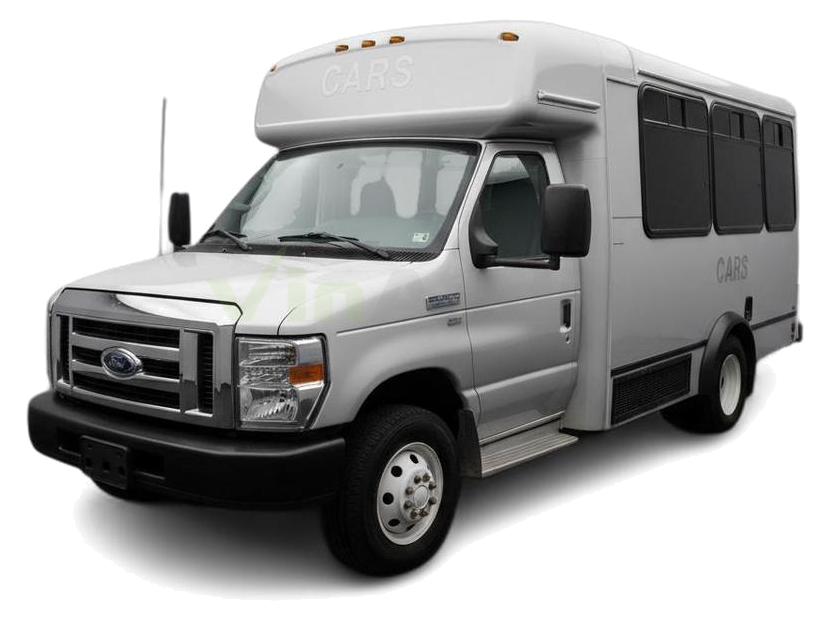
The Good
The 2013 E-350 excels in sheer capability and dependable service. Its powerful engines offer substantial towing and hauling prowess, satisfying practical needs, while its cavernous interior provides ample space for passengers or cargo, offering a sense of security and preparedness for any task.
The Bad
Potential buyers should be aware of its dated interior design and less refined ride quality compared to modern vehicles. Fuel economy is also a significant drawback. Some common issues include transmission problems and potential rust in certain climates, especially around the body panels.
2013 Ford E-350: Quick Overview
- Engine Options: The 2013 Ford E-350 offered two primary engine choices: a 4.6L Triton V8 and a more powerful 5.4L Triton V8. Some configurations might have also featured a 6.8L V10 or a 6.0L Power Stroke turbodiesel, though these were less common in passenger variants.
- Horsepower: The 4.6L V8 typically produced around 225 horsepower, while the 5.4L V8 offered approximately 255 horsepower. The optional V10 would deliver upwards of 305 horsepower.
- Fuel Economy: As a large, heavy-duty vehicle, fuel economy was not a strong suit. Expect figures in the range of 10-14 MPG combined, varying significantly with engine choice, payload, and driving conditions. Specific EPA estimates for the 2013 model year for these configurations are often difficult to pin down precisely due to the commercial nature and customizability.
- 0-60 Times: Due to its commercial focus and weight, 0-60 mph times were not a primary consideration or published metric for the E-350. However, under normal load, acceleration would likely be in the 10-14 second range, depending heavily on the engine and configuration.
- Towing Capacity: The E-350 was engineered for heavy-duty work, with towing capacities often reaching well over 7,000 pounds, and in some configurations, exceeding 10,000 pounds. This capability was contingent on the specific chassis, axle ratio, engine, and optional towing packages installed.
- Trim-Level Features:
- Base Trim: Typically included essential features like air conditioning, power steering, durable cloth seating, a basic AM/FM stereo, and vinyl flooring. Focus was on functionality and ruggedness.
- XLT Trim: Built upon the base trim, adding more comfort and convenience features such as upgraded interior trim, power windows and locks, cruise control, a more advanced audio system, and potentially a tilt steering wheel. Passenger versions in XLT trim often featured enhanced seating and interior amenities for up to 8 or 10 occupants.
- Base Trim: Typically included essential features like air conditioning, power steering, durable cloth seating, a basic AM/FM stereo, and vinyl flooring. Focus was on functionality and ruggedness.
2013 Ford E-350 Specifications
Vehicle Information
| Year | 2013 |
| Make | Ford |
| Model | E-350 |
| Trim | - |
| Style | - |
| Type | Truck |
| Category | Cargo Van |
Manufacturing Details
| Made In | United States |
| Manufacturing City | AVON LAKE |
Dimensions
| Doors | 3-Door |
| Curb Weight | 5521 pounds |
| Gross Vehicle Weight Rating | 9500 pounds |
| Overall Height | 83.60 inches |
| Overall Length | 236.40 inches |
| Overall Width | 79.40 inches |
| Wheelbase Length | 138.00 inches |
| Standard Seating | 2 |
Engine & Performance
| Engine | 5.4L V8 |
| Engine Size | 5.4L |
| Engine Cylinders | 8 |
| Transmission | 6-Speed Automatic |
| Transmission Type | Automatic |
| Transmission Speeds | 6-Speed |
| Drivetrain | Rear-Wheel Drive |
Additional Features
| Anti-Brake System | 4-Wheel ABS |
| Steering Type | Recirculating |
Pricing
| Manufacturer Suggested Retail Price (MSRP) | $32,385 |
| Invoice Price | $29,876 |
| Delivery Charges | $995 |
Vehicle History Report
Specifications
History
Events
History Check
Check
Check
Check
Check
Listings
Recalls
Check
Analysis
What Problems Does the 2013 Ford E-350 Have?
Another area to watch out for is the cooling system. Over time, leaks can develop in hoses or the radiator, leading to overheating. Regular inspection and flushing of the cooling system are recommended. Electrical gremlins can also surface, though often minor, such as issues with power windows, door locks, or dashboard lights. These can sometimes be traced to faulty relays or wiring harnesses.
Regarding recalls, it's always advisable to check the National Highway Traffic Safety Administration (NHTSA) website for any specific recalls pertaining to the 2013 E-350 by its VIN. Common recall areas for E-Series vans over the years have included issues with the fuel pump, airbags, or steering components. For the 2013 model, specific recalls would need to be verified, but generally, Ford's long-term reliability record for its vans is strong, provided they are maintained according to schedule. Long-term reliability is often more dependent on the vehicle's specific use case and how diligently it has been serviced. For example, a van used for constant heavy hauling will likely experience wear and tear differently than one used for occasional passenger transport.
How long will the 2013 Ford E-350 last?
What Technology & Safety Features are Included?
Driver-assistance features were extremely limited on the 2013 E-350. Rear parking sensors might have been available as an option on some configurations, but advanced systems like lane departure warning, adaptive cruise control, or blind-spot monitoring were not offered. The focus was on the core driving experience and utility.
Safety features were primarily centered on passive systems. Standard equipment usually included front airbags for the driver and front passenger. Anti-lock brakes (ABS) were also standard, providing enhanced braking control. For passenger versions, seat belts for all occupants were a given. Traction control might have been available as an option. Ford offered various stability control systems on its vehicles around this time, but their availability on specific E-350 configurations in 2013 would vary.
Crash-test ratings for vehicles like the E-350 are often not as comprehensive or publicly available as for light-duty passenger cars. Due to its heavy-duty nature and commercial focus, it wasn't typically subjected to the same battery of NHTSA or IIHS crash tests. However, its robust construction generally provided good occupant protection in frontal impacts, but side-impact and rollover resistance would depend heavily on the specific configuration and any optional safety equipment.
What Colors Options are Available?
2013 Ford E-350 Prices and Market Value
2013 Ford E-350 Cost of Ownership
2013 Ford E-350 Fuel Efficiency
2013 Ford E-350 Safety Rating
IIHS
2013 Ford E-350 Recalls & Defects
Equipment Adaptive/Mobility
Fuel System, Other:storage
Equipment Adaptive/Mobility
Equipment Adaptive/Mobility
Equipment Adaptive/Mobility
Equipment Adaptive/Mobility
Equipment Adaptive/Mobility
Equipment Adaptive/Mobility
Equipment Adaptive/Mobility
2013 Ford E-350 Warranty
Basic
Powertrain
Rust
2013 Ford E-350 Insurance
reasonable repair costs.
How Does the 2013 Ford E-350 Compare to Other Truck?
Performance: In terms of raw power and towing capacity, the E-350's V8 engine options were generally competitive, offering robust performance for hauling and towing. The Chevrolet Express/GMC Savana also offered strong V8 powertrains, often with similar towing ratings. The Sprinter, particularly with its diesel engine, offered a balance of power and significantly better fuel efficiency, a key differentiator.
Features: The E-350's interior and technology were its weakest point compared to rivals, especially the more modern Sprinter. It featured a utilitarian design focused on durability rather than comfort or advanced tech. The Express/Savana were similarly basic in their standard configurations, though perhaps slightly more refined in higher trims than the E-350. The Sprinter, conversely, offered a more car-like interior, more advanced safety and convenience features, and superior ergonomics.
Reliability: The E-350 has a reputation for solid, albeit basic, reliability, particularly in its powertrain, provided it receives diligent maintenance. The Express/Savana also boast a strong track record for dependability. The Sprinter, while capable, has historically had higher maintenance costs and more complex repair needs, though its long-term durability is also generally good when properly cared for.
Price: The E-350 typically offered a more budget-friendly entry price compared to the Mercedes-Benz Sprinter when new, and this trend often continues in the used market. The Express/Savana were priced competitively with the E-350.
Alternatives: For buyers prioritizing fuel efficiency and a more modern driving experience, the Mercedes-Benz Sprinter is a superior, albeit more expensive, alternative. If reliability and a more direct competitor to the E-350 are sought, the Chevrolet Express/GMC Savana are very similar in their core strengths and weaknesses. However, if a slightly newer used vehicle with more amenities is desired and the budget allows, looking at later model years of the E-350 or its direct competitors would be wise.
Final Verdict: Is the 2013 Ford E-350 a Good Truck?

Cathleen V
Cathleen is an exceptional freelance writer covering hot topics in the automotive world from a gearhead's perspective. Her articles delve into various aspects of automotive technology and history, offering readers detailed insights into engine performance, reliability, and maintenance. Through her engaging and informative writing, Cathleen provides valuable information to automotive enthusiasts and consumers alike, helping them make informed decisions about vehicle maintenance and purchases.