
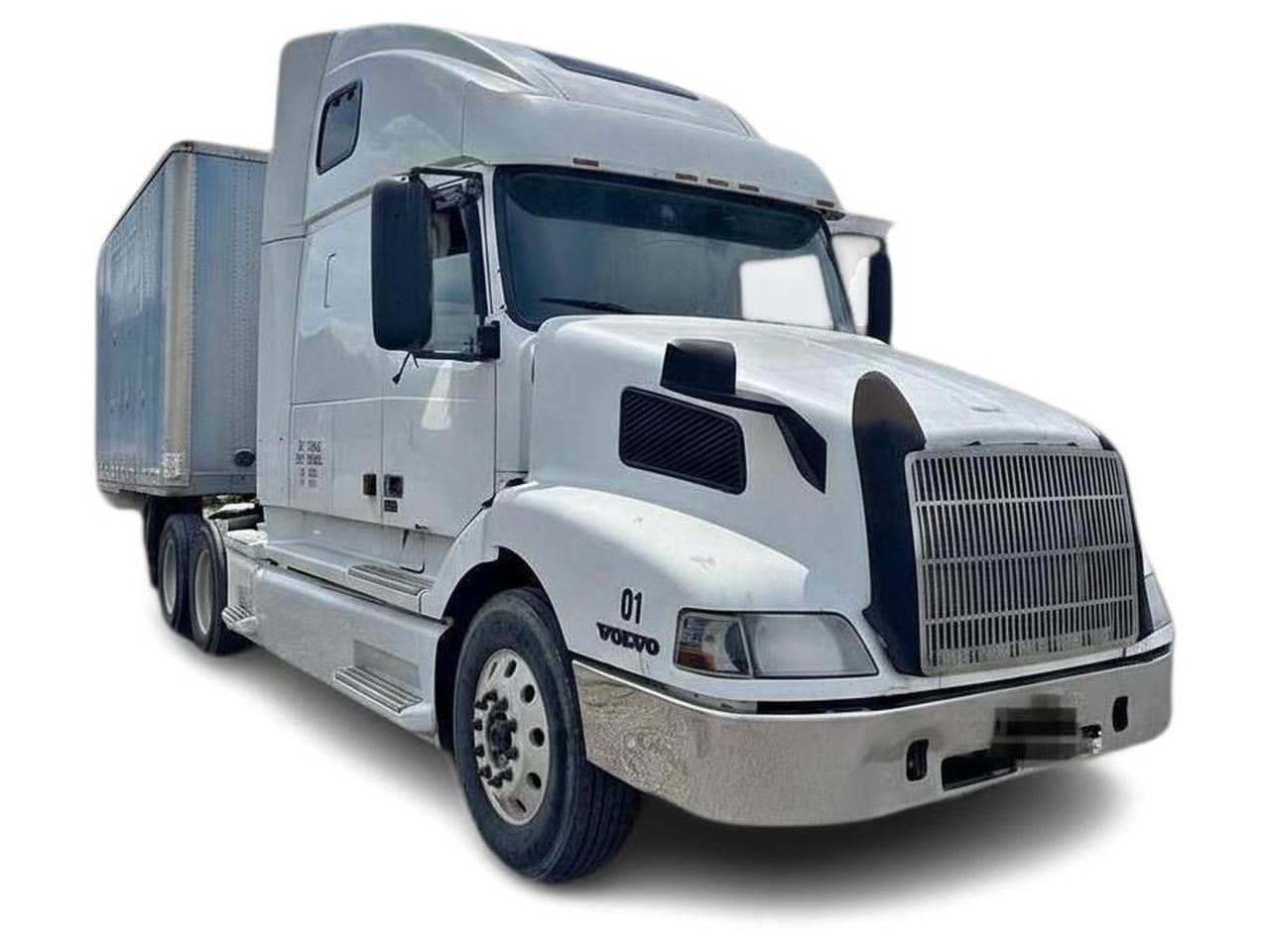
The Good
The 2003 Volvo VNL excels in robust performance, legendary reliability, and superior driver comfort, crucial for long hauls. Its efficient design and value proposition make it a sound investment, appealing to practical needs while offering the emotional reassurance of a trusted, dependable partner on the road.
The Bad
Potential weaknesses for the 2003 Volvo VNL may include common wear and tear on older components like suspension and exhaust systems. Electrical gremlins and aging DPF (Diesel Particulate Filter) systems, if applicable to the specific engine configuration, could also be points to watch out for during inspection.
2003 Volvo VNL: Quick Overview
- Engine Options: The 2003 Volvo VNL was typically equipped with Volvo's D12 or Cummins ISX engines. The D12 is an inline 6-cylinder diesel engine, known for its durability and efficiency. The Cummins ISX offered a range of power options and was a popular choice for heavy-duty applications.
- Horsepower: Horsepower ratings varied widely depending on the specific engine and configuration chosen by the fleet or owner. For the Volvo D12, power typically ranged from 385 hp to 465 hp. Cummins ISX engines offered a similar or even broader range, often starting around 400 hp and going up to 500 hp or more for specialized applications.
- Fuel Economy: Fuel economy for a Class 8 truck like the 2003 Volvo VNL is highly dependent on factors such as load weight, terrain, driving style, aerodynamics, and engine maintenance. Generally, these trucks achieved between 5 to 7 miles per gallon (MPG).
- 0-60 Times: 0-60 mph times are not a primary metric for commercial trucks and are rarely published. A fully loaded semi-truck can take a considerable amount of time to reach highway speeds, often well over 30 seconds, and is more about sustained power and torque than rapid acceleration.
- Towing Capacity: The towing capacity of a 2003 Volvo VNL is dictated by its Gross Combination Weight Rating (GCWR) and chassis configuration. These trucks are designed for heavy-duty applications and can typically haul trailers with a Gross Vehicle Weight (GVW) of 80,000 lbs. up to 100,000 lbs. or even more in specific configurations and regions with higher weight limits.
- Trim-Level Features: While not having traditional "trims" like passenger cars, the 2003 Volvo VNL offered various cab configurations and option packages to suit different operational needs. Common features included different sleeper cab sizes (day cab, 42-inch, 60-inch, 70-inch sleepers), premium interior options for driver comfort, advanced climate control systems, power amenities, and various aerodynamic enhancements. Optional features often included upgraded seating, auxiliary heating, advanced navigation systems, and premium sound systems.
2003 Volvo VNL Specifications
Vehicle Information
| Year | 2003 |
| Make | Volvo |
| Model | VNL |
| Trim | - |
| Style | - |
| Type | Truck |
| Category | Medium Truck |
Manufacturing Details
| Made In | United States |
| Manufacturing City | NEW RIVER VALLEY DUBLIN |
Dimensions
| Doors | - |
| Curb Weight | - |
| Gross Vehicle Weight Rating | 33001 pounds |
| Overall Height | - |
| Overall Length | - |
| Overall Width | - |
| Wheelbase Length | - |
| Standard Seating | - |
Engine & Performance
| Engine | 12.1L I6 |
| Engine Size | 12.1L |
| Engine Cylinders | 6 |
| Transmission | - |
| Transmission Type | - |
| Transmission Speeds | - |
| Drivetrain | 6x4 |
Additional Features
| Anti-Brake System | - |
| Steering Type | - |
Pricing
| Manufacturer Suggested Retail Price (MSRP) | - |
| Invoice Price | - |
| Delivery Charges | - |
Vehicle History Report
Specifications
History
Events
History Check
Check
Check
Check
Check
Listings
Recalls
Check
Analysis
What Problems Does the 2003 Volvo VNL Have?
Frequently reported issues, though not necessarily indicative of widespread defects, often relate to the natural aging process of heavy-duty components. The exhaust system, particularly the Diesel Particulate Filter (DPF) if equipped on certain engine variants, can become clogged over time, leading to performance issues and requiring cleaning or replacement. Suspension components, such as airbags, shocks, and bushings, can wear out, impacting ride quality and handling.
The electrical system is another area to monitor. While generally robust, older wiring harnesses can degrade, leading to intermittent electrical faults or warning lights. Issues with sensors (e.g., ABS sensors, engine sensors) are also not uncommon on vehicles of this vintage. The HVAC system, including the air conditioning and heater, may require servicing or component replacement due to age.
Regarding recalls, specific recall campaigns for the 2003 model year would be tracked by VIN through official Volvo Trucks resources. However, general areas that might see recalls on commercial vehicles of this era include potential issues with braking systems, steering components, or certain engine management software calibrations. It is crucial for any prospective buyer or owner to check for outstanding recalls.
Long-term reliability is heavily influenced by the maintenance regimen. Trucks that have been regularly serviced with quality parts, had fluid changes performed on schedule, and have been operated within their designed parameters tend to be significantly more reliable. Conversely, those subjected to harsh operating conditions or neglected maintenance will inevitably encounter more problems. The reputation for durability generally remains high, with many 2003 VNLs still actively serving in fleets, a testament to their robust engineering.
How long will the 2003 Volvo VNL last?
What Technology & Safety Features are Included?
Standard Features typically included a robust instrument cluster providing vital information such as engine diagnostics, fuel levels, air pressure, and speed. Basic cabin amenities like climate control (heating and air conditioning) were standard, and often quite powerful to handle the large cabin space. Audio systems were generally basic AM/FM radios with cassette or CD players, designed for durability rather than audiophile quality. Communication systems like CB radios were common additions.
Optional Features offered a significant upgrade to the driver experience and operational efficiency. These could include more advanced diagnostic displays, satellite communication or tracking systems for fleet management, premium sound systems, and enhanced climate control packages. Some models might have offered basic cruise control. For comfort and convenience, optional features like power windows, power locks, and heated mirrors were available. Sleeper cabs often came with options for auxiliary heating, refrigerators, and more elaborate interior finishes.
Driver-Assistance and Safety Features: Safety in the 2003 VNL was primarily achieved through Volvo's renowned chassis design, robust braking systems (typically air brakes), and sturdy construction. Features like ABS (Anti-lock Braking System) were becoming more common and often standard. Visibility was a design priority, with large windows and strategically placed mirrors. However, advanced driver-assistance systems (ADAS) such as lane departure warning, adaptive cruise control, or automatic emergency braking were not available on this model year. Similarly, comprehensive electronic stability control systems were nascent in the commercial vehicle sector at this time.
Crash-Test Ratings: Specific crash-test ratings in the same vein as passenger vehicles are not typically published for commercial semi-trucks like the Volvo VNL. The safety of these vehicles is assessed through rigorous internal testing, regulatory compliance (e.g., FMVSS standards), and inherent design robustnes. Volvo trucks are known for their strong cab structures designed to protect occupants in severe impact scenarios, often exceeding regulatory requirements.
What Colors Options are Available?
2003 Volvo VNL Prices and Market Value
In the current used market (as of recent data), prices for a 2003 Volvo VNL can vary dramatically, commonly falling between $15,000 and $40,000. However, exceptions exist for meticulously maintained, low-mileage examples or highly specialized configurations, which could command higher prices.
Depreciation on commercial trucks is substantial in the initial years but slows considerably after the first 5-7 years. The resale value of a 2003 VNL is primarily influenced by its mechanical condition, mileage, maintenance history, and the presence of any existing wear or damage. Trucks with documented maintenance records and proven reliability will always fetch a better price. Factors like engine type, emissions compliance for the region it will be operated in, and the condition of the interior and exterior also play a crucial role.
2003 Volvo VNL Cost of Ownership
2003 Volvo VNL Fuel Efficiency
2003 Volvo VNL Recalls & Defects
Steering:linkages:drag:link:connection
Trailer Hitches:fifth Wheel Assembly
Electrical System:wiring
Equipment:recreational Vehicle/Trailer
Visibility:glass, Side/Rear
Wheels
Engine and Engine Cooling:exhaust System
Electrical System:wiring:fuses and Circuit Breakers
Visibility:windshield Wiper/Washer:motor
2003 Volvo VNL Warranty
Basic
Powertrain
Rust
2003 Volvo VNL Insurance
reasonable repair costs.
How Does the 2003 Volvo VNL Compare to Other Truck?
Performance: In terms of performance, the VNL generally offered competitive powertrains with Volvo's D12 and robust Cummins options, providing strong hauling capabilities. Rivals like Peterbilt and Kenworth were often perceived as having a slight edge in raw power and torque delivery with certain engine configurations, especially for extreme hauling. Freightliner and International also offered potent engines, making performance a relatively even playing field in this segment, with differences often boiling down to specific engine choices and gearing.
Features: The 2003 VNL was known for its driver-focused cabin, prioritizing comfort and ergonomics, which was a significant Volvo strength. Peterbilt and Kenworth cabins were also highly regarded for their driver comfort and premium feel. Freightliner and International offered solid, functional interiors, but Volvo often had a slight lead in perceived build quality and refinement for long-haul comfort. Advanced tech was limited across all brands in 2003, with most features being optional and focused on operational efficiency rather than entertainment.
Reliability: Volvo has a long-standing reputation for exceptional reliability, and the VNL series is no exception. While all trucks of this age require maintenance, Volvos are often praised for their robust powertrains and durable chassis. Peterbilt and Kenworth also enjoy excellent reputations for reliability and longevity. Freightliner and International offered reliable trucks, but sometimes perceived as slightly less bulletproof than Volvo or Paccar offerings in extremely heavy-duty applications.
Price: When new, Volvos were positioned as premium trucks, often carrying a higher price tag than comparable Freightliner or International models, and competing closely with Peterbilt and Kenworth. On the used market in 2023, the price competitiveness shifts. A 2003 VNL can offer excellent value due to its strong residual reliability, often being priced similarly to or slightly above comparable Peterbilts and Kenworths, and typically above older Freightliner or International models of similar condition.
Alternatives: For a similar balance of reliability, driver comfort, and strong performance, a 2003 Kenworth T600 or T800, or a Peterbilt 379, would be very similar alternatives. If budget is a primary concern and slightly less emphasis on premium feel is acceptable, a 2003 Freightliner Columbia or Century Class could be a viable, often more affordable, option. However, for those prioritizing a blend of dependable performance and driver well-being, the 2003 Volvo VNL remains a strong contender, often outperforming its peers in long-term durability metrics when properly maintained.
Final Verdict: Is the 2003 Volvo VNL a Good Truck?
It is absolutely worth buying, but primarily on the used market, as new models are no longer produced. Buying used is the only option, and the condition is paramount. A well-maintained 2003 VNL with comprehensive service records, a strong engine (ideally Volvo D12 or a Cummins ISX with proven history), and minimal wear on critical components offers excellent long-term value. Buyers should carefully inspect the chassis, powertrain, and electrical systems. Sleeper cab configurations will be more valuable for long-haul drivers. It is a proven workhorse, and if acquired wisely, can be a profitable asset for years to come.

Jovan
Jovan specializes in interpreting vehicle records and making sense of VIN data. With over 10 years of experience in the automotive data industry, his work ensures that every report is clear, accurate, and useful for car buyers.