
The Good
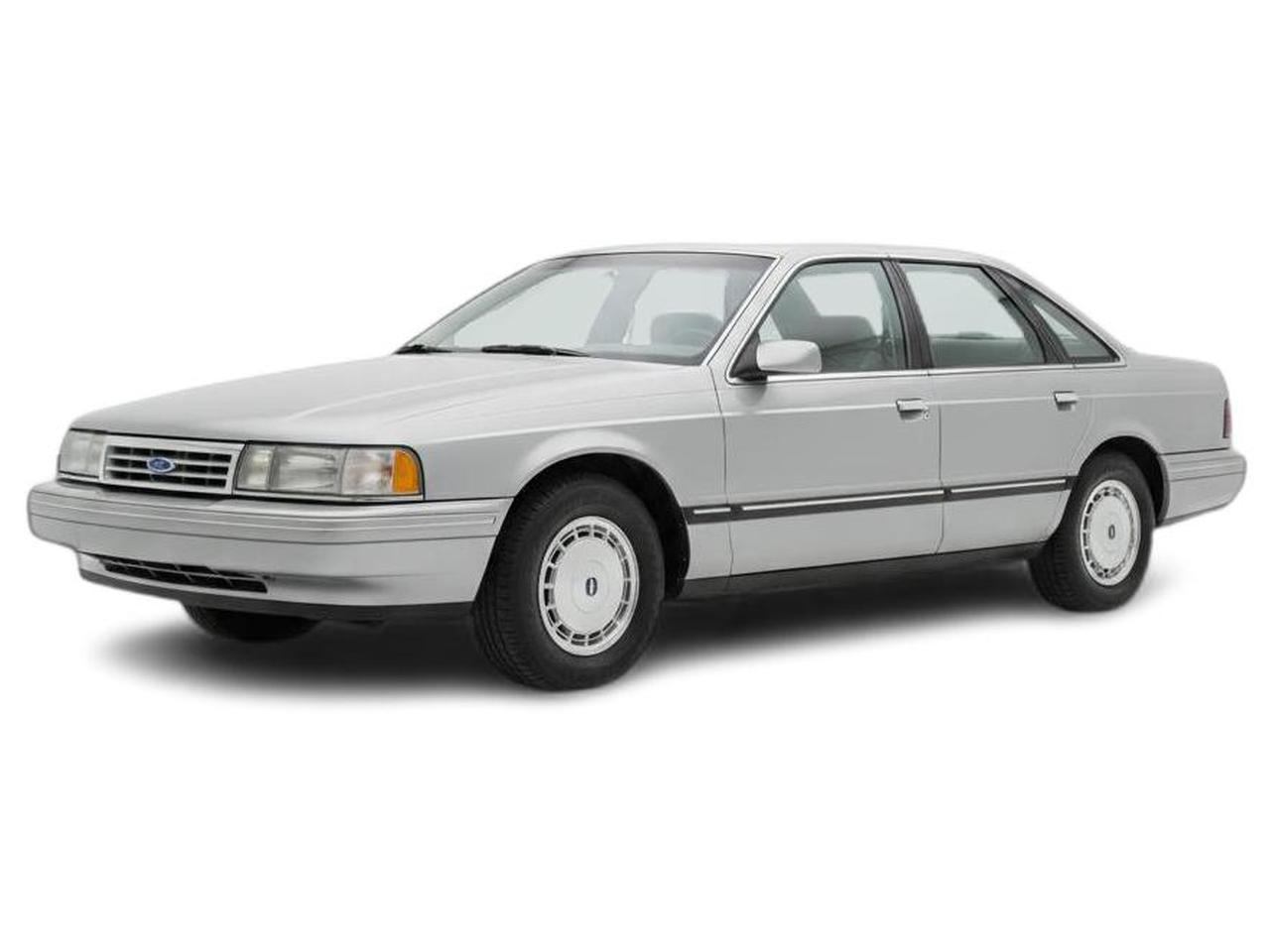
The 1988 Taurus offered a compelling blend of smooth ride and capable handling for its era. Its spacious interior provided comfort for families, while its efficient engines appealed to practical buyers. The distinctive aerodynamic design evoked a sense of modernity and forward-thinking, satisfying emotional desires for style.
The Bad
When considering a 1988 Ford Taurus, potential buyers should be aware of common issues. These can include premature wear on certain engine components, particularly with the older 4-cylinder engines. Transmission problems, especially on higher-mileage examples, are also a concern. Rust, particularly in areas with harsh winters, can be significant.
1988 Ford Taurus: Quick Overview
- Engine Options: The 1988 Ford Taurus offered a range of engine choices to suit different needs and priorities.
- 2.5L I4 (OHC): This was the standard engine for many models. It produced approximately 100 horsepower and offered good fuel economy for its time.
- 3.0L V6 (OHV): A more potent option, this engine offered around 140 horsepower, providing a good balance of power and efficiency for daily driving.
- 3.8L V6 (OHV): Available on higher trims and for more demanding applications, this engine delivered roughly 150 horsepower, offering stronger acceleration and towing capability.
- 2.5L Turbocharged I4 (SHO): Exclusive to the high-performance SHO model, this engine was a Yamaha-designed 24-valve V6 that produced 220 horsepower.
- Horsepower: Ranged from approximately 100 hp (2.5L I4) to 220 hp (SHO 3.0L V6).
- Fuel Economy: Varies significantly by engine and transmission, but generally was competitive for the mid-size segment of the late 1980s. Expect figures in the low to mid-20s MPG combined for the I4 and V6 engines.
- 0-60 Times: Standard models with the 4-cylinder engine could take upwards of 11-13 seconds. V6 models improved this to around 9-11 seconds. The SHO model was significantly quicker, achieving 0-60 mph in under 7 seconds.
- Towing Capacity: Not a primary focus for the Taurus, but the V6 models with appropriate equipment could handle light towing tasks, typically in the range of 1,000 to 2,000 lbs.
- Trim-Level Features:
- L: Base model, typically with essential features.
- GL: Added more comfort and convenience features like power windows and mirrors, upgraded interior trim.
- LX: Further enhanced with features like air conditioning, cruise control, premium audio, and often more advanced seat adjustments.
- Taurus SHO: Featured a sport-tuned suspension, performance tires, unique badging, leather sport seats, and the high-output Yamaha V6 engine.
1988 Ford Taurus Specifications
Vehicle Information
| Year | 1988 |
| Make | Ford |
| Model | Taurus |
| Trim | - |
| Style | LX Wagon FWD 3AT 3.0L V6 |
| Type | Wagon |
| Category | passenger |
Manufacturing Details
| Made In | United States |
| Manufacturing City | ATLANTA |
Dimensions
| Doors | 4-Door |
| Curb Weight | - |
| Gross Vehicle Weight Rating | - |
| Overall Height | - |
| Overall Length | - |
| Overall Width | - |
| Wheelbase Length | - |
| Standard Seating | - |
Engine & Performance
| Engine | 3L V6 |
| Engine Size | 3L |
| Engine Cylinders | 6 |
| Transmission | 3-Speed Automatic |
| Transmission Type | Automatic |
| Transmission Speeds | 3-Speed |
| Drivetrain | Front-Wheel Drive |
Additional Features
| Anti-Brake System | - |
| Steering Type | - |
Pricing
| Manufacturer Suggested Retail Price (MSRP) | - |
| Invoice Price | - |
| Delivery Charges | - |
Vehicle History Report
Specifications
History
Events
History Check
Check
Check
Check
Check
Listings
Recalls
Check
Analysis
What Problems Does the 1988 Ford Taurus Have?
Another area of concern for the Taurus was the electrical system. Issues with the alternator, power window motors, and interior lighting could manifest. The climate control system, particularly the blend doors and blower motor resistor, could also develop faults, leading to ineffective heating or cooling. Rust was a significant issue, especially for Tauruses driven in areas that used road salt during winter. Wheel wells, rocker panels, and the underbody were prone to corrosion, which could compromise structural integrity and lead to costly repairs.
Recalls for the 1988 model year were not exceptionally numerous but did exist. Some recalls addressed issues related to the parking brake, potential fuel leaks, and specific steering components. Owners should always check with the NHTSA database for any outstanding recalls for a specific VIN. Overall, while the Taurus offered good value and a comfortable ride, its long-term reliability was somewhat mixed, with transmission and engine component longevity being key factors influencing ownership satisfaction. Maintenance played a crucial role; neglecting regular fluid changes and tune-ups could accelerate the onset of these problems.
How long will the 1988 Ford Taurus last?
What Technology & Safety Features are Included?
Technology & Entertainment: Standard entertainment typically included an AM/FM radio, with optional upgrades to cassette players and even early CD players on higher trims like the LX. Power windows and door locks were often optional or standard on higher trims, adding to convenience. Air conditioning was a common option that was highly sought after. The instrument cluster was functional, providing essential information like speed, fuel level, engine temperature, and tachometer (especially on V6 and SHO models).
Driver-Assistance Features: True driver-assistance systems as we know them today were virtually non-existent. Features like cruise control were available as options on many trims. Anti-lock brakes (ABS) were becoming more common and were available as an option on some 1988 Taurus models, particularly those with the V6 engines, enhancing braking performance and safety.
Safety Features: Ford made significant strides in safety with the Taurus. Standard safety features included three-point seatbelts in the front and rear, padded dashboards, and energy-absorbing steering columns. The Taurus's design itself was a safety feature, with its aerodynamic shape and strong unibody construction aimed at crash protection. While official NHTSA crash test ratings for the specific 1988 model year are not as readily available or standardized as they are today, the Taurus generally performed well in crash tests for its time, contributing to its reputation as a safe family car. Later models of the Taurus, building on this foundation, received good ratings in various safety tests, indicating a continuous focus on occupant protection by Ford. The optional ABS further contributed to driver control during emergency braking situations.
What Colors Options are Available?
1988 Ford Taurus Prices and Market Value
1988 Ford Taurus Cost of Ownership
1988 Ford Taurus Fuel Efficiency
1988 Ford Taurus Insurance
reasonable repair costs.
How Does the 1988 Ford Taurus Compare to Other Wagon?
Performance: The Taurus's base 4-cylinder engines were adequate but not performance-oriented, often trailing rivals like the Honda Accord in acceleration. The V6 options offered better performance, but the Taurus's true performance king was the SHO, which significantly outperformed most competitors in its class at the time. Rivals like the Lumina offered comparable V6 performance.
Features: The Taurus was praised for its modern interior design and spaciousness, often surpassing American contemporaries. Optional features like ABS and a comfortable ride were competitive. However, Japanese rivals like the Accord and Camry often led in terms of build quality, reliability, and available advanced features, even in their base trims.
Reliability: This is where the Taurus faced its toughest competition. Japanese manufacturers like Honda and Toyota built a reputation for superior long-term reliability. While the Taurus was a significant improvement over previous American sedans, it generally couldn't match the dependability of the Accord or Camry, particularly concerning transmission and electrical components. The Lumina also had its share of reported issues.
Price: The Taurus was competitively priced, often offering more interior space and modern styling for the money compared to some rivals. Its pricing was a strong selling point, making it an attractive alternative to more expensive imports.
Alternatives:
- Honda Accord (1988): Often considered the benchmark for reliability, fuel efficiency, and driving dynamics in this segment. A strong alternative if long-term reliability is the top priority.
- Toyota Camry (1988): Known for its bulletproof reliability, comfortable ride, and refined interior. Another excellent choice for dependability.
- Chevrolet Lumina (1988): A domestic competitor that offered similar styling and V6 performance but often struggled with reliability compared to its Japanese counterparts.
- Ford Taurus SHO (if performance is key): If the budget allows and performance is paramount, the SHO is a unique and capable car that stands out from its segment.
Final Verdict: Is the 1988 Ford Taurus a Good Wagon?

Drew B
Drew is a seasoned automotive expert and contributor to VinCheck.info. With nearly 15 years of experience as a former Porsche technician, he brings a wealth of hands-on knowledge to his writing. Born in North Carolina, a region renowned for its deep-rooted NASCAR culture, Drew developed a passion for cars early in life, often building and working on vehicles from a young age. At VINCheck, Drew leverages his extensive technical background to provide in-depth analyses of various vehicles. His articles often focus on engine performance, reliability, and maintenance insights, offering readers practical information grounded in real-world experience. Some of his notable contributions include reviews on the Mazda CX-5's longevity and detailed examinations of engine options for models like the 2011 Toyota Camry and Tacoma