
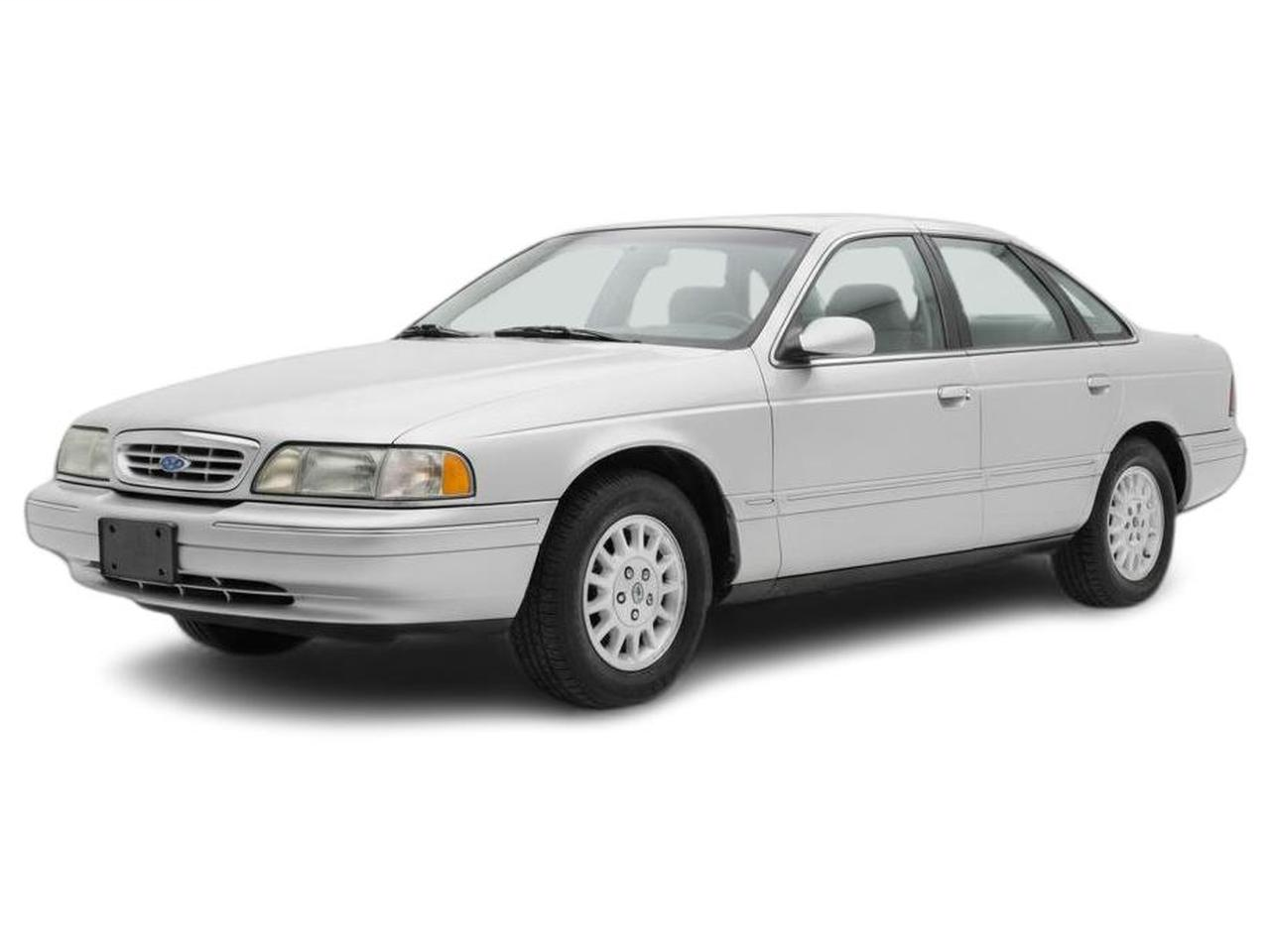
The Good
The 1990 Taurus offered a compelling blend of modern design, comfortable ride, and decent fuel efficiency. Its front-wheel-drive provided confident handling, while the spacious interior appealed to practicality. Emotionally, its sleek lines and widespread presence evoked a sense of American automotive resurgence.
The Bad
Potential buyers should be aware of common issues like transmission problems, especially with the AXOD transmission. Electrical gremlins, starter motor failures, and coolant leaks are also frequent concerns. Rust, particularly in the rocker panels and wheel wells, can be a significant issue on these older vehicles.
1990 Ford Taurus: Quick Overview
The 1990 Ford Taurus offered a range of powertrain options and features that varied significantly by trim level:
Engine Options:
- 2.5L Inline-4 (Vulcan): Standard on base models, this engine prioritized fuel economy.
- 3.0L V6 (Essex): A more common and capable option, offering a balance of power and efficiency.
- 3.8L V6: Available on some higher trims, providing increased torque and power.
- 3.0L V6 SHO (Yamaha-developed): Exclusive to the SHO model, this was a high-performance engine.
Horsepower:
- 2.5L I4: Approximately 105-115 hp
- 3.0L V6: Approximately 140-155 hp
- 3.8L V6: Approximately 140-150 hp (with variable intake)
- 3.0L V6 SHO: Approximately 220 hp
Fuel Economy (EPA Estimated, Varies by Engine and Drivetrain):
- 2.5L I4: Around 20-24 mpg city / 27-32 mpg highway
- 3.0L V6: Around 18-22 mpg city / 24-28 mpg highway
- 3.8L V6: Around 17-20 mpg city / 23-26 mpg highway
- 3.0L V6 SHO: Around 16-19 mpg city / 22-25 mpg highway
0-60 Times (Estimates, Highly Variable):
- Base models: 10-12 seconds
- V6 models: 8-10 seconds
- SHO model: 6-7 seconds
Towing Capacity:
The Taurus was not primarily designed for significant towing. While some models might have had a light-duty towing package for small trailers, a specific towing capacity is generally not a prominent feature or specification for this vehicle.
Trim-Level Features:
- L (Base): Minimal features, often with manual windows and locks, basic radio.
- GL: Added power windows, power locks, cruise control, improved interior trim, better audio system.
- SEL (Sport/Luxury Edition): Typically included upgraded interior materials, alloy wheels, and sportier styling cues.
- LX: Often represented a higher-end, more luxurious trim with premium upholstery, power seats, and enhanced sound systems.
- SHO (Super High Output): Featured the high-performance engine, sport-tuned suspension, unique body styling, performance wheels and tires, and a more driver-focused interior.
1990 Ford Taurus Specifications
Vehicle Information
| Year | 1990 |
| Make | Ford |
| Model | Taurus |
| Trim | - |
| Style | SHO Sedan FWD 4AT 3.0L V6 |
| Type | Sedan |
| Category | passenger |
Manufacturing Details
| Made In | United States |
| Manufacturing City | ATLANTA |
Dimensions
| Doors | 4-Door |
| Curb Weight | 3200 pounds |
| Gross Vehicle Weight Rating | - |
| Overall Height | 54 inches |
| Overall Length | 192 inches |
| Overall Width | 71 inches |
| Wheelbase Length | 108 inches |
| Standard Seating | 5 |
Engine & Performance
| Engine | 3L V6 |
| Engine Size | 3L |
| Engine Cylinders | 6 |
| Transmission | 4-Speed Automatic |
| Transmission Type | Automatic |
| Transmission Speeds | 4-Speed |
| Drivetrain | Front-Wheel Drive |
Additional Features
| Anti-Brake System | 4-Wheel ABS |
| Steering Type | Rack & Pinion |
Pricing
| Manufacturer Suggested Retail Price (MSRP) | $25,000 |
| Invoice Price | $23,000 |
| Delivery Charges | $600 |
Vehicle History Report
Specifications
History
Events
History Check
Check
Check
Check
Check
Listings
Recalls
Check
Analysis
What Problems Does the 1990 Ford Taurus Have?
Another area of concern is the engine. While the 2.5L Vulcan four-cylinder is generally considered robust for its era, it can suffer from oil leaks and gasket failures. The V6 engines, especially the 3.0L Essex and the 3.8L, are more prone to intake manifold coolant leaks, which can lead to overheating and internal engine damage if not addressed promptly. The power steering system can also develop leaks or pump failures.
Electrically, these vehicles can exhibit a range of gremlins. Issues with the alternator, starter motor, and various sensors are common. Owners have also reported problems with power window regulators, door locks, and the interior electronics like the radio and climate control. Headlight switch failures are also a known nuisance. Cooling system issues are prevalent, with radiator leaks, hose failures, and thermostat problems contributing to overheating.
Body-wise, rust is a significant concern, especially on examples that have lived in areas with harsh winters and road salt. Rocker panels, wheel wells, and the rear quarter panels are particularly susceptible to corrosion. The paint can also fade and oxidize over time, especially on darker colors.
Regarding recalls, the 1990 model year did see a number of safety campaigns. These often addressed issues related to the braking system (e.g., anti-lock brake system faults), seat belts, and potential fuel system leaks. It is crucial for any prospective buyer to check for outstanding recalls and ensure they have been addressed. While the Taurus was a revolutionary car for its time, its long-term reliability can be a mixed bag. Meticulous maintenance records and a thorough pre-purchase inspection are essential for assessing the true condition of a 1990 Ford Taurus.
How long will the 1990 Ford Taurus last?
What Technology & Safety Features are Included?
Entertainment:
Standard entertainment typically consisted of a basic AM/FM radio with an optional cassette player. Higher trim levels, like the LX and the SHO, could be optioned with a premium sound system featuring more speakers for enhanced audio quality. Power antenna was a common desirable feature. CD players were a rarity and would have been a very late-model option or an aftermarket addition.
Driver-Assistance Features:
The term 'driver-assistance' was nascent in 1990. The Taurus did feature power steering, which made maneuvering easier. Cruise control was a popular option, enhancing driver comfort on longer journeys. Anti-lock brakes (ABS) were available as an option on many models, and were standard on the SHO. ABS significantly improved braking control and stability, especially in emergency situations.
Safety Features:
Standard safety equipment included three-point seat belts for front occupants and lap belts for rear passengers. Child-seat anchor points were also incorporated. The Taurus was designed with a focus on occupant protection, featuring a reinforced safety cell and energy-absorbing crumple zones. Side-impact door beams were also a key safety component. The SHO model often came with upgraded braking systems and performance-oriented tires for enhanced control.
Optional Features:
Beyond the audio upgrades and ABS, optional features often included power windows, power door locks, power mirrors, air conditioning, a tilt steering wheel, and intermittent windshield wipers. The LX and SEL trims often bundled many of these convenience features. The SHO model came with unique sport seats, a performance gauge cluster, and a sport-tuned suspension.
Crash-Test Ratings:
The Ford Taurus of this generation generally performed well in crash tests for its era. While specific ratings for the 1990 model year might vary depending on the testing agency and specific configuration, earlier models of this generation had received good marks in NHTSA (National Highway Traffic Safety Administration) frontal and side-impact tests. It was considered a safe vehicle for its time, contributing to its popularity.
What Colors Options are Available?
1990 Ford Taurus Prices and Market Value
1990 Ford Taurus Cost of Ownership
1990 Ford Taurus Fuel Efficiency
1990 Ford Taurus Insurance
reasonable repair costs.
How Does the 1990 Ford Taurus Compare to Other Sedan?
Features-wise, the Taurus was competitive, offering amenities like power accessories, cruise control, and optional ABS, which were comparable to Japanese rivals. However, the long-term reliability of the Taurus, particularly concerning its transmissions, was often a point of concern when stacked against the legendary dependability of the Accord and Camry. These Japanese sedans consistently received higher marks for reliability, leading to lower long-term maintenance costs for owners.
The Chevrolet Lumina and Pontiac Grand Prix offered more powerful V6 options and often a sportier, more performance-oriented feel than the standard Taurus, but they also faced their own reliability challenges. Price-wise, the Taurus was generally positioned competitively, offering good value, especially with its numerous trim levels and available options.
Alternatives:
For buyers prioritizing ultimate reliability and longevity, the Honda Accord and Toyota Camry remain superior choices. They generally offer more robust powertrains and better build quality that holds up over time. If sportiness is a priority, the Taurus SHO is a compelling option, but a used BMW 3 Series (E30/E36) or a Nissan 300ZX (Z32) from the same era might offer a more refined and potent performance experience, albeit at a higher cost. For those seeking a comfortable domestic sedan with a bit more power than the base Taurus, a well-maintained Buick LeSabre or Oldsmobile Eighty-Eight could be considered, offering a smoother ride and often more robust V6 engines with potentially better transmission longevity than the AXOD.
Final Verdict: Is the 1990 Ford Taurus a Good Sedan?

Simon A
Simon is a contributor to VinCheck, where he provides articles and reviews on various automotive topics. His work focuses on delivering accurate and up-to-date information about used cars, helping readers make informed decisions.