
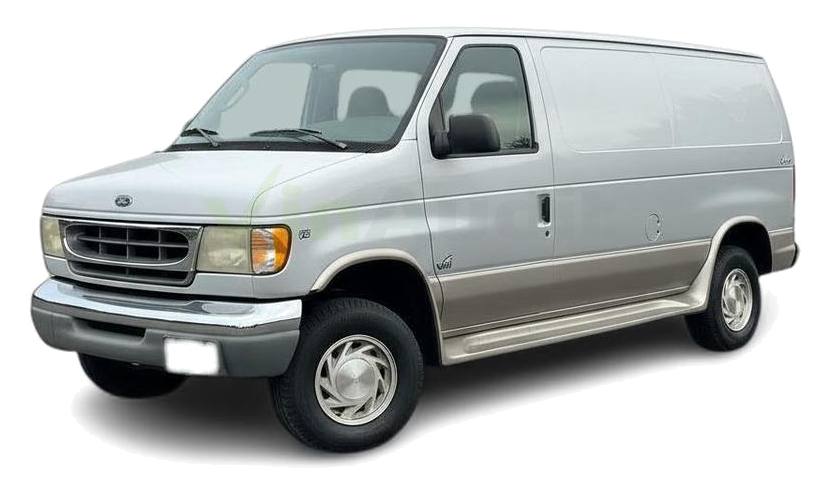
The Good
The 2001 Ford Econoline boasts significant advantages: formidable performance with its V8 and V10 engines ideal for heavy loads, and a reputation for reliability ensuring longevity. Its utilitarian design prioritizes functionality, appealing to practical buyers needing vast cargo or passenger space. Emotionally, it evokes a sense of rugged capability and freedom for road trips or serious work, offering strong value with readily available parts and robust build quality.
The Bad
Known weaknesses for the 2001 Ford Econoline include poor fuel economy across all engine options and truck-like handling. Owners should watch out for common Triton engine issues like spark plug ejection, potential transmission longevity concerns, and typical rust development on older chassis. The interior is often basic, lacking modern refinements.
2001 Ford Econoline: Quick Overview
- Engine Options:
- 4.2L "Essex" V6 (standard in E-150 cargo, passenger models)
- 4.6L "Triton" SOHC V8
- 5.4L "Triton" SOHC V8
- 6.8L "Triton" SOHC V10
- 7.3L "Power Stroke" Turbo-Diesel V8 (available in E-350, E-450) - Horsepower:
- 4.2L V6: Approx. 200 hp
- 4.6L V8: Approx. 220 hp
- 5.4L V8: Approx. 255 hp
- 6.8L V10: Approx. 305 hp
- 7.3L Diesel V8: Approx. 215 hp - Fuel Economy: Generally poor, ranging from 10-15 MPG combined, heavily dependent on engine, load, and driving conditions. The V6 might offer slightly better numbers, while the V10 and diesel, despite higher torque, remain thirsty.
- 0-60 MPH Times: These are not performance vehicles. Times typically range from 9-12+ seconds, varying significantly by engine and vehicle weight.
- Towing Capacity: Impressive, a core strength of the Econoline.
- E-150: Approx. 5,000-7,000 lbs
- E-250: Approx. 7,000-8,500 lbs
- E-350/E-450 (with V10 or 7.3L diesel): Can exceed 10,000 lbs, especially with proper towing packages. - Trim-Level Features:
- XL: Basic workhorse trim, often featuring vinyl seats, manual windows/locks, AM/FM radio, minimal creature comforts, designed for rugged utility.
- XLT: More comfort-oriented, typically includes cloth seats, power windows and door locks, air conditioning, cruise control, improved audio system (e.g., CD player), and chrome exterior accents. Popular for passenger models and those desiring a slightly more refined experience.
- Specific options across trims: Auxiliary rear air conditioning and heat, captain's chairs (passenger vans), various towing packages, upgraded wheel options, and different seating configurations for passenger models.
2001 Ford Econoline Specifications
Vehicle Information
| Year | 2001 |
| Make | Ford |
| Model | Econoline |
| Trim | - |
| Style | - |
| Type | Van |
| Category | Cargo Van |
Manufacturing Details
| Made In | United States |
| Manufacturing City | LORAIN |
Dimensions
| Doors | - |
| Curb Weight | 5253 pounds |
| Gross Vehicle Weight Rating | 8600 pounds |
| Overall Height | 83.40 inches |
| Overall Length | 211.90 inches |
| Overall Width | 79.30 inches |
| Wheelbase Length | 138.00 inches |
| Standard Seating | 2 |
Engine & Performance
| Engine | 5.4L V8 |
| Engine Size | 5.4L |
| Engine Cylinders | 8 |
| Transmission | 4-Speed Automatic |
| Transmission Type | Automatic |
| Transmission Speeds | 4-Speed |
| Drivetrain | Rear-Wheel Drive |
Additional Features
| Anti-Brake System | 4-Wheel ABS |
| Steering Type | Recirculating |
Pricing
| Manufacturer Suggested Retail Price (MSRP) | $21,925 |
| Invoice Price | $19,441 |
| Delivery Charges | - |
Vehicle History Report
Specifications
History
Events
History Check
Check
Check
Check
Check
Listings
Recalls
Check
Analysis
What Problems Does the 2001 Ford Econoline Have?
Intake manifold cracks, particularly on the 4.6L and 5.4L V8 engines, are also a known issue, leading to coolant leaks and engine overheating. Rust is a significant long-term concern for these vans, affecting body panels, frame components, and brake lines, especially in areas exposed to road salt. Owners often report issues with front suspension components like ball joints and tie rods wearing prematurely due to the vehicle's weight. The air conditioning system, especially the rear auxiliary unit, can develop leaks over time. Exhaust manifold leaks are also common, resulting in ticking noises.
Regarding recalls, the 2001 Econoline had several. One prominent recall involved the cruise control switch, which could short circuit and potentially cause a fire, even when the vehicle was off. This recall affected numerous Ford models from the late 1990s and early 2000s. Other recalls addressed potential issues with seat belt anchorages and fuel tank straps. Prospective buyers should always check the NHTSA website for open recalls by VIN. Regular maintenance is crucial to mitigate many of these issues, but some, like the spark plug design flaw, require more specific attention.
How long will the 2001 Ford Econoline last?
Long-term durability is a strong point, attributed to its robust body-on-frame construction and powerful, albeit sometimes problematic, powertrains. Parts are generally affordable and widely available, contributing to extended usability. However, weaknesses over time include significant rust on the chassis and body panels in corrosive climates, requiring preventative measures. Suspension components, such as ball joints and bushings, will wear out due to the vehicle's weight. Electrical gremlins can develop as wiring ages. The aforementioned spark plug issues in Triton engines and potential transmission wear are major long-term concerns that can lead to costly repairs if not addressed or if previous maintenance was lacking.
What Technology & Safety Features are Included?
In terms of safety, the 2001 Econoline included standard driver and front passenger airbags, a significant advancement from earlier decades. Three-point seatbelts were provided for front occupants, and in passenger versions, for all outboard rear seats. Anti-lock brakes (ABS) were typically an optional feature or standard on higher trim levels and heavy-duty models, enhancing braking stability.
Crash-test ratings for full-size vans of this vintage were less comprehensive than for passenger cars today. The National Highway Traffic Safety Administration (NHTSA) provided frontal crash test ratings. The 2001 Ford Econoline (E-Series) generally received ratings of 3 or 4 out of 5 stars for frontal impact protection for both the driver and passenger. Side-impact and rollover ratings were often not conducted or were limited. The large, body-on-frame construction generally offered substantial protection in frontal collisions, but its high center of gravity meant a higher rollover risk compared to lower-slung passenger vehicles. Optional safety enhancements were minimal beyond what was mentioned, with the focus remaining on core utility and commercial applications.
What Colors Options are Available?
2001 Ford Econoline Prices and Market Value
Depreciation was significant in its early years, typical for fleet vehicles. However, it has leveled off due to the enduring demand for reliable, high-capacity utility vehicles. Factors affecting resale value include the engine choice (diesel commands a premium), overall mechanical condition, presence of rust, comprehensive maintenance records, and whether it's a cargo, passenger, or specialty-converted van. Passenger vans often hold slightly less value unless in pristine condition, while clean work vans or those pre-equipped for specific trades or camping can retain strong value.
2001 Ford Econoline Cost of Ownership
2001 Ford Econoline Fuel Efficiency
2001 Ford Econoline Safety Rating
NHTSA
2001 Ford Econoline Recalls & Defects
Child Seat
Fuel System, Gasoline:storage
Vehicle Speed Control:cruise Control
Exterior Lighting:headlights
Exterior Lighting
2001 Ford Econoline Warranty
Basic
Powertrain
Rust
2001 Ford Econoline Insurance
reasonable repair costs.
How Does the 2001 Ford Econoline Compare to Other Van?
In terms of Performance, the Econoline stood strong with its diverse engine lineup, including the potent Triton V8s, the powerful V10, and the highly sought-after 7.3L Power Stroke diesel. This offered excellent towing and hauling capabilities. The GM vans countered with their robust Vortec V8 engines (e.g., 5.3L, 6.0L), also known for good power and reliability. The Dodge Ram Van, while offering capable Magnum V8s, generally had a less extensive and powerful engine range than Ford or GM, especially for heavy-duty applications.
Features were largely utilitarian across the board. All three rivals offered similar basic amenities: AM/FM radio, optional power accessories, and air conditioning. Ford's interior, while basic, was often perceived as robust and functional. GM vans offered a slightly different interior layout, and Dodge's interior was also straightforward. None of these vans boasted advanced tech or driver-assistance features by today's standards.
Reliability is a nuanced comparison. Ford's 7.3L Power Stroke diesel is legendary for its durability. However, the Triton gas engines are known for the spark plug ejection issue and intake manifold problems, which can be significant. GM's Vortec engines from this era are generally considered very reliable. The Dodge Ram Vans also had solid powertrains but might have had more issues with smaller electrical components and rust over time.
Price new was comparable across all three, with similar starting points and increases based on trim and options. In the used market, prices remain competitive, though diesel Ford Econolines often command a premium due to their legendary engine.
Alternatives: For similar capabilities, the Chevrolet Express/GMC Savana of the same vintage are direct and strong alternatives, offering comparable utility and a good balance of power and reliability. For those needing greater fuel efficiency and a more modern driving experience, but willing to sacrifice some heavy-duty capability, later models like the Ford Transit Connect (smaller class) or the Mercedes-Benz Sprinter (larger, more efficient but higher initial and maintenance costs) are better choices, though they are from different eras of van design. For pure utility, a heavy-duty pickup truck with a cap could also be considered an alternative.
Final Verdict: Is the 2001 Ford Econoline a Good Van?
Is it worth buying? Yes, but only as a used vehicle and under specific conditions. A thorough pre-purchase inspection is paramount, focusing on rust, transmission health, and known engine issues like spark plug integrity. Opting for an E-350 with the 7.3L Power Stroke diesel engine offers unparalleled longevity and pulling power, often justifying a higher price. The 5.4L V8 is a capable and more common gasoline alternative, but be aware of its potential spark plug issues. Buyers must be prepared for its poor fuel economy and the possibility of expensive repairs for aging components. If well-maintained and purchased at a reasonable price, it offers immense utility and a strong return on investment for its intended purpose.

Jovan
Jovan specializes in interpreting vehicle records and making sense of VIN data. With over 10 years of experience in the automotive data industry, his work ensures that every report is clear, accurate, and useful for car buyers.