
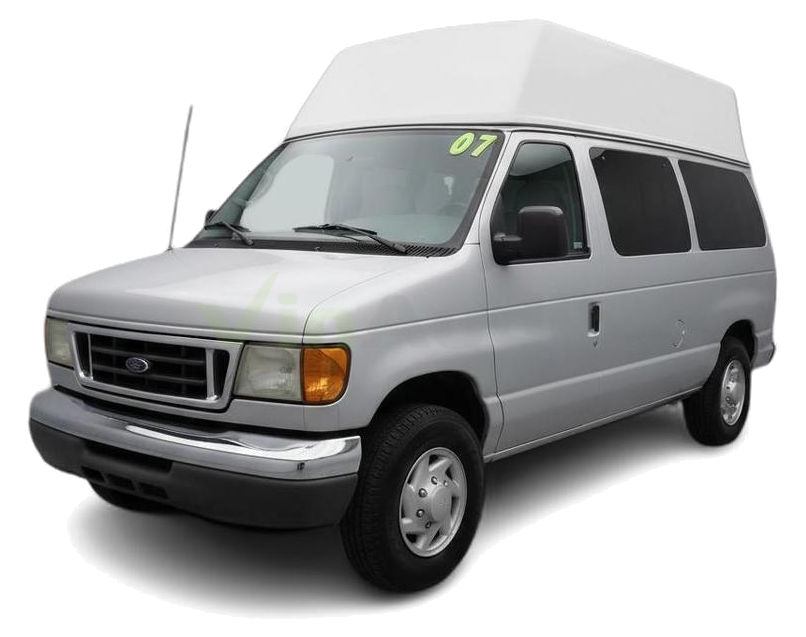
The 2007 Ford Econoline, part of a long-standing lineage of full-size vans, offered a robust and utilitarian platform. Produced through multiple model years with its core design remaining consistent, it was available in various body styles including Cargo Van and Passenger Van. Key trims often reflected engine size and feature packages. Its popularity stemmed from its legendary durability, immense cargo space, and versatile capability for both commercial and personal use, making it a go-to choice for tradespeople and adventurers alike.
The Good
The 2007 Ford Econoline excels in raw utility and steadfast reliability, offering cavernous cargo capacity for practical needs. Its V8 engines provide ample power for hauling, while its robust build provides peace of mind. For those seeking adventure, its blank-canvas interior is a dream for customization, appealing to both the pragmatic need for capability and the emotional desire for freedom.
The Bad
Potential buyers of the 2007 Ford Econoline should be aware of common issues like rust, particularly on the body panels and frame. Transmission problems can arise with higher mileage. Fuel economy is a significant drawback due to its size and engine options. Interior comfort and modern features are also lacking compared to contemporary rivals.
2007 Ford Econoline: Quick Overview
- Engine Options: The 2007 Ford Econoline was typically offered with a choice of robust V8 engines. The standard engine was often a 4.6L Triton V8. A more powerful option was the 5.4L Triton V8. For heavier-duty applications, a 6.8L Triton V10 was also available on certain models.
- Horsepower: The 4.6L V8 typically produced around 215-232 horsepower. The 5.4L V8 generally offered between 255-260 horsepower. The larger 6.8L V10 could generate approximately 305 horsepower.
- Fuel Economy: Fuel economy was not a strong suit for the Econoline. Expect figures in the range of 10-13 MPG in the city and 14-17 MPG on the highway, depending heavily on the engine, drivetrain (RWD or AWD), and payload.
- 0-60 Times: 0-60 mph times varied significantly based on engine choice and load. With the larger V8 or V10 engines, it could achieve 0-60 mph in the high 8 to mid-10 second range when unloaded.
- Towing Capacity: The Econoline offered substantial towing capabilities. Depending on the configuration, engine, and axle ratio, towing capacities could range from around 5,000 lbs up to 10,000 lbs or more, making it suitable for pulling trailers and recreational vehicles.
- Trim-Level Features: Trims were often categorized by wheelbase (e.g., standard and long-wheelbase) and intended use (e.g., Cargo Van, Passenger Van). Standard features could include basic vinyl seats, manual windows and locks, and AM/FM radio. Optional features often included air conditioning, power windows and locks, cruise control, upgraded audio systems, a rear-view camera (on some higher trims), and various work-oriented packages like heavy-duty alternators and towing prep. Passenger versions would have multiple rows of seating and interior amenities for occupants.
2007 Ford Econoline Specifications
Vehicle Information
| Year | 2007 |
| Make | Ford |
| Model | Econoline |
| Trim | - |
| Style | - |
| Type | Truck |
| Category | Cargo Van |
Manufacturing Details
| Made In | United States |
| Manufacturing City | AVON LAKE |
Dimensions
| Doors | 3-Door |
| Curb Weight | 4690 pounds |
| Gross Vehicle Weight Rating | 8520 pounds |
| Overall Height | 80.90 inches |
| Overall Length | 212.00 inches |
| Overall Width | 79.30 inches |
| Wheelbase Length | 138.00 inches |
| Standard Seating | 2 |
Engine & Performance
| Engine | 4.6L V8 |
| Engine Size | 4.6L |
| Engine Cylinders | 8 |
| Transmission | 4-Speed Automatic |
| Transmission Type | Automatic |
| Transmission Speeds | 4-Speed |
| Drivetrain | Rear-Wheel Drive |
Additional Features
| Anti-Brake System | 4-Wheel ABS |
| Steering Type | Recirculating |
Pricing
| Manufacturer Suggested Retail Price (MSRP) | $23,380 |
| Invoice Price | $20,910 |
| Delivery Charges | $870 |
Vehicle History Report
Vehicle
Specifications
Specifications
Ownership
History
History
All History
Events
Events
NMVTIS Title
History Check
History Check
Salvage/Rebuilt
Check
Check
Accident
Check
Check
Theft
Check
Check
Open Lien
Check
Check
Past Sale
Listings
Listings
Safety
Recalls
Recalls
Odometer
Check
Check
Market Price
Analysis
Analysis
What Problems Does the 2007 Ford Econoline Have?
The 2007 Ford Econoline, while generally known for its robustness, is not without its common issues. One of the most frequently reported problems revolves around the transmission, particularly with automatic transmissions experiencing rough shifting, slipping, or outright failure, especially on higher-mileage examples. Spark plug blowouts were a recurring concern on earlier Triton V8 engines, though some fixes were implemented over the years. For the 2007 model year, issues with the fuel pump have also been noted. Rust is another significant long-term concern, often manifesting on the rocker panels, wheel arches, and along the frame rails, which can compromise structural integrity. Electrical gremlins, such as malfunctioning power windows, door locks, and instrument cluster issues, are also reported. Some owners have experienced premature wear on suspension components like ball joints and tie rods. While specific recalls for the 2007 model year are varied, it's always advisable to check the NHTSA website for any outstanding recalls for this particular VIN. Long-term reliability is often dependent on diligent maintenance; however, even with regular servicing, some owners have encountered a higher frequency of repairs compared to more modern vehicles, particularly as the vehicle ages. The core powertrain components, the V8 engines and transmissions, can be durable if well-maintained, but repairs can be costly due to the complexity and size of the components.
How long will the 2007 Ford Econoline last?
Based on owner data and typical maintenance, a well-maintained 2007 Ford Econoline can realistically achieve between 200,000 to 300,000 miles, and in some cases, even more. Its long-term durability is a hallmark, especially concerning the core engine and chassis components. However, weaknesses become more apparent with age and mileage. Transmission issues are a common point of failure after 150,000 miles. Rust can significantly impact its lifespan, especially in rust-prone regions, potentially limiting its service life to under 200,000 miles if untreated. Electrical systems and interior wear-and-tear are also factors that can degrade over time. Regular fluid changes, diligent attention to any warning lights, and addressing rust proactively are crucial for maximizing its service life.
What Technology & Safety Features are Included?
The 2007 Ford Econoline prioritizes utility over advanced technology. Its built-in tech and entertainment features were fairly basic for its era. Standard offerings typically included an AM/FM radio, with optional upgrades for a CD player. Higher trims or specific packages might have offered an auxiliary input or a more sophisticated audio system. Connectivity options like Bluetooth or USB ports were largely absent. Driver-assistance features were virtually non-existent; this was a vehicle focused on straightforward operation rather than electronic aids. Safety features included standard front airbags for the driver and passenger. Anti-lock braking system (ABS) was generally standard across most models. Stability control was not widely available on the 2007 Econoline. For passenger versions, seat belts for all occupants were standard. Crash-test ratings for vans of this vintage are often less comprehensive than for passenger cars, and specific ratings for the 2007 Econoline from agencies like the IIHS or NHTSA might be limited or not directly comparable to modern standards. However, its robust construction generally offered good occupant protection for its class and time, though the lack of modern safety technologies such as side curtain airbags, advanced traction control, or driver-assistance suites like lane departure warning or adaptive cruise control means it falls short of current safety benchmarks.
What Colors Options are Available?
2007 Ford Econoline Prices and Market Value
When new, the 2007 Ford Econoline typically ranged from the mid-$20,000s for base cargo models to over $35,000 for well-equipped passenger or cutaway versions. Today, used market prices for a 2007 Econoline vary significantly, generally falling between $3,000 and $10,000, heavily influenced by mileage, condition, trim level, and maintenance history. Depreciation for the Econoline has been relatively slow due to its enduring utility and demand. Factors affecting resale value include the presence of rust, the condition of the engine and transmission, and whether it was used for commercial purposes. Well-maintained, low-mileage examples, especially those converted for recreational use, can hold their value better than heavily used work vans.
2007 Ford Econoline Cost of Ownership
Owning a 2007 Ford Econoline can be moderately costly, though it offers value in its utility. Insurance rates are generally reasonable for a commercial-style vehicle, but can be higher for passenger versions due to their size and potential for more occupants. Fuel costs are a significant factor, as its V8 engines are thirsty, especially in city driving. Maintenance costs can be average to high; while parts are readily available and mechanics are familiar with them, some repairs, particularly transmission work, can be expensive. Overall, while not economical in terms of fuel, its robust build and longevity can offset some costs for those who depend on its capabilities.
2007 Ford Econoline Fuel Efficiency
Fuel Type
Gasoline
Fuel Capacity
35.00 gallons
City Mileage
14 miles/gallon
Highway Mileage
17 miles/gallon
2007 Ford Econoline Warranty
Basic
Original warranty
36 months / 36,000 miles
Estimated remaining
Expired
Powertrain
Original warranty
60 months / 60,000 miles
Estimated remaining
Expired
Rust
Original warranty
60 months / unlimited miles
Estimated remaining
Expired
2007 Ford Econoline Insurance
Insurance for a 2007 Ford Econoline is moderately priced, reflecting its status as a Truck with strong safety ratings and
reasonable repair costs.
How Does the 2007 Ford Econoline Compare to Other Truck?
The 2007 Ford Econoline competed primarily against the Chevrolet Express/GMC Savana twins and the Mercedes-Benz Sprinter. In terms of performance, the Econoline's V8 engines offered strong towing and hauling power, comparable to or often exceeding the V8 options in the GM vans. The Sprinter, especially with its diesel engine, offered better fuel economy and a more car-like driving experience but at a significantly higher price point. When it comes to features, the Econoline was generally basic. While the GM twins offered similar levels of amenities, the Sprinter was in a different league with more advanced technology and refined interiors. Reliability is a mixed bag. The Econoline is known for robust powertrains but can suffer from rust and transmission issues. The GM vans share some similar reliability concerns. The Sprinter, while often durable, can have more complex and costly repairs if issues arise. Price is where the Econoline often shone, being more affordable than the Sprinter and competitive with the GM vans, especially in the used market. Similar alternatives include the aforementioned Chevrolet Express/GMC Savana, which offer a similar utilitarian experience. For those prioritizing fuel efficiency and a more modern design, a used Mercedes-Benz Sprinter would be a superior, albeit more expensive, choice. If a van is primarily for hauling and basic transportation, the Econoline remains a capable, if dated, option. For individuals seeking a more versatile camper van or passenger hauler with better amenities, newer models or the Sprinter would be recommended.
Final Verdict: Is the 2007 Ford Econoline a Good Truck?

The 2007 Ford Econoline is ideal for pragmatic buyers seeking a no-frills workhorse or a customizable platform for projects like camper van conversions. Its enduring appeal lies in its sheer capability, strong V8 power, and legendary durability if properly maintained. It is worth buying for those who prioritize utility and affordability over modern amenities and fuel efficiency. Specifically, purchasing this van used is the only realistic option. Buyers should thoroughly inspect for rust, check transmission health, and ideally opt for models with the 5.4L or 6.8L V8 engines for better performance. It’s a solid choice if found in good condition for a fair price, especially for commercial use or as a basis for conversion projects.