
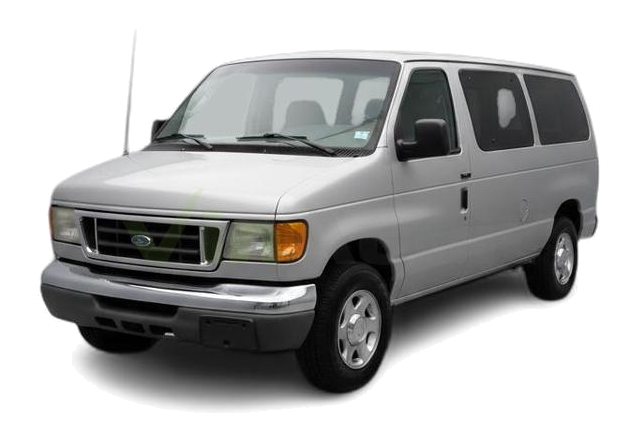
The 2004 Ford Econoline, part of a long-running lineage of full-size vans, offered robust utility and versatility. Produced from 1992 through 2014, its model years were marked by consistent reliability and practicality. Key trims typically included the base model, XL, and XLT. Pricing at the time varied significantly based on configuration and options, but generally started in the low to mid-$20,000s. Its enduring popularity stems from its reputation as a workhorse, adaptable for commercial use, cargo hauling, or conversion into passenger vehicles.
The Good
The 2004 Ford Econoline boasts rugged reliability, powerful engine options for demanding tasks, and a spacious, adaptable interior. Its straightforward design prioritizes functionality, offering substantial value for both commercial and personal use, appealing to practicality while its sheer utility evokes a sense of dependable capability.
The Bad
Potential buyers of the 2004 Ford Econoline should watch out for common issues like aging interior components, potential rust on the body, particularly in salt-belt regions, and the typical wear and tear associated with high-mileage work vehicles. Transmission concerns can also arise over time.
2004 Ford Econoline: Quick Overview
- Engine Options: The 2004 Ford Econoline offered a range of V8 engine options. Standard was often a 4.6L Triton V8, with optional larger engines including a 5.4L Triton V8 and a potent 6.8L Triton V10 for heavier-duty applications.
- Horsepower: Horsepower varied by engine. The 4.6L typically produced around 215-225 horsepower. The 5.4L offered approximately 235-255 horsepower. The 6.8L V10 delivered higher output, around 255-305 horsepower, depending on the specific tune and application.
- Fuel Economy: Fuel economy for the Econoline was not a strong suit, as is typical for large vans. Expect figures generally in the range of 10-14 MPG combined, heavily dependent on engine choice, payload, and driving conditions.
- 0-60 Times: Specific 0-60 mph times are not widely published for commercial vans. However, with the available V8 and V10 engines, acceleration was adequate for its purpose, with lighter configurations likely achieving 0-60 mph in the 9-12 second range, while heavily laden versions would be considerably slower.
- Towing Capacity: The Econoline was designed for towing. Depending on the configuration, engine, and axle ratio, towing capacities could range from approximately 7,000 lbs for lighter duty models up to over 10,000 lbs for heavy-duty variants equipped with the appropriate towing packages.
- Trim-Level Features:
Base/XL Trim: Typically featured durable vinyl flooring, manual windows and locks, basic AM/FM stereo, and utilitarian seating. Focused on functionality and ease of cleaning for work purposes.
XLT Trim: Added creature comforts such as cloth seating, power windows and door locks, cruise control, a more advanced audio system, and often a tilt steering wheel. Some models could be optioned with rear climate control and upgraded interior trim.
2004 Ford Econoline Specifications
Vehicle Information
| Year | 2004 |
| Make | Ford |
| Model | Econoline |
| Trim | - |
| Style | - |
| Type | Minivan |
| Category | Passenger Van |
Manufacturing Details
| Made In | United States |
| Manufacturing City | LORAIN |
Dimensions
| Doors | 3-Door |
| Curb Weight | 5254 pounds |
| Gross Vehicle Weight Rating | 7000 pounds |
| Overall Height | 80.90 inches |
| Overall Length | 211.90 inches |
| Overall Width | 79.30 inches |
| Wheelbase Length | 138.00 inches |
| Standard Seating | 7 |
Engine & Performance
| Engine | 5.4L V8 |
| Engine Size | 5.4L |
| Engine Cylinders | 8 |
| Transmission | 4-Speed Automatic |
| Transmission Type | Automatic |
| Transmission Speeds | 4-Speed |
| Drivetrain | Rear-Wheel Drive |
Additional Features
| Anti-Brake System | 4-Wheel ABS |
| Steering Type | Recirculating |
Pricing
| Manufacturer Suggested Retail Price (MSRP) | $29,630 |
| Invoice Price | $25,872 |
| Delivery Charges | $735 |
Vehicle History Report
Vehicle
Specifications
Specifications
Ownership
History
History
All History
Events
Events
NMVTIS Title
History Check
History Check
Salvage/Rebuilt
Check
Check
Accident
Check
Check
Theft
Check
Check
Open Lien
Check
Check
Past Sale
Listings
Listings
Safety
Recalls
Recalls
Odometer
Check
Check
Market Price
Analysis
Analysis
What Problems Does the 2004 Ford Econoline Have?
The 2004 Ford Econoline, like many vehicles of its era, has some commonly reported issues that owners and potential buyers should be aware of. Over time, and particularly with consistent use, interior components can show wear and tear; this includes seat upholstery degradation, dashboard cracks due to sun exposure, and malfunctioning interior lights or power accessory switches. Rust is another prevalent concern, especially in regions where roads are treated with salt during winter. The unibody construction and exposed metal areas are susceptible to corrosion, particularly around wheel wells, rocker panels, and the lower edges of doors. Mechanical issues can also surface. For the powertrain, transmission problems are not uncommon, with instances of slipping, harsh shifting, or complete failure reported after high mileage. The Triton V8 and V10 engines, while generally robust, can sometimes develop intake manifold gasket leaks, leading to coolant loss and potential overheating. Spark plug ejection, a known issue with some Triton engines, though less common in later years, is something to monitor. Cooling system components like radiators and water pumps may also require replacement due to age and mileage. Electrical gremlins can also occur, such as faulty instrument cluster readings, issues with the power door locks, or malfunctioning turn signals. While specific widespread recalls affecting the 2004 model year extensively are not prominently highlighted, routine maintenance and addressing minor issues proactively are key to ensuring long-term reliability. Owners often report that with consistent maintenance, particularly fluid changes and inspections, the Econoline can remain a dependable vehicle for many years and miles, though the risk of age-related wear and tear on various systems increases with time.
How long will the 2004 Ford Econoline last?
The 2004 Ford Econoline is known for its potential for longevity, with many owners reporting service lives well beyond 200,000 miles, and some even reaching 300,000 miles or more. This durability is heavily dependent on regular, meticulous maintenance, including timely oil changes, transmission fluid flushes, and addressing minor issues promptly. The robust V8 and V10 engines, when properly cared for, are capable of enduring significant mileage. However, weaknesses that emerge over time often relate to wear-and-tear components such as suspension parts, brake systems, and exhaust systems. The potential for rust, as mentioned previously, can also limit its lifespan in certain environments. Overall, while its mechanical heart is strong, the vehicle's longevity is a testament to diligent upkeep and proactive repairs rather than inherent immunity to aging.
What Technology & Safety Features are Included?
The 2004 Ford Econoline's technology, entertainment, driver-assistance, and safety features were fairly basic by modern standards, reflecting its utilitarian design and the era in which it was produced. Built-in tech was primarily focused on core functionality. Standard entertainment usually consisted of an AM/FM radio, often with a cassette player or a single-disc CD player in higher trims. Higher-end models could be equipped with upgraded audio systems. Navigation systems were not a common factory offering for this model year. Driver-assistance features were virtually non-existent, with the focus being on the vehicle's core driving capabilities rather than electronic aids. Anti-lock braking systems (ABS) were typically standard on all four wheels, providing essential stopping power. Airbags for the driver and front passenger were also standard safety equipment. Optional safety features could include a passenger-side airbag (in some configurations) and potentially a limited-slip differential for improved traction. For crash-test ratings, specific results for the 2004 Ford Econoline from organizations like the NHTSA or IIHS are not readily available in a comparable format to modern passenger vehicles, as commercial vans often undergo different testing protocols or are not tested as extensively for consumer-facing safety ratings. However, its body-on-frame construction and substantial mass generally provided a degree of inherent passive safety. The available technology was more about durable functionality and basic creature comforts rather than advanced electronic integration or sophisticated driver aids. Rear parking sensors or backup cameras were not offered.
What Colors Options are Available?
2004 Ford Econoline Prices and Market Value
When new, the 2004 Ford Econoline's price typically ranged from around $22,000 for a base cargo van to upwards of $35,000 for a well-optioned passenger version or a heavy-duty model. Today, used prices for a 2004 Ford Econoline can vary significantly, commonly falling between $3,000 and $10,000, depending heavily on mileage, condition, trim level, and any existing modifications (e.g., conversion van features). These vans have experienced substantial depreciation from their original MSRP. Resale value is primarily affected by overall condition, mechanical health, rust presence, and mileage. Cargo vans in good condition with lower mileage and minimal rust tend to hold their value better for commercial buyers, while passenger or converted vans appeal to a different market, with their value tied to the quality of the conversion and features.
2004 Ford Econoline Cost of Ownership
Owning a 2004 Ford Econoline can be economical in terms of purchase price but costly in day-to-day operation and upkeep. Insurance costs are generally moderate, influenced by its commercial or passenger use and driver history. Fuel costs are a significant factor due to its V8 engines and less-than-stellar fuel economy, likely averaging $1,500-$2,500 annually depending on mileage. Maintenance and repair costs can be substantial; while parts are generally available and mechanics familiar with these vans, frequent use, especially for work, can lead to regular wear-and-tear expenses. Long-term ownership can be costly if significant mechanical issues arise, but for those needing its capability, it offers a cost-effective solution compared to newer, specialized vehicles.
2004 Ford Econoline Fuel Efficiency
Fuel Type
Gasoline
Fuel Capacity
35.00 gallons
City Mileage
13 miles/gallon
Highway Mileage
17 miles/gallon
2004 Ford Econoline Safety Rating
NHTSA
IIHS
2004 Ford Econoline Warranty
Basic
Original warranty
36 months / 36,000 miles
Estimated remaining
Expired
Powertrain
Original warranty
36 months / 36,000 miles
Estimated remaining
Expired
Rust
Original warranty
60 months / unlimited miles
Estimated remaining
Expired
2004 Ford Econoline Insurance
Insurance for a 2004 Ford Econoline is moderately priced, reflecting its status as a Minivan with strong safety ratings and
reasonable repair costs.
How Does the 2004 Ford Econoline Compare to Other Minivan?
The 2004 Ford Econoline competed directly with rivals like the Chevrolet Express/GMC Savana twins and the Mercedes-Benz Sprinter (though the Sprinter was a higher-end, diesel-powered option). In terms of performance, the Econoline's V8 and V10 engines offered strong towing and hauling capabilities, often matching or exceeding the Chevrolet offerings, especially in the higher-weight classes. The Sprinter, with its diesel powertrain, provided better fuel economy and often a smoother ride, but at a significantly higher initial cost. Features in the 2004 Econoline were practical rather than luxurious; it offered basic comfort and utility. Competitors like the Express/Savana offered similar utilitarian features. The Sprinter, however, provided more advanced interior amenities and a more refined cabin experience, though it was less common as a base cargo vehicle. Reliability is a mixed bag; the Econoline has a reputation for being mechanically sound and durable if well-maintained, particularly its powertrains. However, rust issues can be a significant detractor. The Chevy Express/GMC Savana are also known for durability, though some model years had specific issues. The Sprinter, while generally reliable, could be more expensive to repair due to specialized parts and labor. Price-wise, the 2004 Econoline was positioned as a value-oriented choice, generally more affordable than the Sprinter and often competitive with the Express/Savana. For similar alternatives in the same class and year, the Chevrolet Express and GMC Savana are direct competitors offering comparable utility and robust powertrains, often with slightly different styling and interior configurations. If a more modern and efficient option is desired, and budget allows, a used Mercedes-Benz Sprinter (though likely a later model year and more expensive) would offer a significant upgrade in comfort, fuel economy (with diesel), and overall refinement. For those prioritizing pure utility and affordability, a well-maintained Econoline or Express/Savana remains a strong contender.
Final Verdict: Is the 2004 Ford Econoline a Good Minivan?

The 2004 Ford Econoline is ideal for individuals or businesses needing a no-frills, robust vehicle for cargo hauling, trades work, or basic passenger transport. It is worth buying primarily on the used market for its strong value proposition and proven durability, provided it has been well-maintained and inspected for rust. New purchases of this model are not possible as it is out of production. Specific trims like the XLT offer slightly more comfort for passenger-carrying duties. Buyers should be prepared for higher fuel costs and potential ongoing maintenance associated with an older vehicle. It is best suited for those who prioritize utility and cost-effectiveness over modern amenities and fuel efficiency, and who are willing to undertake thorough pre-purchase inspections to mitigate risks of costly repairs.