
The Good
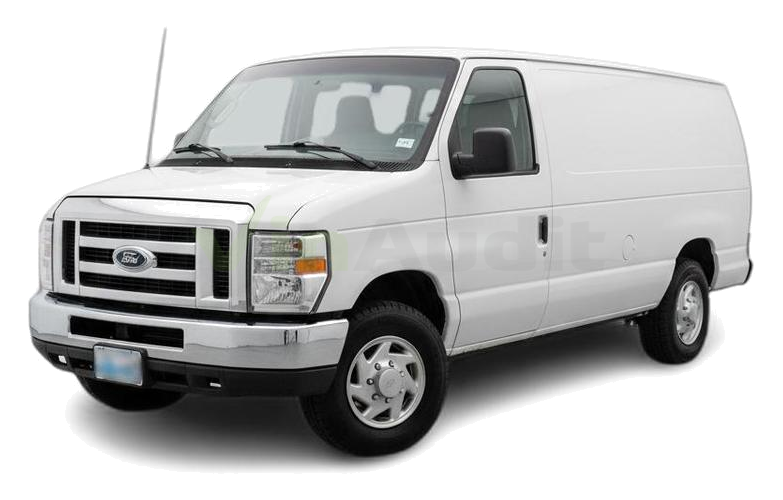
The 2012 Ford Econoline boasts impressive towing and hauling prowess, a reputation for bulletproof reliability, and a cavernous interior ready for any task. Its straightforward design appeals to practicality, while its sheer capability offers peace of mind and the freedom to tackle demanding jobs or road trips with confidence.
The Bad
Potential buyers should be aware of the Econoline's dated interior design and technology, which can feel primitive compared to modern vehicles. Fuel economy is also a significant concern, particularly with the larger engine options. Ride comfort can be truck-like, and some owners report issues with minor electrical components over time.
2012 Ford Econoline: Quick Overview
- Engine Options: The 2012 Ford Econoline offered a choice of robust gasoline engines. The base engine was typically a 4.6-liter V8. A more powerful 5.4-liter V8 was also available, and for maximum performance and towing, a 6.8-liter V10 was an option.
- Horsepower: Horsepower varied by engine. The 4.6L V8 generally produced around 225 horsepower, the 5.4L V8 offered approximately 255 horsepower, and the 6.8L V10 could deliver upwards of 305 horsepower.
- Fuel Economy: Fuel economy for the 2012 Econoline was not a strong suit, reflecting its size and powertrain. Expect figures in the range of 10-13 MPG in the city and 14-17 MPG on the highway, depending heavily on the engine, drivetrain (RWD or AWD), and cargo load.
- 0-60 Times: Official 0-60 mph times were not a primary focus for this utilitarian vehicle. With the larger V8 or V10 engines and without significant payload, acceleration could range from the mid-8-second to low 10-second range, but these figures are highly variable.
- Towing Capacity: The Econoline excelled in towing. Depending on the configuration, wheelbase, axle ratio, and engine, towing capacities could range from approximately 7,000 lbs for lighter duty configurations up to over 10,000 lbs for heavy-duty models equipped with the V10 engine.
- Trim-Level Features:
- XL Trim: This was the base trim, focusing on essential functionality. Standard features typically included vinyl flooring, basic cloth seats, manual windows and locks, and a simple audio system. It was designed for maximum utility and customization for commercial purposes.
- XLT Trim: Stepping up to the XLT trim added more creature comforts. Features often included upgraded cloth seats, power windows and door locks, cruise control, a more advanced audio system with an auxiliary input, and sometimes a tilt steering wheel. This trim offered a more comfortable experience for passenger transport or personal use.
2012 Ford Econoline Specifications
Vehicle Information
| Year | 2012 |
| Make | Ford |
| Model | Econoline |
| Trim | - |
| Style | - |
| Type | Van |
| Category | Cargo Van |
Manufacturing Details
| Made In | United States |
| Manufacturing City | AVON LAKE |
Dimensions
| Doors | 3-Door |
| Curb Weight | 5430 pounds |
| Gross Vehicle Weight Rating | 8600 pounds |
| Overall Height | 82.60 inches |
| Overall Length | 237.00 inches |
| Overall Width | 79.30 inches |
| Wheelbase Length | 138.00 inches |
| Standard Seating | 2 |
Engine & Performance
| Engine | 4.6L V8 |
| Engine Size | 4.6L |
| Engine Cylinders | 8 |
| Transmission | 4-Speed Automatic |
| Transmission Type | Automatic |
| Transmission Speeds | 4-Speed |
| Drivetrain | Rear-Wheel Drive |
Additional Features
| Anti-Brake System | 4-Wheel ABS |
| Steering Type | Recirculating |
Pricing
| Manufacturer Suggested Retail Price (MSRP) | $27,840 |
| Invoice Price | $25,726 |
| Delivery Charges | $995 |
Vehicle History Report
Specifications
History
Events
History Check
Check
Check
Check
Check
Listings
Recalls
Check
Analysis
What Problems Does the 2012 Ford Econoline Have?
How long will the 2012 Ford Econoline last?
What Technology & Safety Features are Included?
Built-in Tech & Entertainment: Standard equipment was basic. Expect a simple AM/FM/CD audio system with an auxiliary input jack for connecting external devices. Higher trims like the XLT might have offered upgraded audio systems with more speakers. Bluetooth connectivity was not standard and would likely have been an optional accessory or absent altogether. Navigation systems were not a common factory option for this generation of Econoline.
Driver-Assistance Features: Advanced driver-assistance systems were virtually non-existent in the 2012 Econoline. Features like blind-spot monitoring, adaptive cruise control, or lane-keeping assist were not available. The primary driver aids were more basic, such as power steering and ABS (Anti-lock Braking System). Some models might have offered rear parking sensors as an option, which would be a significant convenience for maneuvering in tight spaces.
Safety Features: Standard safety equipment included front airbags for the driver and front passenger. Anti-lock brakes (ABS) were also standard, providing improved stopping control. Seatbelts with pretensioners were fitted for all occupants. Traction control was available on some models, enhancing stability, especially in adverse conditions.
Optional Features: Beyond basic upgrades to the audio system, optional features often focused on enhancing utility and comfort. These could include a heavy-duty alternator, upgraded cooling systems, trailer tow packages, limited-slip rear axle, and auxiliary air conditioning for rear passengers. For passenger versions, vinyl or cloth seating upgrades, along with interior paneling, were common options.
Crash-Test Ratings: As a commercial-oriented vehicle, the Ford Econoline was not subjected to the same rigorous crash-testing regimes by agencies like the NHTSA or IIHS as passenger cars and SUVs. Therefore, official crash-test ratings are not readily available or comparable in the same way. Its body-on-frame construction and substantial mass provide a degree of passive safety, but the lack of modern crumple zones and advanced safety systems means it would likely perform less favorably in severe impact scenarios compared to contemporary vehicles designed with more advanced safety structures.
What Colors Options are Available?
2012 Ford Econoline Prices and Market Value
Currently, used 2012 Ford Econoline prices are highly dependent on mileage, condition, and the specific configuration (cargo van vs. passenger van, engine choice). Expect to find them ranging from approximately $6,000 to $15,000 for models with average to higher mileage. Well-maintained, lower-mileage examples, particularly cargo vans configured for specific trades, can command higher prices.
Depreciation for the Econoline is relatively slow compared to many other vehicle types, especially for commercial variants, due to their enduring utility. Factors affecting resale value include maintenance history, rust presence (especially in northern climates), interior condition, and overall mechanical soundness. Vans with fewer owners and a documented service history tend to hold their value best.
2012 Ford Econoline Cost of Ownership
2012 Ford Econoline Fuel Efficiency
2012 Ford Econoline Safety Rating
NHTSA
IIHS
2012 Ford Econoline Recalls & Defects
Power Train:automatic Transmission
Power Train:clutch Assembly
2012 Ford Econoline Warranty
Basic
Powertrain
Rust
2012 Ford Econoline Insurance
reasonable repair costs.
How Does the 2012 Ford Econoline Compare to Other Van?
Performance: In terms of raw power and towing capacity, the Econoline, especially with its V10 engine, was a strong contender, often matching or exceeding the Chevrolet Express in brute force. The Mercedes-Benz Sprinter, however, offered a more refined driving experience and superior fuel economy with its diesel engines, though at a higher price point. The Econoline's performance was geared towards utility rather than agility.
Features: This is where the Econoline showed its age. Compared to the Sprinter, which offered more modern technology, better ergonomics, and a more car-like interior, the Econoline felt basic. The Chevrolet Express was in a similar boat, also featuring a rather dated interior and feature set. While the Econoline offered practical cargo space, it lacked the advanced infotainment, safety features, and creature comforts found in more modern competitors.
Reliability: The Econoline has a legendary reputation for ruggedness and durability. While both the Express and Savana are also built tough, the Econoline often edges them out in terms of long-term powertrain reliability and ease of repair. The Sprinter, while sophisticated, can sometimes be more costly to maintain and repair, particularly its more complex diesel systems.
Price: The Ford Econoline and its GM counterparts were generally more affordable both new and used than the Mercedes-Benz Sprinter. This made them the go-to choice for budget-conscious commercial buyers or individuals seeking a no-frills work vehicle.
Recommendations: If your priority is maximum towing and hauling capacity for the lowest price, with proven long-term durability and ease of maintenance, the 2012 Ford Econoline is a solid choice. If you need better fuel efficiency, a more modern interior, and a more comfortable ride, the Mercedes-Benz Sprinter (though significantly more expensive) is a superior option. The Chevrolet Express/GMC Savana twins are similar in many ways to the Econoline, offering comparable utility and reliability, and could be considered if pricing or availability favors them. For a more modern, albeit smaller, van experience, you might look at the Ford Transit Connect if your cargo needs are less demanding.
Final Verdict: Is the 2012 Ford Econoline a Good Van?
It is absolutely worth buying if your needs align with its strengths and you find one in good condition with a documented maintenance history. Given its age, purchasing used is the only option. Focus on models with the V8 or V10 engines if towing or hauling heavy loads is a necessity. Avoid those with excessively high mileage or signs of neglect, particularly regarding transmission and cooling system maintenance. For those who need a reliable, no-nonsense transporter of goods or people and can overlook its dated interior and thirst for fuel, the Econoline remains a compelling, value-driven choice.

Drew B
Drew is a seasoned automotive expert and contributor to VinCheck.info. With nearly 15 years of experience as a former Porsche technician, he brings a wealth of hands-on knowledge to his writing. Born in North Carolina, a region renowned for its deep-rooted NASCAR culture, Drew developed a passion for cars early in life, often building and working on vehicles from a young age. At VINCheck, Drew leverages his extensive technical background to provide in-depth analyses of various vehicles. His articles often focus on engine performance, reliability, and maintenance insights, offering readers practical information grounded in real-world experience. Some of his notable contributions include reviews on the Mazda CX-5's longevity and detailed examinations of engine options for models like the 2011 Toyota Camry and Tacoma