
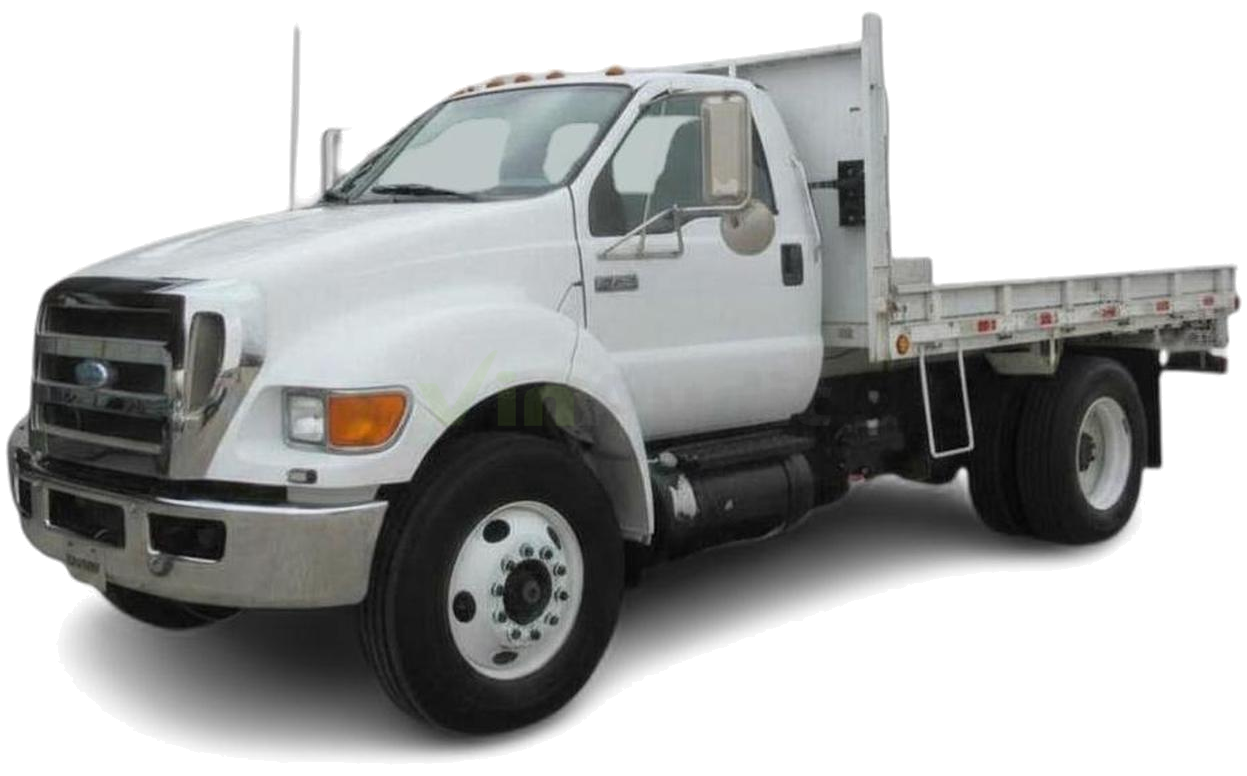
The Good
The 2008 Ford F-750 excels in performance with its powerful engine options and immense towing/hauling capabilities, offering practical solutions for demanding jobs. Its robust construction ensures long-term reliability, a key emotional appeal for businesses relying on consistent operation. While comfort is utilitarian, it prioritizes driver functionality. Its purpose-built design emphasizes durability and versatility, providing excellent value through its extended service life and ability to tackle nearly any commercial task with steadfast confidence.
The Bad
Potential weaknesses for the 2008 Ford F-750 include its notoriously low fuel economy, characteristic of its class, and a somewhat stiff ride, especially when unloaded. Maintenance and repair costs can be substantial due to specialized commercial parts and labor. Watch out for wear and tear on suspension and brake components, and potential issues with emissions systems on diesel engines over time.
2008 Ford F-750: Quick Overview
- Engine Options:
- Caterpillar C7 ACERT Diesel: A common choice, known for durability.
- Cummins ISB Diesel: Another popular, reliable diesel offering.
- Ford 6.8L Triton V10 Gasoline: Available for those preferring gas or specific applications, offering strong performance without the complexities of modern diesel emissions systems.
- Horsepower:
- Varies significantly by engine and tune. Diesel engines typically range from approximately 200-300 horsepower, with varying torque figures. The 6.8L V10 gasoline engine produced around 362 horsepower. Torque is the critical factor for commercial trucks, with diesel options offering much higher figures (e.g., 520-800+ lb-ft) for heavy loads.
- Fuel Economy:
- Official EPA fuel economy ratings are not provided for commercial vehicles in this class. Owners can expect very low fuel economy, typically in the range of 5-10 MPG, heavily dependent on load, driving conditions, and specific engine/drivetrain configuration.
- 0-60 Times:
- 0-60 MPH acceleration times are not a relevant performance metric for the Ford F-750 or any medium-duty commercial truck. These vehicles are designed for hauling and towing heavy loads, not rapid acceleration.
- Towing Capacity (Gross Combined Weight Rating - GCWR):
- The F-750's capability is primarily measured by its Gross Vehicle Weight Rating (GVWR) and GCWR. GVWRs range significantly, often from 26,000 lbs (Class 6/7) to over 33,000 lbs, requiring a Commercial Driver's License (CDL) in many configurations. GCWR can exceed 60,000 lbs, allowing for substantial trailer towing. Specific capacity depends entirely on chassis, engine, and axle configurations.
- Trim-Level Features:
- The F-750 doesn't have traditional "trim levels" like passenger vehicles. Instead, features are chosen based on chassis configuration:
- Cab Types: Regular Cab, SuperCab (extended), Crew Cab (four-door).
- Wheelbase Options: Multiple lengths to accommodate various body upfits.
- Brakes: Hydraulic or full air brake systems.
- Axle Ratios: Various rear axle ratios to optimize for either highway speed or heavy-duty pulling.
- Transmissions: Automatic transmissions (e.g., Allison 2000 or 3000 Series, or Ford's TorqShift) are common, designed for commercial duty.
- Interior: Functional and durable, typically featuring vinyl or cloth seats, basic AM/FM radio, manual windows/locks (power options often available), and robust controls designed for commercial use.
- Power Take-Off (PTO) Provision: Essential for operating hydraulic equipment like dump beds, cranes, or hoists.
- Frame & Suspension: Heavy-duty, reinforced steel frames and robust leaf spring suspension systems designed for sustained heavy loads.
- The F-750 doesn't have traditional "trim levels" like passenger vehicles. Instead, features are chosen based on chassis configuration:
2008 Ford F-750 Specifications
Vehicle Information
| Year | 2008 |
| Make | Ford |
| Model | F-750 |
| Trim | - |
| Style | 2WD |
| Type | Pickup Truck |
| Category | Medium Truck |
Manufacturing Details
| Made In | Mexico |
| Manufacturing City | ESCOBEDO |
Dimensions
| Doors | 4-Door |
| Curb Weight | - |
| Gross Vehicle Weight Rating | - |
| Overall Height | - |
| Overall Length | - |
| Overall Width | - |
| Wheelbase Length | - |
| Standard Seating | - |
Engine & Performance
| Engine | 7.2L I6 |
| Engine Size | 7.2L |
| Engine Cylinders | 6 |
| Transmission | - |
| Transmission Type | - |
| Transmission Speeds | - |
| Drivetrain | Rear-Wheel Drive |
Additional Features
| Anti-Brake System | - |
| Steering Type | - |
Pricing
| Manufacturer Suggested Retail Price (MSRP) | - |
| Invoice Price | - |
| Delivery Charges | - |
Vehicle History Report
Specifications
History
Events
History Check
Check
Check
Check
Check
Listings
Recalls
Check
Analysis
What Problems Does the 2008 Ford F-750 Have?
Transmission issues, while less frequent on heavy-duty Allison units, can arise from consistent overloading or lack of fluid maintenance. Electrical gremlins, such as faulty sensors or wiring harnesses, are also not uncommon across commercial vehicle platforms due to exposure to harsh environments. Brake system wear, whether hydraulic or air, is a constant consideration given the truck's weight and usage patterns.
Regarding recalls for the 2008 Ford F-750, it's important to check the NHTSA database using the specific VIN, as commercial vehicle recalls can be very targeted. However, some general recalls that affected Ford commercial chassis around this period included potential issues with certain steering components, brake line routing, or specific engine-related software updates to address performance or emissions. Long-term reliability concerns primarily focus on diligent maintenance of the driveline components, as these trucks are expected to run for hundreds of thousands of miles. Rust on the chassis, body panels, and fuel tanks can become an issue in regions with harsh winters or coastal environments. Interior components, while durable, can show significant wear from constant daily use. Proactive maintenance is paramount to mitigating these potential problems and ensuring a long service life for an F-750.
How long will the 2008 Ford F-750 last?
What Technology & Safety Features are Included?
Driver-assistance features, in the modern sense of adaptive cruise control, lane-keeping assist, or blind-spot monitoring, were non-existent for the 2008 F-750. The primary "assistance" came from robust mechanical systems and the driver's skill. Standard safety features included a sturdy steel cab structure designed for crash protection, anti-lock brakes (ABS), and typically driver and passenger airbags. Some configurations might have included traction control systems, especially those with air brakes. Visibility was generally good from the elevated seating position, aided by large side mirrors.
Optional features were more about commercial utility than luxury. These included power windows and door locks, air conditioning (not always standard), various seating materials (vinyl for durability, cloth for comfort), and specialized upfitting preparations such as PTO (Power Take-Off) provisions for hydraulic equipment, heavy-duty alternators, and enhanced battery systems. Air ride suspension for the cab or rear axle could also be specified for improved comfort or load protection. Crash-test ratings from agencies like NHTSA or IIHS are not applicable and not available for commercial trucks in the Class 7 segment like the F-750. These vehicles are not subjected to the same consumer crash testing protocols as light-duty passenger vehicles due to their size, weight, and specialized applications.
What Colors Options are Available?
2008 Ford F-750 Prices and Market Value
On the current used market, prices for a 2008 F-750 can range from $15,000 for high-mileage, basic chassis-cab units requiring work, to $40,000-$70,000 or more for well-maintained trucks with desirable, functional upfits and lower commercial mileage. Depreciation is significant initially, but then levels off. Unlike passenger cars, commercial trucks like the F-750 hold their value reasonably well over the long term if properly maintained and if the upfit remains functional. Factors affecting resale value include the condition of the engine and transmission, overall mileage, maintenance history, and critically, the type and condition of the installed vocational body (dump, box, utility, crane, etc.), which often represents a substantial portion of the vehicle's utility and value.
2008 Ford F-750 Cost of Ownership
2008 Ford F-750 Fuel Efficiency
2008 Ford F-750 Warranty
Basic
Powertrain
Rust
2008 Ford F-750 Insurance
reasonable repair costs.
How Does the 2008 Ford F-750 Compare to Other Pickup Truck?
Performance: All these rivals offer comparable levels of heavy-duty performance, primarily driven by robust diesel engines like Cummins ISB/ISC or Caterpillar C7 (Ford and Freightliner often used these), and proprietary engines from International (MaxxForce) or PACCAR (Kenworth/Peterbilt). The F-750's available Ford 6.8L V10 gas engine was a differentiator, offering a lower entry cost and simpler emissions, which some competitors didn't match in this class. All provide immense towing and payload capacities, designed for vocational tasks.
Features: "Features" in this segment revolve around chassis configurability. The F-750, like its rivals, offered various cab types (regular, extended, crew), multiple wheelbase options, PTO readiness, and heavy-duty frame choices. Interior amenities were similarly basic across the board: durable materials, functional dashboards, and essential comforts like AC and basic audio. No brand truly stood out with significantly more "tech" in 2008.
Reliability: Reliability is a strong suit for all these commercial trucks, provided they receive proper maintenance. Ford's F-Series commercial platform has a long-standing reputation for durability. Freightliner and International are also well-regarded workhorses. Kenworth and Peterbilt, often considered premium, tend to have excellent build quality and strong dealer support. Specific engine choices often dictate potential reliability issues more than the truck brand itself.
Price: New pricing was competitive, highly dependent on specification and upfit. On the used market, the F-750 generally offers good value, comparable to a used DuraStar or M2 106. Kenworth and Peterbilt often command a slight premium due to their perceived higher quality and driver comfort, which can impact resale.
Alternatives: For those seeking alternatives, the Freightliner M2 106 is arguably the most direct and prevalent competitor, offering similar versatility, engine options, and a broad dealer network. The International DuraStar is another excellent choice, known for its robust chassis. For a slightly more upscale option, the Kenworth T270/T370 or Peterbilt 330/337 provide a similar Class 7 capability with a focus on driver ergonomics and perceived build quality, though they may come at a higher price point, even used.
Final Verdict: Is the 2008 Ford F-750 a Good Pickup Truck?

Simon A
Simon is a contributor to VinCheck, where he provides articles and reviews on various automotive topics. His work focuses on delivering accurate and up-to-date information about used cars, helping readers make informed decisions.