
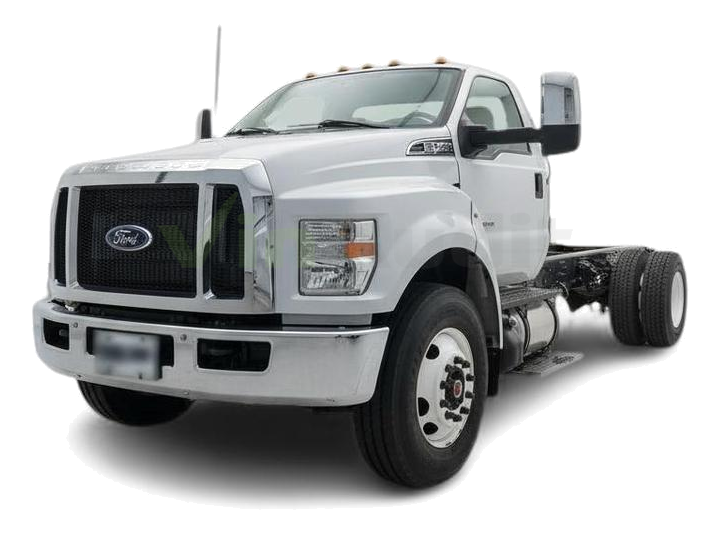
The Good
The 2024 Ford F-750 boasts formidable performance with powerful engine options and exceptional towing/hauling capacities, appealing to practical needs. Its legendary Ford reliability instills confidence, while a surprisingly comfortable and functional cabin eases long workdays. The robust design signifies enduring value, making it a sound investment for demanding operations.
The Bad
Potential weaknesses for the 2024 Ford F-750 include its sheer size, which can make it challenging to maneuver in tight urban environments. Fuel economy, while typical for its class, can be a significant operating cost. Specialized maintenance and repair may require dedicated commercial service centers, adding to ownership complexity.
2024 Ford F-750: Quick Overview
- Engine Options: The 2024 Ford F-750 offers two primary engine choices:
- 7.3L V8 Gas (Godzilla Engine): This naturally aspirated gasoline engine is designed for robust performance and durability. It delivers excellent torque for heavy-duty applications.
Horsepower: Typically around 350-450 hp.
Torque: Significantly high torque output, crucial for hauling and towing, often exceeding 450 lb-ft. - 6.7L Power Stroke V8 Turbo Diesel: Ford's renowned diesel engine offers superior pulling power and efficiency for commercial operations.
Horsepower: Varies by application, but generally in the range of 300-330 hp.
Torque: Exceptionally high torque figures, often exceeding 700 lb-ft, making it ideal for the most demanding tasks.
- 7.3L V8 Gas (Godzilla Engine): This naturally aspirated gasoline engine is designed for robust performance and durability. It delivers excellent torque for heavy-duty applications.
- Fuel Economy: Specific MPG figures for commercial trucks like the F-750 are not as standardized or widely reported as for light-duty vehicles. Fuel economy is highly dependent on the engine, transmission, payload, driving conditions, and specific upfitting. It is generally lower than smaller trucks, with diesel engines typically offering better mileage than gasoline counterparts under load.
- 0-60 Times: 0-60 mph acceleration times are not a primary consideration or a commonly tested metric for the F-750 due to its intended commercial purpose. Its focus is on power under load, not rapid acceleration.
- Towing and Payload Capacity: This is where the F-750 excels. It is designed for substantial work.
GCWR (Gross Combined Weight Rating): Can exceed 50,000 lbs, depending on configuration and axle ratings.
GVWR (Gross Vehicle Weight Rating): Typically ranges from 25,000 lbs up to 37,000 lbs.
Payload Capacity: Extremely high, designed to carry significant weight in the chassis and body.
Towing Capacity: When properly equipped and configured for towing (e.g., with a fifth-wheel or gooseneck hitch), the F-750 can tow very heavy trailers, often exceeding 20,000 lbs, with some configurations rated much higher. - Key Trim-Level Features: The F-750 is less about traditional trim levels (like XLT, Lariat) and more about vocational packages and optional equipment. Buyers select a base chassis and then customize.
- Chassis Cab Configuration: Standard offering, allowing for custom bodies (dump beds, box trucks, tow trucks, etc.).
- Engine and Drivetrain Options: Selection of gas or diesel engines, transmission types (e.g., TorqShift HD automatic), and drivetrain configurations (2WD).
- Cab Options: Regular Cab is standard. Crew Cab configurations may be available for larger crews.
- Upfitter Interface Module: Integrated electrical connectors and upfitter switches to simplify the installation of auxiliary equipment.
- Suspension and Axle Options: Various heavy-duty suspension and axle configurations to meet specific load requirements.
- Optional features may include: Enhanced infotainment systems (for commercial use), air brakes (on higher GVWR models), specialized PTO (Power Take-Off) options, and various safety and comfort amenities tailored for commercial operators.
2024 Ford F-750 Specifications
Vehicle Information
| Year | 2024 |
| Make | Ford |
| Model | F-750 |
| Trim | - |
| Style | Regular Cab 2WD |
| Type | Truck |
| Category | - |
Manufacturing Details
| Made In | United States |
| Manufacturing City | LORIAN |
Dimensions
| Doors | 2-Door |
| Curb Weight | - |
| Gross Vehicle Weight Rating | 14968.54 kg |
| Overall Height | - |
| Overall Length | - |
| Overall Width | - |
| Wheelbase Length | - |
| Standard Seating | - |
Engine & Performance
| Engine | 6.7L V8 |
| Engine Size | 6.7L |
| Engine Cylinders | 8 |
| Transmission | Automatic |
| Transmission Type | Automatic |
| Transmission Speeds | - |
| Drivetrain | Rear-Wheel Drive |
Additional Features
| Anti-Brake System | - |
| Steering Type | - |
Pricing
| Manufacturer Suggested Retail Price (MSRP) | - |
| Invoice Price | - |
| Delivery Charges | - |
Vehicle History Report
Specifications
History
Events
History Check
Check
Check
Check
Check
Listings
Recalls
Check
Analysis
What Problems Does the 2024 Ford F-750 Have?
Powertrain: While the 7.3L V8 gas and 6.7L Power Stroke diesel are generally robust, issues can occasionally surface with emissions control systems (DPF, DEF) on diesel engines, particularly with improper maintenance or frequent short-haul driving. Turbocharger issues or injector problems, while not epidemic, are possibilities with high-mileage diesel engines.
Transmission: The heavy-duty automatic transmissions are designed for durability, but like any transmission under heavy load, they can be susceptible to wear over time. Fluid changes and proper cooling are critical. Issues can sometimes involve shifting problems or premature wear if consistently overloaded.
Electrical Systems: Complex electrical systems can sometimes develop gremlins. This might manifest as sensor failures, issues with the upfitter interface module, or problems with dashboard displays or warning lights. This is often more prevalent after extensive upfitting.
Brakes: While highly engineered, heavy-duty braking systems (especially air brakes on some configurations) require regular maintenance. Issues could include brake fade, worn components, or air system leaks if not properly serviced.
Recalls: Recalls are issued by manufacturers to address safety concerns. For a specific 2024 model year, recalls are typically announced as they are identified. Buyers should always check Ford's official recall information for the most up-to-date list pertinent to their VIN. Recalls on medium-duty trucks often relate to specific component failures, software glitches, or safety system anomalies.
Long-Term Reliability: The F-750 is designed for longevity. With consistent, scheduled maintenance adhering to Ford's recommendations, these trucks can achieve hundreds of thousands of miles. Neglecting fluid changes, filters, and inspections will significantly shorten their lifespan and increase the likelihood of major component failures. The reliability is strongly correlated with the owner's commitment to upkeep and the operational demands placed upon the vehicle. Specific issues by model year are less documented in the public domain for commercial trucks compared to consumer vehicles, as their use cases and maintenance patterns vary widely.
How long will the 2024 Ford F-750 last?
What Technology & Safety Features are Included?
Built-in Tech and Entertainment: Standard features are often utilitarian. Buyers can opt for upgraded infotainment systems that may include a touchscreen display, AM/FM radio, USB ports, and Bluetooth connectivity for hands-free calling and audio streaming. Ford's SYNC system, while perhaps a more basic version than in passenger cars, provides essential connectivity. For commercial operators, telematics and fleet management integration options are often more critical than premium sound systems.
Driver-Assistance Features: Due to its size and commercial application, advanced driver-assistance systems (ADAS) are less common as standard equipment compared to light-duty vehicles. However, optional features can include:
- Rearview Camera: Essential for maneuvering in tight spaces and hitching trailers.
- Forward Collision Warning and Automatic Emergency Braking: Increasingly available to help mitigate frontal impacts, especially crucial in heavy traffic.
- Lane Departure Warning: Alerts the driver if the vehicle begins to drift out of its lane.
- Trailer Brake Controller: Integrated control for trailer braking systems.
Safety Features: Standard safety equipment includes:
- Robust Frame and Body Construction: Designed to withstand significant loads and impacts.
- Airbags: Driver and passenger airbags.
- Anti-lock Braking System (ABS): Standard on all models.
- Electronic Stability Control (ESC): Helps prevent rollovers and loss of control.
- Heavy-Duty Brakes: Designed to stop substantial loads effectively, with options for hydraulic or air brakes depending on GVWR.
Crash-Test Ratings: Medium-duty commercial trucks like the Ford F-750 are generally not subjected to the same standardized crash-test ratings (like NHTSA or IIHS) as light-duty passenger vehicles. Their safety is primarily assessed through structural integrity, braking performance, and the inclusion of available advanced safety systems designed for their operational environment. Ford engineers the F-750 with safety as a paramount concern, emphasizing occupant protection through its robust construction and the availability of critical safety technologies.
What Colors Options are Available?
2024 Ford F-750 Prices and Market Value
2024 Ford F-750 Cost of Ownership
2024 Ford F-750 Fuel Efficiency
2024 Ford F-750 Warranty
Basic
Powertrain
Rust
2024 Ford F-750 Insurance
reasonable repair costs.
How Does the 2024 Ford F-750 Compare to Other Truck?
International MV Series: Often considered a direct competitor, the MV Series offers a similar range of powertrain options, including Navistar's own diesel engines and potentially Cummins engines, along with gasoline options. Performance is comparable, with a strong emphasis on vocational applications. Features and customization are extensive, catering to specific business needs. Reliability is generally strong for both brands, though specific component sourcing can differ. Pricing is competitive, often falling within a similar bracket.
Freightliner M2 Series: Freightliner, a Daimler Trucks North America brand, offers the M2 series which is highly regarded for its driver comfort and advanced features within the commercial space. Performance is excellent with powerful diesel engines. They often boast a more modern interior and potentially more advanced driver-assistance options than some competitors. Reliability is a strong suit for Freightliner. Pricing can be comparable, though options can drive costs up.
Hino Conventional Series: Hino trucks, part of the Toyota Group, are known for their reliability and often strong warranties. They offer competitive diesel engines and a focus on fuel efficiency. The conventional series provides a solid platform for various vocational needs. Features and comfort are generally competitive. Price can sometimes be an advantage for Hino, offering good value.
Comparing the F-750:
- Performance: The F-750's 7.3L gas and 6.7L Power Stroke diesel engines are highly competitive, offering excellent power and torque for demanding tasks.
- Features: Ford's upfitter interface and integration are strong points for customization. While infotainment might be less flashy than some rivals, its practical application is key.
- Reliability: Ford has a long-standing reputation for robust commercial vehicles, and the F-750 generally upholds this. The Power Stroke diesel is a proven workhorse.
- Price: The F-750 often presents a strong value proposition, especially when considering Ford's extensive dealer network and parts availability.
Recommendations:
- Similar Alternatives: The International MV Series and Freightliner M2 Series are excellent, often interchangeable choices depending on specific dealer support, pricing incentives, and minor feature preferences.
- Value-Oriented Alternative: If budget is a primary concern and a slightly less powerful but highly reliable diesel is acceptable, the Hino Conventional Series is worth strong consideration.
Ultimately, the best choice often depends on local dealer support, specific upfitting requirements, and negotiated pricing for the intended vocational application.
Final Verdict: Is the 2024 Ford F-750 a Good Truck?

Drew B
Drew is a seasoned automotive expert and contributor to VinCheck.info. With nearly 15 years of experience as a former Porsche technician, he brings a wealth of hands-on knowledge to his writing. Born in North Carolina, a region renowned for its deep-rooted NASCAR culture, Drew developed a passion for cars early in life, often building and working on vehicles from a young age. At VINCheck, Drew leverages his extensive technical background to provide in-depth analyses of various vehicles. His articles often focus on engine performance, reliability, and maintenance insights, offering readers practical information grounded in real-world experience. Some of his notable contributions include reviews on the Mazda CX-5's longevity and detailed examinations of engine options for models like the 2011 Toyota Camry and Tacoma