
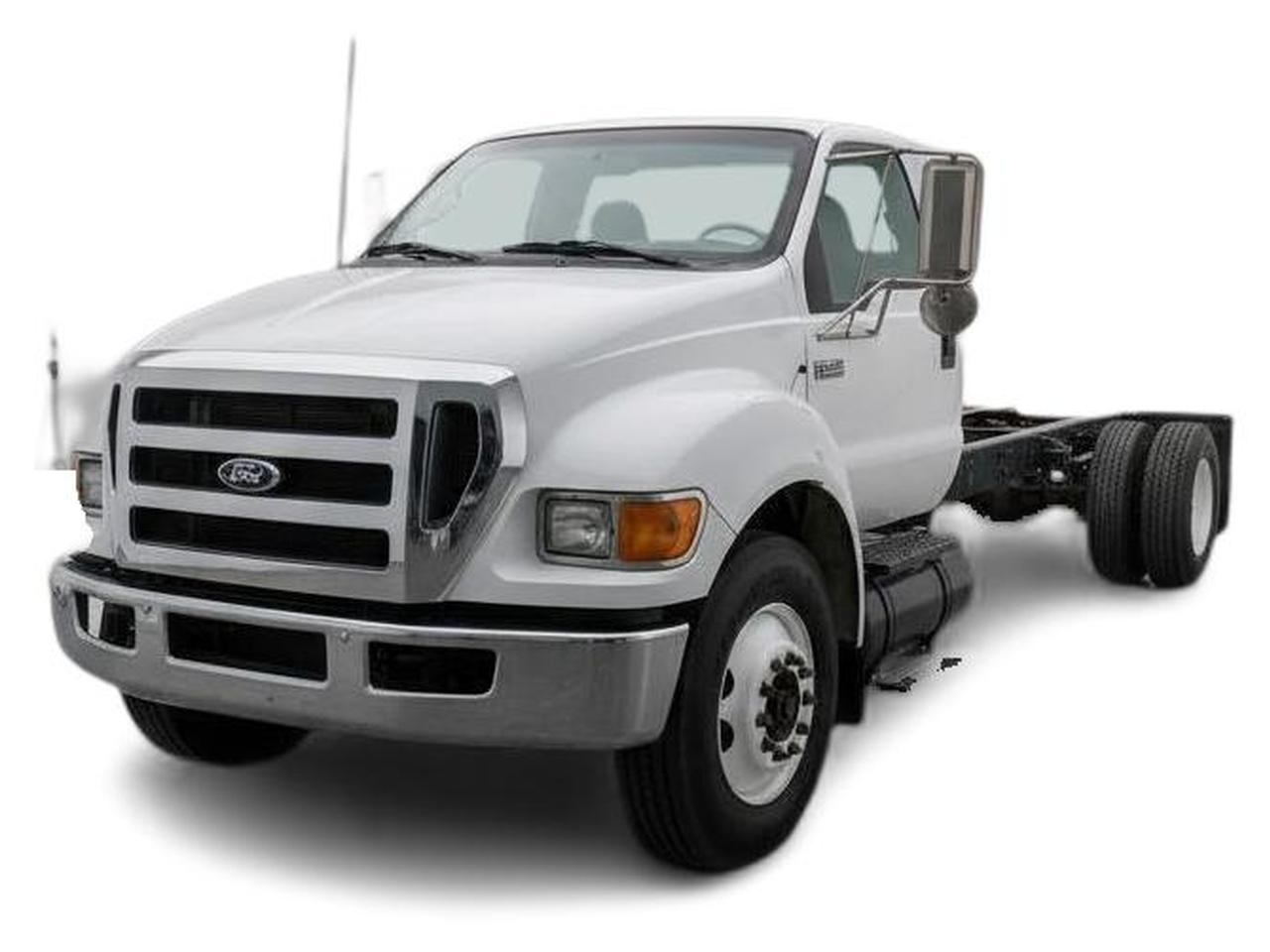
The Good
The 2010 Ford F-750 offers exceptional performance for heavy-duty tasks, legendary reliability for consistent operation, and surprising comfort for its class. Its rugged design inspires confidence, while its value is undeniable for businesses needing a dependable workhorse that can tackle any job.
The Bad
Potential weaknesses for the 2010 Ford F-750 include its large turning radius, making maneuverability in tight spaces a challenge. Fuel economy is inherently poor due to its size and power. Older models may exhibit wear and tear on powertrain components, and some owners report issues with the transmission or emissions systems.
2010 Ford F-750: Quick Overview
- Engine Options: The 2010 Ford F-750 was primarily equipped with powerful diesel engines designed for commercial use. Key options included:
- Cummins ISB 6.7L Turbo Diesel: A very common and robust choice, known for its durability and strong torque.
- Ford Power Stroke 6.4L Turbo Diesel: Ford's in-house diesel option, offering significant power.
- Horsepower:
- Cummins ISB 6.7L: Typically ranged from 200 hp to 325 hp, with torque figures often exceeding 500 lb-ft, up to around 650 lb-ft.
- Ford Power Stroke 6.4L: Offered horsepower in the range of 300 hp to 350 hp, with substantial torque.
- Fuel Economy: Fuel economy for a vehicle of this size and class is not a primary focus and is generally poor. Expect single-digit miles per gallon (MPG), likely in the 5-8 MPG range, heavily dependent on load, terrain, and driving conditions.
- 0-60 Times: 0-60 mph times are not typically measured or relevant for this type of commercial vehicle, as its purpose is not acceleration but sustained power under load.
- Towing and Hauling Capacity: This is where the F-750 shines.
- GCWR (Gross Combined Weight Rating): Can exceed 70,000 lbs, allowing for very substantial trailer weights.
- GVWR (Gross Vehicle Weight Rating): Typically ranges from 26,000 lbs to 37,000 lbs, depending on configuration.
- Payload Capacity: Varies widely based on body upfit, but generally designed to carry thousands of pounds of cargo.
- Trim-Level Features: Trims are less about luxury and more about functionality and powertrain. Key distinctions often relate to:
- Engine Choice: Cummins vs. Ford Power Stroke.
- Transmission: Available with robust manual transmissions (e.g., Eaton Fuller) or heavy-duty automatic transmissions.
- Axle Ratios: Specific ratios to optimize for towing, hauling, or fuel economy (though the latter is relative).
- Suspension Options: Heavy-duty leaf spring suspensions are standard.
- Cab Options: Standard cab configurations are typical, focusing on utility over creature comforts, though some higher-spec versions might offer more amenities.
2010 Ford F-750 Specifications
Vehicle Information
| Year | 2010 |
| Make | Ford |
| Model | F-750 |
| Trim | - |
| Style | 2WD |
| Type | Truck |
| Category | Medium Truck |
Manufacturing Details
| Made In | Mexico |
| Manufacturing City | ESCOBEDO |
Dimensions
| Doors | 4-Door |
| Curb Weight | - |
| Gross Vehicle Weight Rating | - |
| Overall Height | - |
| Overall Length | - |
| Overall Width | - |
| Wheelbase Length | - |
| Standard Seating | - |
Engine & Performance
| Engine | 6.7L I6 |
| Engine Size | 6.7L |
| Engine Cylinders | 6 |
| Transmission | - |
| Transmission Type | - |
| Transmission Speeds | - |
| Drivetrain | Rear-Wheel Drive |
Additional Features
| Anti-Brake System | - |
| Steering Type | - |
Pricing
| Manufacturer Suggested Retail Price (MSRP) | - |
| Invoice Price | - |
| Delivery Charges | - |
Vehicle History Report
Specifications
History
Events
History Check
Check
Check
Check
Check
Listings
Recalls
Check
Analysis
What Problems Does the 2010 Ford F-750 Have?
The Ford Power Stroke 6.4L engine, while powerful, has its own set of known challenges. One significant concern is the reliability of the EGR cooler, which can fail and lead to coolant leaks into the exhaust system, potentially causing more severe damage. The turbocharger system on the 6.4L, with its variable geometry turbo (VGT), can also become problematic over time due to soot buildup, affecting performance. Injector issues are also reported.
Transmission problems can arise with both manual and automatic transmissions, especially if subjected to extreme loads or if fluid changes are neglected. Clutch wear on manual transmissions is also a factor. For automatic transmissions, overheating and torque converter issues can occur.
Recalls for Ford F-750 models can vary by year and specific configuration. It is crucial for any prospective buyer to check for any outstanding recalls and ensure they have been addressed. Common recall areas for heavy-duty trucks often involve braking systems, fuel systems, or potential fire hazards. Specific to the 2010 model year or around that period, recalls might address issues like potential fuel leaks or steering components.
Long-term reliability is generally good if the vehicle is properly maintained according to Ford's or the engine manufacturer's (Cummins) severe-duty service schedule. Neglect in maintenance, such as infrequent oil changes, fuel filter replacements, and coolant flushes, will significantly shorten the lifespan of major components like the engine and transmission. The frame and chassis are typically very robust, but rust can be an issue in regions with harsh winters and road salt usage. Suspension components and brake wear are also expected maintenance items, proportional to the vehicle's usage.
How long will the 2010 Ford F-750 last?
What Technology & Safety Features are Included?
Driver-assistance features are virtually non-existent in the 2010 F-750. Modern amenities like adaptive cruise control, lane departure warning, or blind-spot monitoring are not integrated. The focus is on mechanical robustness and driver awareness through mirrors.
Safety features are basic but functional for its intended purpose. Standard safety equipment typically includes:
- Antilock Braking System (ABS): Essential for controlling the vehicle during heavy braking, especially when loaded.
- Seatbelts: Three-point seatbelts for driver and passengers.
- Airbags: Frontal airbags for the driver and front passenger are standard.
What Colors Options are Available?
2010 Ford F-750 Prices and Market Value
2010 Ford F-750 Cost of Ownership
2010 Ford F-750 Fuel Efficiency
2010 Ford F-750 Recalls & Defects
Service Brakes, AIR
2010 Ford F-750 Warranty
Basic
Powertrain
Rust
2010 Ford F-750 Insurance
reasonable repair costs.
How Does the 2010 Ford F-750 Compare to Other Truck?
Performance: In terms of raw power and torque, the F-750 with its Cummins or Power Stroke diesel engines is competitive. The Cummins ISB 6.7L is a well-regarded engine known for its balance of power and durability. Rivals like the International WorkStar often offer similar or even more powerful engine options. Peterbilt and Kenworth, being premium heavy-duty brands, might offer slightly more refined powertrain integration, but the F-750 holds its own for demanding vocational tasks.
Features: As discussed, the 2010 F-750 is lean on technology and comfort features. It prioritizes a robust, functional cabin. Competitors in this segment are also generally focused on utility. However, premium brands like Peterbilt and Kenworth might offer slightly more ergonomic cab designs and more robust chassis components, though this comes at a higher price point. International's WorkStar also offers a no-nonsense, durable cabin experience.
Reliability: The F-750 has a reputation for being a dependable workhorse, especially when equipped with the Cummins engine. However, the 6.4L Power Stroke had some known issues. International trucks are also generally considered reliable. Peterbilt and Kenworth are renowned for their long-term durability and robust construction, often considered top-tier in this regard, but again, at a higher initial and potentially ongoing cost.
Price: The Ford F-750 typically offered a more budget-friendly entry point compared to premium brands like Peterbilt or Kenworth when new, and this often carries over to the used market. International's WorkStar can be similarly priced to the F-750.
Alternatives:
- Similar: The International WorkStar (e.g., 7300, 7400, 7500 series) is a very comparable alternative, offering similar vocational capabilities and often using the same Cummins diesel engines.
- Potentially Better (if budget allows): The Kenworth T370 or Peterbilt Model 337 offer superior build quality, driver comfort, and often a longer service life between major overhauls, but at a significantly higher cost, both new and used.
- Lighter Duty (if F-750 is overkill): If the task doesn't require Class 7 capabilities, a well-equipped Ford F-650 or a heavy-duty pickup like a Ford F-450/F-550 chassis cab might be more economical to operate.
Final Verdict: Is the 2010 Ford F-750 a Good Truck?
It is worth buying if you need a reliable workhorse and can find one that has been well-maintained. The used market is where this vehicle makes the most sense, as new pricing would be prohibitive for many. Focus on models equipped with the Cummins ISB 6.7L engine for generally better long-term reliability and parts availability compared to the Ford Power Stroke 6.4L. Thorough pre-purchase inspection by a diesel mechanic is paramount to avoid costly surprises. For its intended use, it remains a capable and valuable asset.

Jovan
Jovan specializes in interpreting vehicle records and making sense of VIN data. With over 10 years of experience in the automotive data industry, his work ensures that every report is clear, accurate, and useful for car buyers.