
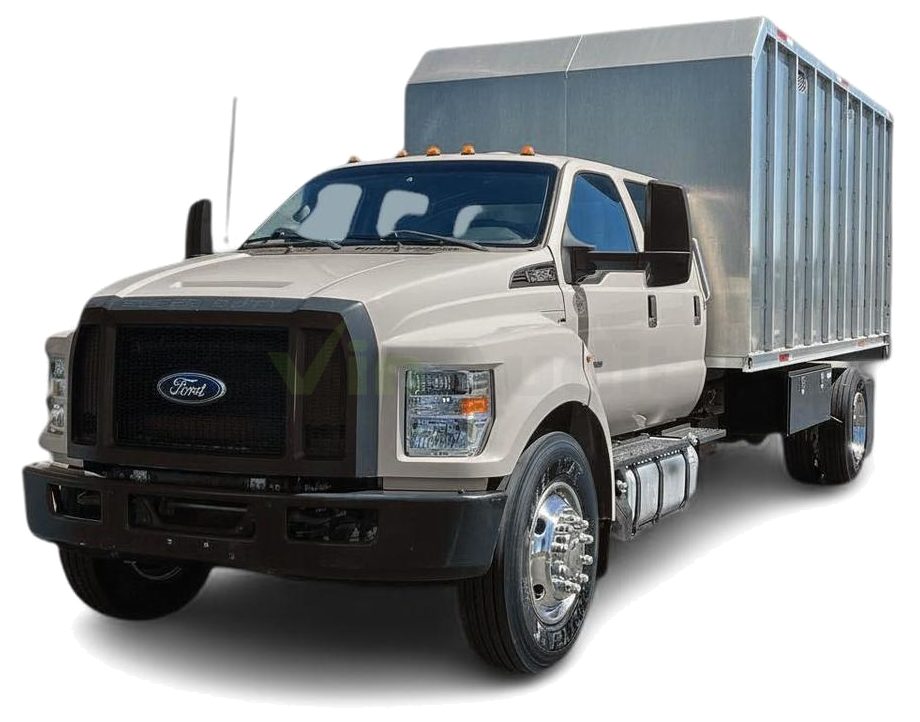
The Good
The 2017 F-750 excels in raw power and unwavering reliability, offering a commanding presence that appeals to pride. Its practical advantages include immense towing and hauling capabilities, customizable configurations for specific jobs, and a work-focused interior designed for long days, promising excellent long-term value.
The Bad
Potential weaknesses of the 2017 F-750 include its substantial size which can make maneuverability in tight spaces challenging, and the fuel economy, which is not its strong suit. Owners should also be aware of potential wear and tear on components given its heavy-duty nature.
2017 Ford F-750: Quick Overview
- Engine Options: The 2017 Ford F-750 was primarily offered with two robust engine choices:
- 6.7L Power Stroke V8 Turbo Diesel: This is the more common and powerful option.
- Horsepower: Ranging from 270 to 330 hp depending on configuration.
- Torque: Typically around 700 lb-ft to 825 lb-ft, providing immense pulling power.
- Horsepower: Ranging from 270 to 330 hp depending on configuration.
- 7.3L V8 Gasoline (Triton): A less common, but still capable option for gasoline needs.
- Horsepower: Around 320 hp.
- Torque: Approximately 460 lb-ft.
- Horsepower: Around 320 hp.
- 6.7L Power Stroke V8 Turbo Diesel: This is the more common and powerful option.
- Fuel Economy: Specific MPG figures are not typically rated or reported for vehicles of this class and purpose. Expect significantly lower fuel efficiency compared to lighter-duty trucks, likely in the single digits (MPG) under load.
0-60 Times: Not applicable or tested for this class of commercial vehicle. Its purpose is not acceleration but sustained work. - Towing/Hauling Capacity: This is the F-750's forte. Gross Vehicle Weight Ratings (GVWR) can range from 26,000 lbs up to 37,000 lbs, allowing for substantial payloads and towing capabilities depending on the chassis and axle configurations. Specific towing numbers are highly dependent on the upfit and intended application, but it's designed for very heavy-duty work.
- Trim-Level Features: As a commercial chassis cab, trim levels are more about configuration and vocational packages rather than luxury amenities. Standard features are utilitarian, focusing on durability and functionality. Key available options include:
- Various cab configurations (Regular Cab).
- Different wheelbase lengths.
- Upfitter interfaces for easy installation of specialized equipment.
- Heavy-duty suspension and braking systems.
- Air brakes (on some models).
- Limited interior creature comforts focusing on ease of cleaning and durability.
- Available auxiliary power outlets and PTO (Power Take-Off) capabilities for specialized equipment.
- Various cab configurations (Regular Cab).
2017 Ford F-750 Specifications
Vehicle Information
| Year | 2017 |
| Make | Ford |
| Model | F-750 |
| Trim | - |
| Style | 2WD |
| Type | Truck |
| Category | - |
Manufacturing Details
| Made In | United States |
| Manufacturing City | - |
Dimensions
| Doors | 4-Door |
| Curb Weight | - |
| Gross Vehicle Weight Rating | 33001 pounds |
| Overall Height | - |
| Overall Length | - |
| Overall Width | - |
| Wheelbase Length | - |
| Standard Seating | - |
Engine & Performance
| Engine | 6.7L I6 |
| Engine Size | 6.7L |
| Engine Cylinders | 8 |
| Transmission | - |
| Transmission Type | - |
| Transmission Speeds | - |
| Drivetrain | Rear-Wheel Drive |
Additional Features
| Anti-Brake System | - |
| Steering Type | - |
Pricing
| Manufacturer Suggested Retail Price (MSRP) | - |
| Invoice Price | - |
| Delivery Charges | - |
Vehicle History Report
Specifications
History
Events
History Check
Check
Check
Check
Check
Listings
Recalls
Check
Analysis
What Problems Does the 2017 Ford F-750 Have?
One area that sometimes sees reports relates to the diesel particulate filter (DPF) system on the 6.7L Power Stroke engine. Clogged DPFs can lead to reduced engine performance and warning lights, often requiring regeneration cycles or professional cleaning. This is more common in applications with frequent short trips and less highway driving, where the system doesn't get hot enough to perform its self-cleaning function effectively. Regular maintenance and proper usage are key to mitigating this.
Another potential concern, though not necessarily widespread for the 2017 model year specifically, is related to the transmission, particularly with the TorqShift automatic transmission when subjected to extreme, continuous heavy loads. While generally robust, consistent overloading or aggressive driving can accelerate wear on transmission components. Owners should adhere to recommended fluid change intervals and ensure the vehicle is not regularly pushed beyond its intended capacity.
Recalls for commercial vehicles like the F-750 are often specific to safety components or emissions systems. For the 2017 model year, owners should always check the National Highway Traffic Safety Administration (NHTSA) database for any issued recalls related to their specific VIN. Common recall areas for heavy trucks can include issues with braking systems, electrical components, or fuel delivery systems.
Long-term reliability is generally considered a strong suit for the F-750. Its chassis and powertrain are engineered for demanding use. However, the longevity and reliability are heavily dependent on the owner's maintenance schedule and the type of work the truck is performing. A well-maintained F-750 used within its designed parameters can achieve hundreds of thousands of miles. Neglect, improper operation, or exceeding load limits will undoubtedly lead to premature component failure and higher repair costs.
How long will the 2017 Ford F-750 last?
What Technology & Safety Features are Included?
Driver-assistance features are minimal in the traditional automotive sense. Expect standard power steering, power brakes, and possibly air brakes on certain configurations for enhanced stopping power. Features like cruise control might be optional. Advanced driver aids such as lane departure warning, adaptive cruise control, or blind-spot monitoring are generally not available for this class of commercial truck.
Safety features are focused on the fundamental requirements for heavy vehicles. Standard safety equipment typically includes airbags for the driver and front passenger, seat belts with pretensioners, and robust construction designed to protect occupants in the event of a collision. Antilock Braking System (ABS) is standard, crucial for maintaining steering control during hard braking. The F-750 does not undergo typical consumer-focused crash-test ratings from organizations like the IIHS or NHTSA in the same way as passenger vehicles. Its safety is evaluated based on commercial vehicle standards and its inherent structural integrity designed to withstand the rigors of its intended use.
What Colors Options are Available?
2017 Ford F-750 Prices and Market Value
2017 Ford F-750 Cost of Ownership
2017 Ford F-750 Fuel Efficiency
2017 Ford F-750 Recalls & Defects
Equipment
2017 Ford F-750 Warranty
Basic
Powertrain
Rust
2017 Ford F-750 Insurance
reasonable repair costs.
How Does the 2017 Ford F-750 Compare to Other Truck?
Performance: The F-750 is generally on par with its competitors in terms of raw power, especially with the 6.7L Power Stroke diesel. Horsepower and torque figures are competitive, offering robust hauling and towing capabilities. Its performance is tailored for work, not speed.
Features: Features are utilitarian across the board. The F-750's advantage often lies in Ford's extensive dealer network and service infrastructure, which can be more accessible for maintenance and repairs compared to some competitors. Other trucks might offer slightly more refined cabin options or specialized vocational packages, but the core functionality is similar.
Reliability: Ford's reputation for heavy-duty truck reliability is strong, and the F-750 generally lives up to this. International and Freightliner also have long-standing track records in the commercial space. Long-term reliability for all these vehicles heavily depends on maintenance and operational use. There isn't a standout winner in reliability; it's more about specific engine and transmission choices and how the truck is cared for.
Price: New pricing is comparable, with variations often driven by specific configurations and options. Used prices are also highly competitive. The F-750 often presents a strong value proposition due to its robust build and readily available support network.
Alternatives:
- International MV Series (successor to 4300): A very similar offering, often powered by Navistar's own diesel engines. Offers strong vocational support.
- Freightliner M2 106: Another direct competitor known for its strong engineering and often a slightly more modern cabin feel, though comfort is still secondary to function.
- Hino 155/195: While generally in a slightly lighter class (Class 5/6), Hinos can be configured for similar tasks and might offer competitive pricing and fuel efficiency, though usually with less raw power than the F-750.
For most users seeking a dependable, work-ready Class 7 truck, the 2017 F-750 is a solid choice that stands competitively against its direct rivals, with its primary differentiator being the widespread Ford service network.
Final Verdict: Is the 2017 Ford F-750 a Good Truck?
Given its commercial nature and high initial cost, purchasing a used 2017 F-750 is often the most prudent option for many buyers. Look for well-maintained examples with documented service history. The diesel variants, particularly with the 6.7L Power Stroke, are generally preferred for their power and longevity. Avoid models that have been severely overworked or neglected. It's a sound investment for vocational needs when purchased with a clear understanding of its operational costs and intended purpose.

Jovan
Jovan specializes in interpreting vehicle records and making sense of VIN data. With over 10 years of experience in the automotive data industry, his work ensures that every report is clear, accurate, and useful for car buyers.