
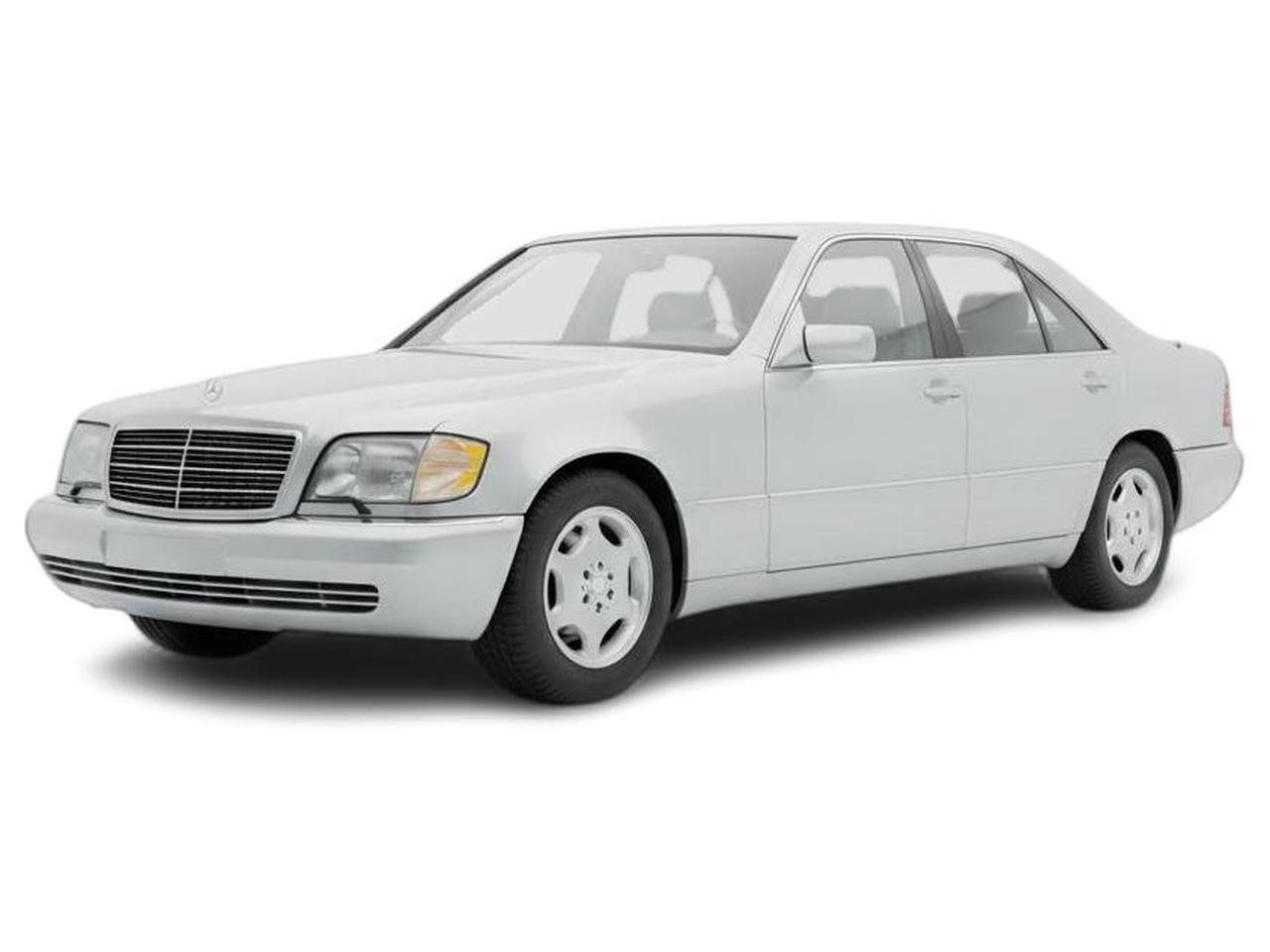
The Good
The 1990 S-Class boasts exceptional build quality, supreme ride comfort, and powerful, smooth engines. Its timeless design exudes sophistication, while advanced engineering offers a sense of security and prestige. For practical buyers, its durability and potential for longevity are key; for emotional buyers, it's pure automotive artistry and status.
The Bad
Common concerns for the 1990 S-Class include potential electrical gremlins due to its complex systems, aging rubber and plastic components (especially cooling hoses and vacuum lines), and the significant cost of repairs for specialized parts and labor. Thorough pre-purchase inspection is crucial.
1990 Mercedes-Benz S-Class: Quick Overview
- Engine Options:
- 3.0L Inline-6 Cylinder (M103)
- 4.2L V8 Cylinder (M119)
- 5.6L V8 Cylinder (M116)
- Horsepower:
- 3.0L Inline-6: Approximately 190 hp
- 4.2L V8: Approximately 279 hp
- 5.6L V8: Approximately 295 hp
- Fuel Economy (EPA Estimated - MPG):
- 3.0L Inline-6 (Combined): Around 17 MPG
- 4.2L V8 (Combined): Around 15 MPG
- 5.6L V8 (Combined): Around 14 MPG
- Note: Actual mileage varies significantly with driving conditions and maintenance.
- 0-60 Times:
- 3.0L Inline-6: Approximately 9-10 seconds
- 4.2L V8: Approximately 7-8 seconds
- 5.6L V8: Approximately 6-7 seconds
- Note: These are approximate figures and depend on transmission and specific configuration.
- Towing Capacity: Not applicable or officially specified for passenger comfort and luxury. This vehicle was not designed or intended for towing.
- Trim-Level Features (Common across trims, with variations):
- Standard Features:
- Power adjustable front seats with memory
- Automatic climate control
- Leather upholstery
- Power windows, locks, and mirrors
- Sunroof (often standard or widely optioned)
- Cruise control
- AM/FM stereo with cassette player
- Four-wheel disc brakes with ABS
- Independent suspension
- Dual airbags (driver and passenger)
- Optional Features:
- Heated front and rear seats
- Bose premium sound system
- Limited-slip differential (on some models)
- Traction control (ASR)
- Rear-seat climate control
- Headlight washers/wipers
- Power adjustable steering column
- Standard Features:
1990 Mercedes-Benz S-Class Specifications
Vehicle Information
| Year | 1990 |
| Make | Mercedes-Benz |
| Model | S-Class |
| Trim | - |
| Style | S 350 Chassis Cab RWD 7AT 3.0L V6 |
| Type | Chassis Cab |
| Category | commercial |
Manufacturing Details
| Made In | Germany |
| Manufacturing City | LUDWIGSFELDE |
Dimensions
| Doors | 4-Door |
| Curb Weight | 3800 pounds |
| Gross Vehicle Weight Rating | - |
| Overall Height | 56 inches |
| Overall Length | 202 inches |
| Overall Width | 72 inches |
| Wheelbase Length | 120 inches |
| Standard Seating | 5 |
Engine & Performance
| Engine | 3L V6 |
| Engine Size | 3L |
| Engine Cylinders | 6 |
| Transmission | 7-Speed Automatic |
| Transmission Type | Automatic |
| Transmission Speeds | 7-Speed |
| Drivetrain | Rear-Wheel Drive |
Additional Features
| Anti-Brake System | - |
| Steering Type | Recirculating Ball |
Pricing
| Manufacturer Suggested Retail Price (MSRP) | $60,000 |
| Invoice Price | $55,000 |
| Delivery Charges | $800 |
Vehicle History Report
Specifications
History
Events
History Check
Check
Check
Check
Check
Listings
Recalls
Check
Analysis
What Problems Does the 1990 Mercedes-Benz S-Class Have?
Another area to watch is the cooling system. The original plastic components, such as coolant reservoirs and hose connections, tend to become brittle and crack over time, leading to leaks and potential overheating. Regular inspection and replacement of these parts with more durable aftermarket solutions are recommended. The dual-pane glass, a feature designed for exceptional quietness, can sometimes develop condensation between the panes, requiring costly replacement.
For the 1990 model year specifically, while it was at the beginning of the W140 production, some early kinks were still being ironed out. Unlike later model years that might have seen specific recalls, for 1990, the focus is more on the general wear and tear of components common to vehicles of this age. The self-leveling suspension, a complex hydraulic system, can be a source of expensive repairs if leaks or malfunctions occur.
Long-term reliability hinges heavily on the car's maintenance history. These cars were built with high-quality materials, but their complexity means that neglecting regular maintenance, especially fluid changes and inspections, can lead to cascading failures. Owners who have meticulously maintained their S-Class models often report very high mileage and continued satisfaction, while those who haven't can face significant repair bills. Recalls for this specific year are not as prominent as the general maintenance and age-related component failures.
How long will the 1990 Mercedes-Benz S-Class last?
What Technology & Safety Features are Included?
Built-in Tech & Entertainment: Standard equipment included a sophisticated automatic climate control system that maintained a precise cabin temperature. Power windows, mirrors, and seats were ubiquitous, often featuring memory functions for the driver's seat. The sound system typically consisted of a high-quality AM/FM stereo radio with a cassette player, often from Becker, known for its excellent sound reproduction. Optional upgrades could include a premium sound system, such as a Bose package, which was quite advanced for the era.
Driver-Assistance Features: While modern driver-assistance systems were non-existent, the S-Class boasted features that enhanced the driving experience and safety. Cruise control was standard, allowing for relaxed highway driving. The anti-lock braking system (ABS) was a significant safety feature, preventing wheel lock-up during hard braking. Traction control (ASR - Acceleration Skid Control) was also becoming available, particularly on V8 models, helping to prevent wheelspin during acceleration.
Safety Features: Safety was paramount. The 1990 S-Class was one of the first production cars to offer dual front airbags as standard. The robust body structure was designed for exceptional rigidity and occupant protection. Features like a collapsible steering column and reinforced doors contributed to its safety credentials.
Optional Features: Buyers could opt for features like heated front and rear seats, power-adjustable steering columns, headlight washers and wipers, and even rear-seat climate controls, further enhancing passenger comfort and convenience.
Crash-Test Ratings: While formal crash-test ratings from agencies like the NHTSA or IIHS in their current, comprehensive format were not as prevalent or as publicly detailed for 1990 models, Mercedes-Benz vehicles of this era were renowned for their exemplary safety performance in internal and third-party testing. The W140 chassis was engineered with a strong emphasis on occupant protection, with sophisticated crumple zones and a very rigid safety cell, earning it a reputation as one of the safest cars of its time.
What Colors Options are Available?
1990 Mercedes-Benz S-Class Prices and Market Value
Today, used market prices vary dramatically based on condition, mileage, and maintenance history. Expect to find examples ranging from $3,000-$5,000 for project cars needing significant work, to $10,000-$15,000 for well-maintained, lower-mileage examples, and potentially $20,000+ for exceptionally pristine, low-mileage collector cars.
Depreciation was substantial in the first decade of ownership, as is typical for high-end luxury vehicles. However, these cars have now entered the classic and enthusiast market. Resale value is heavily influenced by a documented maintenance history, originality, low mileage, and the absence of major mechanical or electrical issues. A car that has been meticulously cared for will retain value far better than one that has been neglected.
1990 Mercedes-Benz S-Class Cost of Ownership
1990 Mercedes-Benz S-Class Fuel Efficiency
1990 Mercedes-Benz S-Class Warranty
Basic
Powertrain
Rust
1990 Mercedes-Benz S-Class Insurance
reasonable repair costs.
How Does the 1990 Mercedes-Benz S-Class Compare to Other Chassis Cab?
Performance: The S-Class offered smooth, powerful V8 engines that excelled in effortless cruising and strong acceleration, especially in the 560 SEL. BMW's 750iL was a performance king with its V12, while the LS 400 offered a refined V8 that rivaled Mercedes. Cadillac's front-wheel-drive DeVille focused more on comfort than outright performance.
Features: Mercedes was a leader in safety and comfort tech, with dual airbags, ABS, and advanced climate control being highlights. The Lexus LS 400 matched or surpassed Mercedes in build quality and feature packaging from the outset, often at a slightly lower price point. BMW offered innovative features like a trip computer and early electronic engine management. Cadillac provided a spacious and comfortable interior, though its technology lagged behind the German and Japanese rivals.
Reliability: This is where the S-Class and its rivals have diverged over time. The Lexus LS 400 gained a reputation for exceptional, near-bulletproof reliability, setting a new benchmark. The BMW 7 Series (E32) was generally reliable but could be complex and costly to repair. The Mercedes S-Class, while built to last, is known for its complex electrical systems that can become troublesome with age, making its long-term reliability more dependent on meticulous maintenance. Cadillac's reliability in this era was generally good, but not on par with the Japanese or German flagships.
Price: New, all these cars were expensive luxury vehicles. The S-Class and 7 Series were typically at the top of the price spectrum, with the LS 400 offering comparable luxury and build quality, often for less. The Cadillac was generally more affordable.
Alternatives: For buyers prioritizing ultimate long-term reliability and refinement, the Lexus LS 400 from the same era is a strong contender, often proving less expensive to maintain. If a more engaging driving experience is desired, a well-maintained BMW 7 Series (E32) could be considered, though it requires more attentive servicing. For those seeking the iconic Mercedes experience with a focus on comfort and presence, a carefully selected 1990 S-Class is still a compelling choice, but only if its maintenance history is impeccable.
Final Verdict: Is the 1990 Mercedes-Benz S-Class a Good Chassis Cab?
It is not an ideal choice for a daily commuter looking for economical transportation or for a buyer with a limited repair budget. Focus on examples that have been consistently serviced by Mercedes-Benz specialists. Opting for a well-maintained 300 SE or 400 SE can offer a more manageable ownership experience than the larger V8 models due to slightly less complex systems and better fuel economy. Thorough pre-purchase inspection by a qualified mechanic is non-negotiable.

Drew B
Drew is a seasoned automotive expert and contributor to VinCheck.info. With nearly 15 years of experience as a former Porsche technician, he brings a wealth of hands-on knowledge to his writing. Born in North Carolina, a region renowned for its deep-rooted NASCAR culture, Drew developed a passion for cars early in life, often building and working on vehicles from a young age. At VINCheck, Drew leverages his extensive technical background to provide in-depth analyses of various vehicles. His articles often focus on engine performance, reliability, and maintenance insights, offering readers practical information grounded in real-world experience. Some of his notable contributions include reviews on the Mazda CX-5's longevity and detailed examinations of engine options for models like the 2011 Toyota Camry and Tacoma