
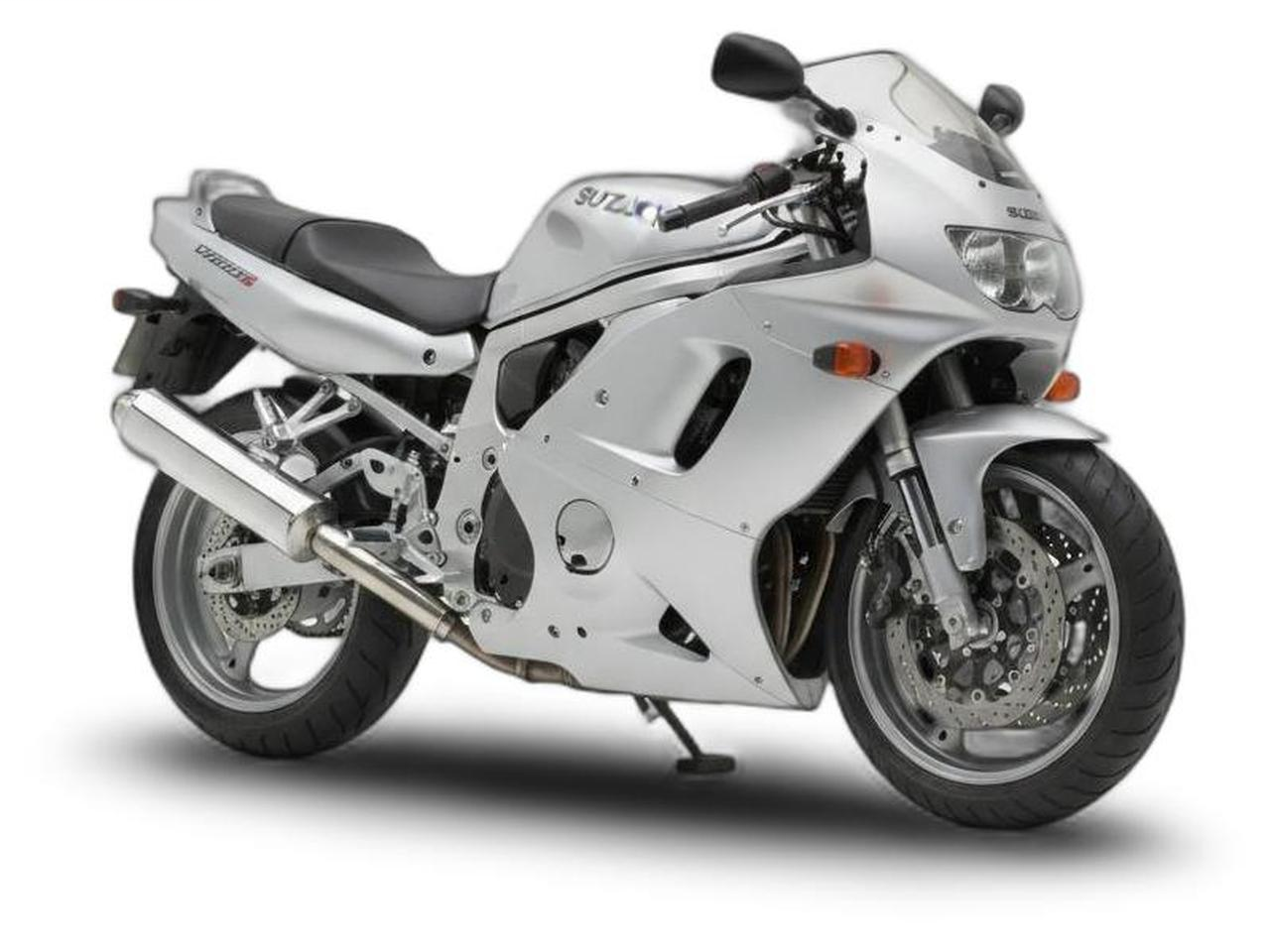
The Good
The 1994 GSX-R750 offers thrilling performance with its powerful engine and agile handling, appealing to the sportbike enthusiast's desire for speed. Its iconic design evokes a sense of raw performance. While not built for comfort, its reliability for its age, when maintained, offers practical value for enthusiasts seeking an accessible piece of sportbike history.
The Bad
Common weaknesses for the 1994 GSX-R750 include potential electrical gremlins, particularly concerning the charging system and wiring harness. Suspension components may need rebuilding due to age. Overheating can be an issue if cooling systems aren't meticulously maintained. Clutch wear is also a possibility on higher-mileage examples.
1994 Suzuki GSX-R750: Quick Overview
- Engine: 749cc, four-stroke, DOHC, 16-valve, liquid-cooled inline-four.
- Horsepower: Approximately 107 hp at 10,500 rpm.
- Torque: Around 55 lb-ft at 8,500 rpm.
- Fuel Economy: Estimated around 35-45 mpg, highly dependent on riding style and conditions.
- 0-60 mph: Typically in the range of 3.0-3.5 seconds.
- Top Speed: Around 155 mph (electronically limited on some models or due to gearing).
- Transmission: 6-speed manual.
- Clutch: Wet, multi-plate.
- Brakes: Dual 310mm discs with 4-piston calipers (front), 240mm disc with 2-piston caliper (rear).
- Suspension:
- Front: 41mm upside-down telescopic fork, adjustable compression and rebound damping.
- Rear: Monoshock with adjustable preload, compression, and rebound damping.
- Frame: Aluminum twin-spar frame.
- Wheels: 17-inch alloy wheels.
- Weight: Dry weight approximately 392 lbs (178 kg); wet weight around 463 lbs (210 kg).
- Fuel Tank Capacity: 5.8 gallons (22 liters).
- Trim Levels: The 1994 model is generally considered a single, primary trim for the GSX-R750. While minor variations might exist in specific market packages, there weren't distinct, widely recognized sub-trims like "SE" or "SP" for this particular year in the same way some other models might have. The focus was on the core GSX-R750 performance package.
- Towing Capacity: N/A (motorcycles are not designed for towing).
1994 Suzuki GSX-R750 Specifications
Vehicle Information
| Year | 1994 |
| Make | Suzuki |
| Model | GSX-R750 |
| Trim | - |
| Style | - |
| Type | Motorcycle |
| Category | Motorcycle |
Manufacturing Details
| Made In | Japan |
| Manufacturing City | TOYOKAWA |
Dimensions
| Doors | - |
| Curb Weight | - |
| Gross Vehicle Weight Rating | - |
| Overall Height | - |
| Overall Length | - |
| Overall Width | - |
| Wheelbase Length | - |
| Standard Seating | - |
Engine & Performance
| Engine | 747CC |
| Engine Size | 747L |
| Engine Cylinders | 4 |
| Transmission | - |
| Transmission Type | - |
| Transmission Speeds | - |
| Drivetrain | - |
Additional Features
| Anti-Brake System | - |
| Steering Type | - |
Pricing
| Manufacturer Suggested Retail Price (MSRP) | - |
| Invoice Price | - |
| Delivery Charges | - |
Vehicle History Report
Specifications
History
Events
History Check
Check
Check
Check
Check
Listings
Recalls
Check
Analysis
What Problems Does the 1994 Suzuki GSX-R750 Have?
Another area of concern is the suspension. Given the age of the motorcycle, original suspension components, both front forks and the rear monoshock, are likely to be worn. Seals can leak, damping performance diminishes, and bushings may require replacement. Rebuilding or replacing these components is often necessary to restore optimal handling and ride quality.
The cooling system is also a point to monitor. Overheating can occur if the radiator, hoses, and water pump are not in good condition. Regular flushing of the coolant and inspection for leaks are crucial.
Clutch wear is a common issue on many performance motorcycles, and the GSX-R750 is no exception. Heavy use, especially on track days or in aggressive riding, can accelerate clutch plate wear, leading to a slipping clutch.
While Suzuki issued recalls for some GSX-R models across various years, specific widespread recalls for the 1994 GSX-R750 are not prominently documented in readily accessible public databases for this particular model year. However, it's always advisable for owners to check with Suzuki or relevant authorities for any potential outstanding safety recalls that might apply to their specific VIN.
Long-term reliability hinges heavily on consistent and proper maintenance. A well-maintained 1994 GSX-R750 can still provide years of enjoyment, but neglected examples are prone to the aforementioned issues, particularly electrical and wear-related components. The inherent design is robust, but the passage of time affects seals, plastics, and electronics.
How long will the 1994 Suzuki GSX-R750 last?
The long-term durability of the GSX-R750 is generally good for its core mechanical components, such as the engine and gearbox, provided they receive regular oil changes and proper care. The inline-four engine is a robust design. Weaknesses that emerge over time are primarily related to wear-and-tear items and aging materials: suspension components, electrical connections, fuel lines, and seals can degrade. Rust can also be a concern in certain climates. With diligent maintenance, these bikes can remain reliable for many years, but consistent attention to preventative care is paramount.
What Technology & Safety Features are Included?
Built-in Tech: The primary technology integrated into the 1994 GSX-R750 is its performance-oriented instrumentation. This typically includes an analog speedometer and tachometer, with smaller gauges for fuel level, coolant temperature, and indicator lights for turn signals, high beam, and neutral. There is no digital display for advanced information like average fuel consumption or gear position. The engine management is handled by a basic electronic fuel injection (EFI) system, which was a significant technological advancement for the era, offering better throttle response and fuel efficiency compared to carburetors.
Entertainment: There is no built-in entertainment system on the 1994 GSX-R750. This is a pure sportbike designed for the riding experience, not for cruising with music.
Driver-Assistance Features: In the realm of driver-assistance, this motorcycle is devoid of any modern systems. Features like traction control, ABS (Anti-lock Braking System), or riding modes are non-existent. The rider is solely responsible for controlling the motorcycle's dynamics.
Safety Features: Safety features are limited to the mechanical aspects and the rider's skill. The brakes, while powerful for their time (dual discs up front), are standard hydraulic systems without ABS. The lighting system includes a headlight, taillight, and turn signals for visibility. The robust frame and suspension are designed to provide stability and control, which are indirect safety features when functioning correctly.
Optional Features: Optional features were typically limited to aftermarket accessories such as different exhaust systems, upgraded suspension components, custom seats, or aesthetic enhancements. Suzuki did not offer significant factory-installed technological options for this model.
Crash-Test Ratings: Motorcycle crash-test ratings, as understood for cars, are not typically performed or published by official bodies for motorcycles like the 1994 Suzuki GSX-R750. Safety assessments for motorcycles focus more on design, braking performance, handling dynamics, and the availability of safety-enhancing technologies like ABS, which this model lacks.
What Colors Options are Available?
1994 Suzuki GSX-R750 Prices and Market Value
Depreciation for this model has long since passed its steepest curve. These bikes are now considered classics or modern classics, and their value is more about collectibility and condition than typical automotive depreciation. Factors affecting resale value include:
- Condition: Original paint, fairings, and overall mechanical health are paramount.
- Mileage: Lower mileage examples command higher prices.
- Originality: Unmolested bikes with original parts are more desirable to collectors.
- Maintenance History: Proof of regular servicing significantly boosts value.
- Modifications: While some performance upgrades might be accepted, excessive or poorly done modifications can detract from value.
1994 Suzuki GSX-R750 Cost of Ownership
1994 Suzuki GSX-R750 Fuel Efficiency
1994 Suzuki GSX-R750 Warranty
Basic
Powertrain
Rust
1994 Suzuki GSX-R750 Insurance
reasonable repair costs.
How Does the 1994 Suzuki GSX-R750 Compare to Other Motorcycle?
Performance: The GSX-R750 was renowned for its potent inline-four engine, offering brisk acceleration and high top speeds. It generally held its own against the Yamaha YZF750R and Kawasaki ZX-7R, both of which also boasted strong performance. The Honda CBR900RR, with its larger displacement, often had a torque advantage but could be less nimble.
Features: In terms of technology, these bikes were fairly comparable for their era. The GSX-R750 featured electronic fuel injection, upside-down forks, and adjustable suspension. The YZF750R and ZX-7R offered similar levels of sophisticated suspension and braking. None of these bikes from this year offered advanced rider aids like traction control or ABS.
Reliability: Generally, Japanese sportbikes from this era were known for good mechanical reliability if maintained. The Suzuki GSX-R series, in particular, built a reputation for robust engines. However, electrical gremlins and aging components are common across all manufacturers as these bikes age.
Price: When new, they were all in a similar premium price bracket, typically in the $9,000-$11,000 range. On the used market today, their values are driven by condition and collectibility.
Alternatives:
- Similar: The 1994 Yamaha YZF750R is a very comparable alternative, offering similar performance, handling, and a focus on track-day capability. The 1994 Kawasaki Ninja ZX-7R is another strong contender, often praised for its sharp handling and raw power.
- Slightly Different: The Honda CBR900RR (Fireblade) from the same period, particularly the early models, offered a significant step up in power and a more compact package, though it was a 900cc. It's a more aggressive and potent choice.
- Later Models: If considering more modern technology and safety features without sacrificing performance, one might look at later GSX-R models (e.g., 2000s) or competitors like the Yamaha R6 or R1, Kawasaki ZX-6R or ZX-10R, or Honda CBR600RR or CBR1000RR, which offer ABS, advanced electronics, and significantly more power.
Final Verdict: Is the 1994 Suzuki GSX-R750 a Good Motorcycle?
Buying this motorcycle is exclusively a used proposition, as it's a classic. It is most worthwhile when purchasing a well-maintained, low-mileage example with a solid service history. Avoid bikes with extensive modifications or signs of neglect, as repairs can be costly. For collectors or riders who value purity of experience over modern amenities and safety features, the 1994 GSX-R750 offers significant rewards, but requires a commitment to ongoing maintenance.

Jovan
Jovan specializes in interpreting vehicle records and making sense of VIN data. With over 10 years of experience in the automotive data industry, his work ensures that every report is clear, accurate, and useful for car buyers.