
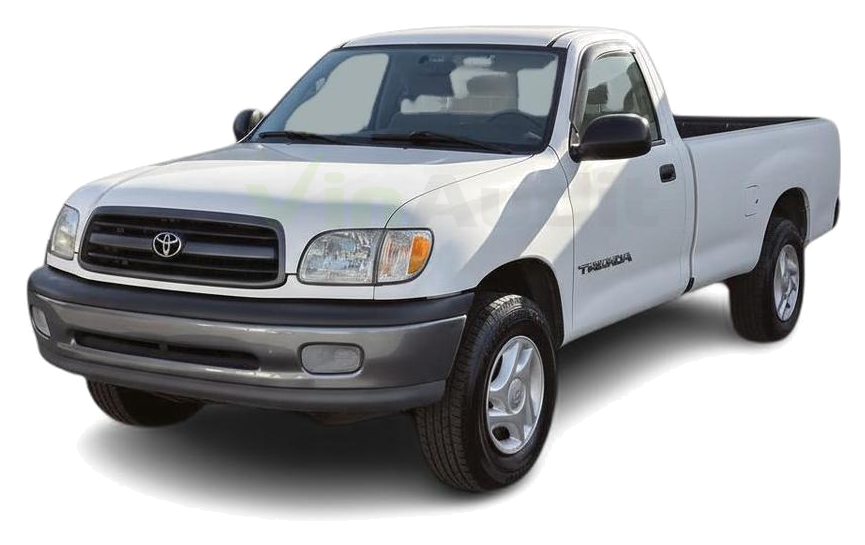
The Good
The 2001 Toyota Tundra offers a blend of Toyota's renowned reliability and a comfortable driving experience. Practically, it's dependable and capable. Emotionally, it offers the satisfaction of owning a robust and long-lasting truck. Its design is understated but functional, and it provides good value for money compared to some competitors, particularly in terms of long-term ownership.
The Bad
Common weaknesses in the 2001 Toyota Tundra include potential rust issues, especially in areas with road salt. Some owners have reported problems with ball joints and lower control arms. Fuel economy is not a strong point. The original V6 engine could feel underpowered for heavier tasks. Limited interior space in the regular cab can be a drawback for some.
2001 Toyota Tundra: Quick Overview
- Engine Options:
- 3.4L V6: 190 hp, 220 lb-ft of torque
- 4.7L i-Force V8: 245 hp, 315 lb-ft of torque
- Horsepower: 190 hp (V6), 245 hp (V8)
- Fuel Economy (V6): Approximately 16 mpg city / 19 mpg highway
- Fuel Economy (V8): Approximately 14 mpg city / 17 mpg highway
- 0-60 Times:
- V6: Around 9-10 seconds
- V8: Around 7-8 seconds
- Towing Capacity: Up to 7,200 lbs (V8, properly equipped)
- Trim Level Features:
- Base: Cloth upholstery, AM/FM radio, basic features.
- SR5: Adds features like upgraded cloth, alloy wheels (optional), power windows and locks, and cruise control.
- Limited: Leather upholstery, premium audio system, wood-grain trim, automatic climate control, and more luxurious features.
- Transmissions: 4-speed automatic, 5-speed manual (V6 only)
2001 Toyota Tundra Specifications
Vehicle Information
| Year | 2001 |
| Make | Toyota |
| Model | Tundra |
| Trim | - |
| Style | SR5 Truck 4WD 4AT 3.4L V6 |
| Type | Pickup Truck |
| Category | passenger |
Manufacturing Details
| Made In | United States |
| Manufacturing City | PRINCETON |
Dimensions
| Doors | 4-Door |
| Curb Weight | 4300 pounds |
| Gross Vehicle Weight Rating | - |
| Overall Height | 70.5 inches |
| Overall Length | 207.9 inches |
| Overall Width | 75.2 inches |
| Wheelbase Length | 128.3 inches |
| Standard Seating | 5 |
Engine & Performance
| Engine | 3.4L V6 |
| Engine Size | 3.4L |
| Engine Cylinders | 6 |
| Transmission | 4-Speed Automatic |
| Transmission Type | Automatic |
| Transmission Speeds | 4-Speed |
| Drivetrain | Four-Wheel Drive |
Additional Features
| Anti-Brake System | 4-Wheel ABS |
| Steering Type | Rack & Pinion |
Pricing
| Manufacturer Suggested Retail Price (MSRP) | $24,900 |
| Invoice Price | $23,000 |
| Delivery Charges | $800 |
Vehicle History Report
Specifications
History
Events
History Check
Check
Check
Check
Check
Listings
Recalls
Check
Analysis
What Problems Does the 2001 Toyota Tundra Have?
Some owners have experienced issues with the mass airflow sensor, leading to poor engine performance. The oxygen sensors can also fail over time, affecting fuel economy and emissions. Premature wear of brake components, particularly the rotors, is another common issue. Earlier models (2000-2003) seem to be more prone to some of these problems compared to later years in the first generation.
While the engine and transmission are generally durable, proper maintenance is crucial. Neglecting regular oil changes and other scheduled services can lead to premature wear and potential failures. Check for any open recalls on the NHTSA website using the VIN. Addressing these potential issues proactively can significantly extend the Tundra's lifespan.
How long will the 2001 Toyota Tundra last?
What Technology & Safety Features are Included?
Safety features include standard front airbags and anti-lock brakes (ABS) were optional on some models. Power windows, power locks, and cruise control were available on higher trims like the SR5 and Limited. Optional features included a sunroof, upgraded audio systems, and alloy wheels.
Crash test ratings from the NHTSA (National Highway Traffic Safety Administration) for the 2001 Tundra are generally good for its class at the time. However, keep in mind that safety standards have evolved significantly since then. It received four stars for driver and passenger in frontal crashes and three stars for side impacts. Given its age, it lacks many of the advanced safety technologies found in newer vehicles. Remember that even well-rated vehicles of this era offer significantly less protection than modern vehicles in severe crashes.
What Colors Options are Available?
Exterior Colors
Interior Colors
2001 Toyota Tundra Prices and Market Value
The Tundra has depreciated significantly, but its reputation for reliability helps maintain resale value. Factors affecting resale value include the truck's condition (rust-free examples command a premium), mileage, service history, and whether it's a V6 or V8 model. Lower mileage examples in excellent condition hold their value best. The 4x4 models also are generally worth more than 4x2 models.
2001 Toyota Tundra Cost of Ownership
2001 Toyota Tundra Fuel Efficiency
2001 Toyota Tundra Recalls & Defects
2001 Toyota Tundra Insurance
reasonable repair costs.
How Does the 2001 Toyota Tundra Compare to Other Pickup Truck?
In terms of price, the Tundra was generally competitive. Feature-wise, it lagged behind some of its rivals, particularly in available tech and luxury options. Performance was also a bit behind, especially regarding towing capacity compared to some of the more powerful American V8s.
Alternatives to consider include: a well-maintained later model first-generation Tundra (2005-2006) which may have addressed some early issues, or a slightly newer Nissan Titan, offering a good blend of reliability and features. If towing capacity is a primary concern, an F-150 with the Triton V8 might be a better choice, but be aware of potential reliability trade-offs. For those prioritizing reliability above all else, the Tundra remains a strong contender, but buyers should be prepared for its relatively basic features.
Ranks #55 Truck
| 1 | 2023 Toyota Tundra | (5.0★) |
| 2 | 2022 Honda Ridgeline | (5.0★) |
| 3 | 2023 Ford E-Transit Chassis | (0.0★) |
| 4 | 2020 Mercedes-Benz Sprinter Cab Chassis | (0.0★) |
| 5 | 2024 Chevrolet Silverado 3500HD | (0.0★) |
| 6 | 2023 Hyundai Santa Cruz | (5.0★) |
| 7 | 2023 Nissan Frontier | (5.0★) |
| 8 | 2024 GMC Sierra 2500HD | (0.0★) |
| 9 | 2023 Ram 4500 | (0.0★) |
| 10 | 2022 Jeep Gladiator | (5.0★) |
| 11 | 2012 Suzuki Equator | (0.0★) |
| 12 | 2009 Mitsubishi Raider | (5.0★) |
| 55 | 2001 Toyota Tundra | (0.0★) |
Final Verdict: Is the 2001 Toyota Tundra a Good Pickup Truck?
Avoid models with excessive rust or neglected maintenance. A pre-purchase inspection by a qualified mechanic is highly recommended. Given its age, it's only worth buying used. The SR5 or Limited trims offer a better balance of features and value compared to the base model. If you need advanced technology or high towing capacity, look elsewhere, but for dependable basic trucking, the 2001 Tundra remains a solid choice.

Simon A
Simon is a contributor to VinCheck, where he provides articles and reviews on various automotive topics. His work focuses on delivering accurate and up-to-date information about used cars, helping readers make informed decisions.