
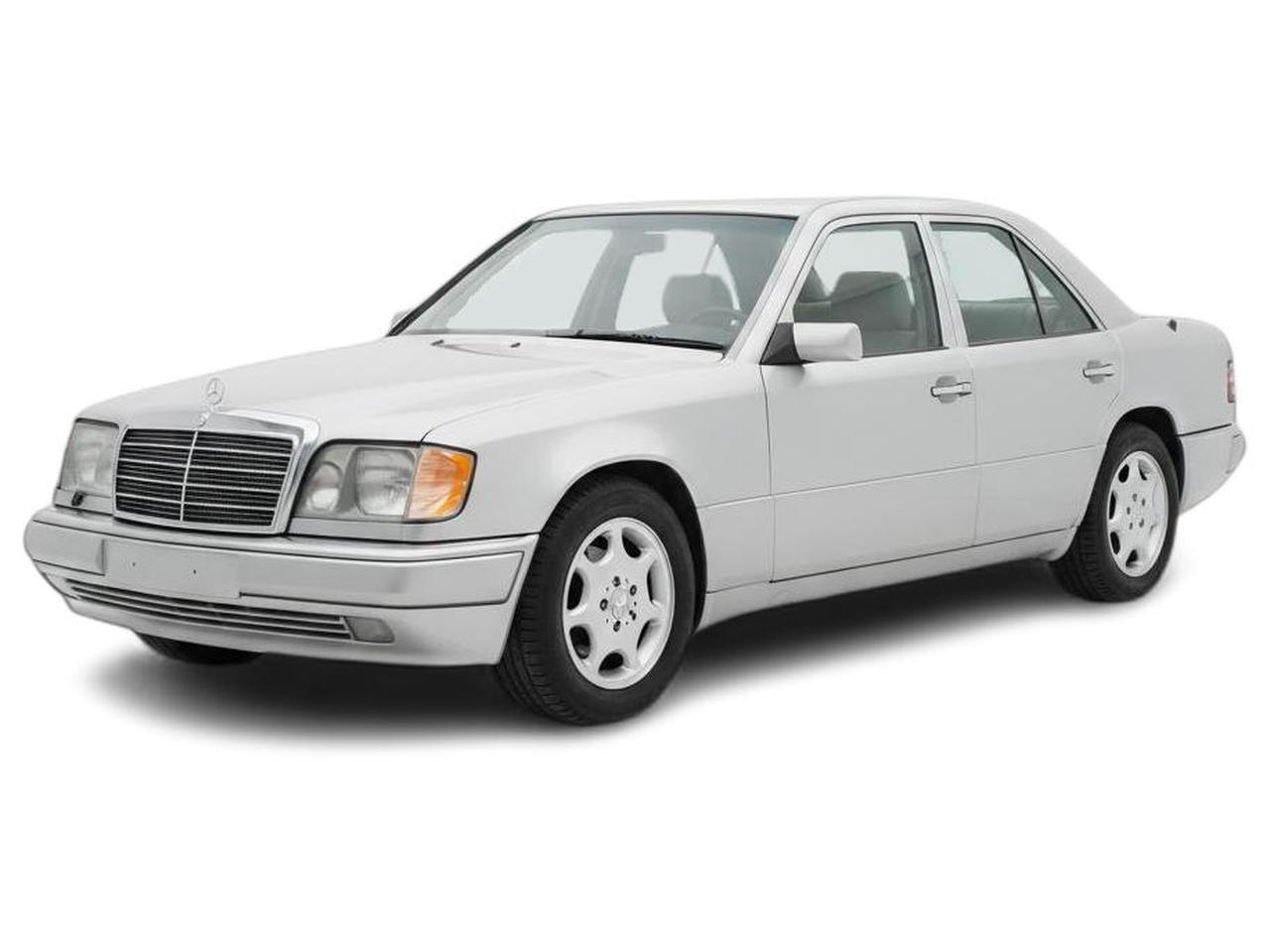
The Good
The 1993 E-Class excels in rock-solid reliability, a supremely comfortable ride, and elegant, understated design. Its robust engineering appeals to practical buyers seeking longevity, while its sophisticated presence and driving dynamics satisfy emotional desires for prestige and a premium experience. Fuel efficiency is respectable for its class, adding to its overall value proposition.
The Bad
Potential weaknesses include aging electrical components, particularly wiring harnesses that can become brittle. Rust can be an issue in the rocker panels and wheel arches. The headliner can sag, and automatic transmission issues might arise with high mileage. Cooling system components and vacuum lines also require attention on well-used examples.
1993 Mercedes-Benz E-Class: Quick Overview
- Engine Options: The 1993 E-Class offered a range of gasoline and diesel engines.
- 3.0L Inline-6 Turbo Diesel (OM603.960): Found in the E300 Diesel.
- 3.2L Inline-6 (M104.992): Standard in the E320.
- 5.0L V8 (M119.971): Exclusive to the performance-oriented E500.
- Horsepower:
- E300 Diesel: Approximately 134 hp
- E320: Approximately 217 hp
- E500: Approximately 322 hp
- Fuel Economy (Estimated MPG):
- E300 Diesel: 23 city / 29 highway
- E320: 18 city / 23 highway
- E500: 15 city / 20 highway
- 0-60 Times (Estimated):
- E300 Diesel: 11-13 seconds
- E320: 7.5-8.5 seconds
- E500: 5.5-6.0 seconds
- Towing Capacity: Mercedes-Benz typically did not widely advertise or equip their E-Class sedans and coupes with dedicated towing packages in the US market. Wagons had more capacity, often around 3500 lbs with proper equipment.
- Trim-Level Features:
- E300 Diesel: Focused on efficiency and durability. Standard features included power windows, locks, cruise control, automatic climate control, and a robust diesel engine known for longevity.
- E320: The most common model, offering a balance of performance and luxury. Included leather upholstery, power-adjustable front seats with memory, sunroof, heated mirrors, and a more refined suspension.
- E500: A limited-production, high-performance variant. Featured a powerful V8 engine, upgraded brakes, sport-tuned suspension, unique aerodynamic enhancements, and all the luxury features of the E320, plus often sportier interior accents.
1993 Mercedes-Benz E-Class Specifications
Vehicle Information
| Year | 1993 |
| Make | Mercedes-Benz |
| Model | E-Class |
| Trim | - |
| Style | E 320 Chassis Cab RWD 4AT 2.0L I4 |
| Type | Chassis Cab |
| Category | commercial |
Manufacturing Details
| Made In | Germany |
| Manufacturing City | LUDWIGSFELDE |
Dimensions
| Doors | 4-Door |
| Curb Weight | - |
| Gross Vehicle Weight Rating | - |
| Overall Height | - |
| Overall Length | - |
| Overall Width | - |
| Wheelbase Length | - |
| Standard Seating | - |
Engine & Performance
| Engine | 2L I4 |
| Engine Size | 2L |
| Engine Cylinders | 4 |
| Transmission | 4-Speed Automatic |
| Transmission Type | Automatic |
| Transmission Speeds | 4-Speed |
| Drivetrain | Rear-Wheel Drive |
Additional Features
| Anti-Brake System | - |
| Steering Type | Recirculating Ball |
Pricing
| Manufacturer Suggested Retail Price (MSRP) | - |
| Invoice Price | - |
| Delivery Charges | - |
Vehicle History Report
Specifications
History
Events
History Check
Check
Check
Check
Check
Listings
Recalls
Check
Analysis
What Problems Does the 1993 Mercedes-Benz E-Class Have?
How long will the 1993 Mercedes-Benz E-Class last?
What Technology & Safety Features are Included?
In terms of technology and entertainment, the focus was on quality and functionality rather than cutting-edge gadgets. Standard equipment typically included a premium sound system, often with cassette and AM/FM radio. Power windows, power door locks, cruise control, and automatic climate control were standard on most models, providing a comfortable and convenient cabin environment. Optional features could include heated front seats, a power sunroof, self-leveling rear suspension (on some wagon models), and upgraded sound systems. Leather upholstery was also a common option or standard on higher trims.
Crash-test ratings for vehicles of this vintage are not directly comparable to modern NHTSA or IIHS standards. However, the W124 E-Class was widely regarded as one of the safest cars in its class during its production run. Mercedes-Benz invested heavily in passive safety, and the vehicle's substantial weight and strong structure contributed to its protective capabilities in collisions. Independent testing at the time often praised its occupant protection in frontal and side impacts, reflecting the brand's commitment to safety engineering even before standardized crash testing became as prominent as it is today. The focus was on building a car that protected its occupants through structural integrity and well-placed safety restraints.
What Colors Options are Available?
1993 Mercedes-Benz E-Class Prices and Market Value
1993 Mercedes-Benz E-Class Cost of Ownership
1993 Mercedes-Benz E-Class Fuel Efficiency
1993 Mercedes-Benz E-Class Warranty
Basic
Powertrain
Rust
1993 Mercedes-Benz E-Class Insurance
reasonable repair costs.
How Does the 1993 Mercedes-Benz E-Class Compare to Other Chassis Cab?
Performance: In terms of raw performance, the E500 was a formidable contender, directly challenging performance-oriented rivals like the BMW M5 (E34) with its V8 power and agile handling. The E320 offered a strong balance, outperforming many base luxury sedans, while the E300 Diesel prioritized efficiency over speed, a niche where it excelled. The BMW 5 Series often offered more engaging driving dynamics, particularly the 535i and 540i, while the Audi 100/A6 provided solid, comfortable performance, often with quattro all-wheel drive. The Lexus LS 400 focused on a supremely quiet and refined ride, prioritizing luxury over sporty performance.
Features: Mercedes-Benz was known for its robust build quality and thoughtful features. The E-Class offered excellent comfort, advanced (for its time) safety features, and a luxurious, albeit understated, interior. BMW often provided more driver-focused interiors and sportier seating. Audi offered innovative technology and optional quattro all-wheel drive. The Lexus LS 400 arguably set the benchmark for interior luxury, quietness, and advanced features for its time.
Reliability: This is where the 1993 E-Class truly shines. The W124 generation is legendary for its durability and over-engineered components, often surpassing rivals like the BMW 5 Series in long-term reliability and resistance to major issues, especially when properly maintained. The Lexus LS 400 also boasts exceptional reliability, often considered one of the most dependable luxury cars of the era. Audi's reliability could be more variable, particularly with complex electronic systems.
Price: The E-Class was priced competitively within the luxury segment, with the E500 being a significant outlier. The BMW 5 Series and Audi 100/A6 were generally in a similar price bracket to the E320, while the Lexus LS 400 often commanded a higher premium.
Recommendations: For those prioritizing bulletproof reliability, exceptional build quality, and a comfortable, stately ride, the 1993 Mercedes-Benz E-Class remains an outstanding choice. Its long-term durability often exceeds that of its German and Japanese rivals. If a more engaging driving experience is paramount, a BMW 5 Series (E34) of similar vintage might be preferable. For ultimate luxury and quietness, the Lexus LS 400 is a strong alternative, though potentially more complex to maintain. The Audi 100/A6 offers a good blend of comfort, features, and the advantage of quattro. The E-Class, particularly the E320, offers a superb balance that is hard to beat for its intended purpose.
Final Verdict: Is the 1993 Mercedes-Benz E-Class a Good Chassis Cab?

Drew B
Drew is a seasoned automotive expert and contributor to VinCheck.info. With nearly 15 years of experience as a former Porsche technician, he brings a wealth of hands-on knowledge to his writing. Born in North Carolina, a region renowned for its deep-rooted NASCAR culture, Drew developed a passion for cars early in life, often building and working on vehicles from a young age. At VINCheck, Drew leverages his extensive technical background to provide in-depth analyses of various vehicles. His articles often focus on engine performance, reliability, and maintenance insights, offering readers practical information grounded in real-world experience. Some of his notable contributions include reviews on the Mazda CX-5's longevity and detailed examinations of engine options for models like the 2011 Toyota Camry and Tacoma