
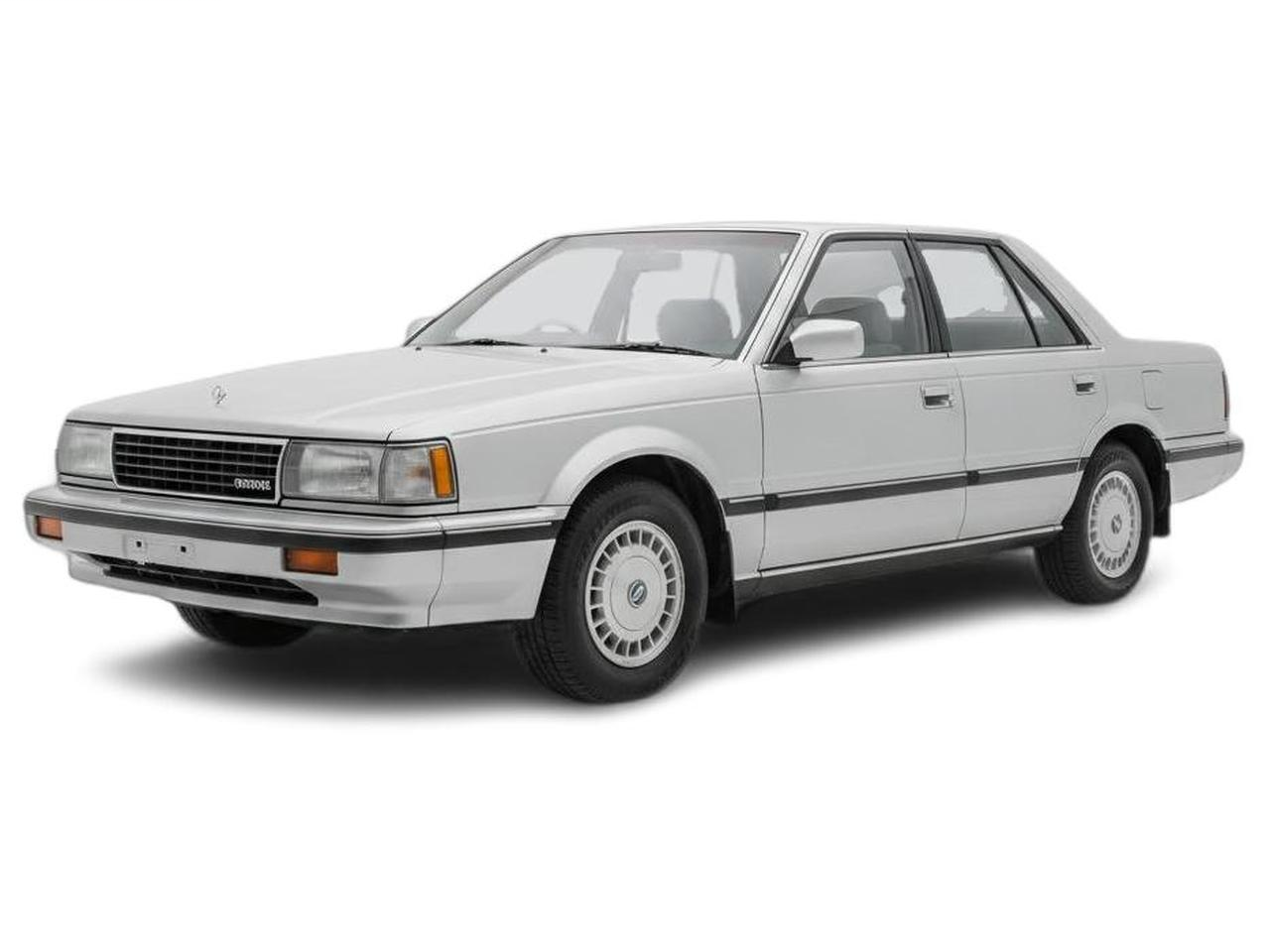
The Good
The 1985 Maxima excelled with its powerful V6 engine offering spirited performance. Its reputation for robust reliability meant peace of mind for practical buyers, while the comfortable interior and elegant styling appealed to emotional desires for a sophisticated ride.
The Bad
Common weaknesses for the 1985 Maxima include potential rust issues, especially around the wheel wells and rocker panels. Electrical gremlins, particularly with older sensors and wiring harnesses, can also arise. Transmission issues, though not universal, are worth checking in higher-mileage examples.
1985 Nissan Maxima: Quick Overview
- Engine Options: The primary engine offered was a 3.0-liter V6.
- Horsepower: This V6 typically produced around 154 horsepower.
- Torque: Torque figures were generally in the vicinity of 170 lb-ft.
- Fuel Economy: EPA estimates for the 1985 Maxima were often around 18 MPG city and 24 MPG highway, though this could vary slightly with transmission choice and driving conditions.
- 0-60 Times: Acceleration was respectable for its era, with 0-60 mph times generally falling in the low to mid-9-second range, depending on the specific configuration and driver.
- Towing Capacity: The 1985 Nissan Maxima was not designed or equipped for towing, so a towing capacity is not applicable.
- Trim-Level Features:
- Base Model: Typically included power steering, power brakes, a tilt steering wheel, AM/FM stereo, and cloth interior. Standard amenities focused on a comfortable daily commute.
- GL Trim: The GL model significantly enhanced the luxury and convenience. Features often included power windows, power door locks, cruise control, air conditioning, upgraded cloth or optional leather upholstery, alloy wheels, and a more sophisticated stereo system with graphic equalizer. Some GL models might have featured optional sunroofs and premium sound systems.
- Transmission: Available transmissions were typically a 4-speed automatic and a 5-speed manual gearbox.
- Drivetrain: Front-wheel drive was standard across all models.
1985 Nissan Maxima Specifications
Vehicle Information
| Year | 1985 |
| Make | Nissan |
| Model | Maxima |
| Trim | - |
| Style | GL Sedan FWD 4AT 3.0L V6 |
| Type | Sedan |
| Category | passenger |
Manufacturing Details
| Made In | Japan |
| Manufacturing City | YOKOSUKA |
Dimensions
| Doors | 4-Door |
| Curb Weight | - |
| Gross Vehicle Weight Rating | - |
| Overall Height | - |
| Overall Length | - |
| Overall Width | - |
| Wheelbase Length | - |
| Standard Seating | - |
Engine & Performance
| Engine | 3L V6 |
| Engine Size | 3L |
| Engine Cylinders | 6 |
| Transmission | 4-Speed Automatic |
| Transmission Type | Automatic |
| Transmission Speeds | 4-Speed |
| Drivetrain | Front-Wheel Drive |
Additional Features
| Anti-Brake System | - |
| Steering Type | - |
Pricing
| Manufacturer Suggested Retail Price (MSRP) | - |
| Invoice Price | - |
| Delivery Charges | - |
Vehicle History Report
Specifications
History
Events
History Check
Check
Check
Check
Check
Listings
Recalls
Check
Analysis
What Problems Does the 1985 Nissan Maxima Have?
Electrical problems are another frequently reported area. Over time, wiring harnesses can degrade, leading to intermittent issues with various systems like the power windows, locks, lights, or even the engine management. Specific sensors can also fail, leading to check engine lights or performance issues. The Automatic Climate Control system, if equipped, can be prone to module failures or actuator problems.
The V6 engine itself is generally robust, but like any engine, it can develop issues such as oil leaks from valve covers or oil pan gaskets. The automatic transmission, particularly on higher-mileage examples, can exhibit wear, leading to slipping or delayed shifts. While manual transmissions are often more durable, clutch wear is a normal maintenance item.
Cooling system components, including radiators and water pumps, can age and leak. Heater cores are also a potential failure point, leading to a lack of heat or a constantly fogged windshield. Regarding recalls, specific to the 1985 model year, it's always advisable to check the NHTSA database for any issued recalls that might have been addressed or remain outstanding. However, for a vehicle of this age, many original recalls may no longer be relevant or addressable. Long-term reliability is highly dependent on consistent maintenance. Vehicles that have been regularly serviced with fluid changes, belt replacements, and attention to minor issues are far more likely to be reliable than those that have been neglected.
How long will the 1985 Nissan Maxima last?
What Technology & Safety Features are Included?
Built-in Tech and Entertainment: Standard entertainment typically included an AM/FM stereo radio. Higher trims, particularly the GL, often featured an upgraded sound system, which could include a graphic equalizer and cassette player, offering a more immersive audio experience. Cruise control was a common convenience feature, especially on the GL, allowing for more relaxed highway driving. Power windows and power door locks were also increasingly standard or optional on higher trims, enhancing convenience. Air conditioning was a staple, providing comfort in various climates.
Driver-Assistance Features: For 1985, driver-assistance features were rudimentary by today's standards. Power steering was standard, making maneuvering easier. The tilt steering wheel allowed for driver customization of the driving position. Anti-lock braking systems (ABS) were not yet standard or widely available on this model.
Safety Features: Standard safety equipment included seatbelts, typically lap and shoulder belts in the front. Crumple zones were designed into the vehicle's structure. The 1985 Maxima also featured hazard warning lights and side-impact beams within the doors.
Optional Features: Optional features could include a power sunroof, alloy wheels, and more advanced stereo systems. Leather upholstery was sometimes an option on the highest trims, further elevating the luxury feel.
Crash-Test Ratings: Official crash-test ratings from organizations like the NHTSA or IIHS for vehicles from 1985 are not readily available in the same detailed format as modern tests. However, vehicles from this era were generally built with more substantial steel structures compared to some earlier models. Despite this, safety standards and testing protocols were less stringent than they are today, meaning frontal and side-impact protection would be considerably less advanced than contemporary vehicles.
What Colors Options are Available?
1985 Nissan Maxima Prices and Market Value
Currently, used market prices for the 1985 Maxima vary wildly. Well-maintained, low-mileage examples in pristine condition can fetch anywhere from $3,000 to $7,000 or more, appealing to collectors and enthusiasts. However, most common examples in average condition with higher mileage might be found for $1,000 to $3,000. Factors significantly affecting resale value include rust condition, originality of parts, service history, and overall mechanical and cosmetic condition. A complete lack of rust and a documented maintenance record are paramount for higher valuations.
1985 Nissan Maxima Cost of Ownership
1985 Nissan Maxima Fuel Efficiency
1985 Nissan Maxima Recalls & Defects
1985 Nissan Maxima Insurance
reasonable repair costs.
How Does the 1985 Nissan Maxima Compare to Other Sedan?
Performance: The Maxima's 3.0L V6 offered a distinct advantage in horsepower and acceleration over many four-cylinder competitors like the Accord. It generally matched or slightly exceeded the V6-equipped Cressida. American V6 offerings from Ford and Buick often focused more on torque and smoothness than outright sportiness, making the Maxima a bit more engaging to drive for those who appreciated spirited performance.
Features: Nissan's approach to luxury was often about offering a comprehensive package of features, especially in the GL trim. Power windows, locks, cruise control, and a refined audio system were common, rivaling or surpassing what was available on similarly priced Japanese and American models. The Cressida was a close competitor in terms of luxury appointments.
Reliability: The Maxima had a strong reputation for reliability, particularly its V6 engine. While not quite reaching the legendary status of some Honda products, it was generally considered more reliable and less prone to major issues than many contemporary American sedans, especially concerning powertrain longevity. Rust, however, was a common concern across many vehicles of this era, including the Maxima and Cressida.
Price: The Maxima offered excellent value for its price point, providing a near-luxury experience at a more accessible cost than established European luxury brands. It was competitively priced against the Cressida and often offered more standard features for the money than entry-level luxury cars.
Alternatives: For those seeking similar Japanese reliability and luxury, the Toyota Cressida is a very close alternative, often exhibiting even more refined ride quality. The Honda Accord (especially higher trims) offered exceptional reliability and fuel efficiency but lacked the V6 power and outright luxury of the Maxima. For buyers prioritizing American comfort and size, the Buick LeSabre or Ford Taurus (with V6) provided different driving dynamics and often more interior space, but could lag in perceived build quality and long-term powertrain reliability compared to the Japanese entries. For ultimate reliability, a well-maintained Honda Accord or Toyota Camry from a similar era would be strong contenders, albeit in a slightly less luxurious segment.
Final Verdict: Is the 1985 Nissan Maxima a Good Sedan?
It is absolutely worth buying if you find a well-maintained example with minimal rust and a documented service history. Buying new is obviously not an option. Focus on the GL trim for the best balance of features and value. Be prepared for potential age-related maintenance and keep an eye out for common issues like rust and electrical quirks. For the right price, it offers significant bang for your buck, delivering a satisfying ownership experience for those who value its blend of practicality and understated refinement.

Simon A
Simon is a contributor to VinCheck, where he provides articles and reviews on various automotive topics. His work focuses on delivering accurate and up-to-date information about used cars, helping readers make informed decisions.